Palm-Up – Palm-Down Rotation: Shoulder Mobility, Form, Sets, Tips & FAQ
Learn how to do the Palm-Up – Palm-Down Rotation for better shoulder mobility, control, and rotator cuff activation. Includes form tips, sets and reps by goal, common mistakes, FAQs, and recommended equipment.
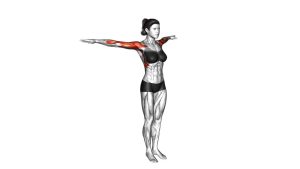
Palm-Up / Palm-Down Rotation
This exercise works best as a low-load shoulder activation drill before upper-body training, as a mobility reset during the day, or as part of a prehab routine for healthier shoulder mechanics. You should feel controlled muscular effort around the shoulders and upper arms, not pinching, shrugging, or neck tension.
Quick Overview
| Body Part | Shoulders |
|---|---|
| Primary Muscle | Deltoids and rotator cuff |
| Secondary Muscle | Upper traps, scapular stabilizers, upper arms |
| Equipment | None |
| Difficulty | Beginner |
Sets & Reps (By Goal)
- Warm-up before upper-body training: 2–3 sets × 10–15 reps
- Mobility / shoulder control: 2–4 sets × 12–20 reps
- Desk break or movement reset: 1–2 sets × 8–12 reps
- Rehab-style light activation: 2–3 sets × 8–10 slow reps
Progression rule: Increase control and range of motion first. Only add light resistance once you can rotate smoothly without shrugging or compensating.
Setup / Starting Position
- Stand tall: Keep your chest lifted, core lightly braced, and spine neutral.
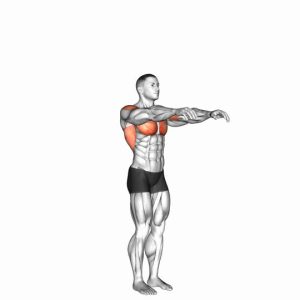
- Raise your arms: Extend both arms out to the sides at about shoulder height, forming a “T” shape.
- Keep elbows straight: Arms stay long but not hyperextended.
- Relax the shoulders: Do not shrug up toward the ears.
- Start controlled: Begin with palms facing down or neutral.
Tip: If full shoulder-height positioning is uncomfortable, lower the arms slightly and work within a pain-free range.
Execution (Step-by-Step)
- Set your arm position: Hold the arms out to the sides and keep your neck relaxed.
- Rotate into palm-up: Turn the entire arm so the palms rotate upward, as if externally rotating from the shoulder.
- Reverse into palm-down: Rotate back the other direction until the palms face down again.
- Keep the movement clean: Do not bend the elbows or flick the wrists to create the motion.
- Repeat smoothly: Continue under control for the desired number of reps.
Pro Tips & Common Mistakes
- Keep the arms level: Avoid letting them drift too high or drop too low during the set.
- Move from the shoulders: The wrists stay quiet; the upper arm rotation does the work.
- Stay long through the neck: No shrugging or upper-trap dominance.
- Use a slow tempo: Smooth reps improve control more than fast reps.
- Do not force range: Only rotate as far as you can without pain or compensation.
- Great before pressing or pulling: This drill pairs well with shoulder warm-ups and posture work.
FAQ
What muscles does Palm-Up / Palm-Down Rotation work?
It mainly trains the shoulders, especially the deltoids and rotator cuff, while also challenging small stabilizers around the shoulder blade.
Is this a strength or mobility exercise?
It is primarily a mobility and control drill. It helps improve shoulder coordination, range awareness, and movement quality more than max strength.
Should I feel this in my neck?
No. Mild shoulder effort is normal, but strong neck tension usually means you are shrugging or holding too much tension. Lower the arms slightly and relax your upper traps.
Can beginners use this as a warm-up?
Yes. It is beginner-friendly and works well before shoulder workouts, upper-body sessions, or mobility routines.
Can I add resistance?
Yes, but only after mastering the bodyweight version. Light bands or very light dumbbells can increase the challenge, but control should always come first.
Recommended Equipment (Optional)
- Shoulder Resistance Bands — useful for progressing shoulder activation and light rotator cuff work
- Stretching Strap — helpful for shoulder mobility drills and flexibility work
- Exercise Mat — useful for floor-based mobility, warm-ups, and recovery sessions
- Light Dumbbells — optional for advanced progression once bodyweight control is solid
- Iron Neck Shoulder Resistance Band System — shoulder rehab and performance kit for more structured resistance training
Tip: Start with bodyweight first. Optional equipment should improve control, not turn the drill into a sloppy strength exercise.