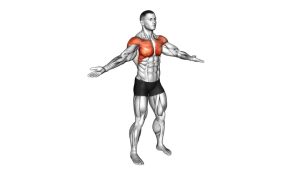
Shoulder Medial Rotation (Internal Rotation): Form, Muscles Worked, Sets, Tips & FAQ
Learn how to perform Shoulder Medial Rotation (Internal Rotation) with proper form. Discover muscles worked, setup, step-by-step execution, sets and reps by goal, common mistakes, FAQs, and recommended equipment.
Shoulder Medial Rotation (Internal Rotation)
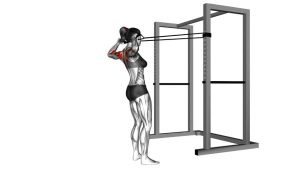
This exercise works best with light resistance, precise control, and a smooth tempo. You should feel the front-side shoulder and deep rotator cuff working without turning the movement into a full-body pull. Keep the range comfortable, avoid shrugging, and focus on rotating the arm inward rather than yanking the handle across your body.
Quick Overview
| Body Part | Shoulders |
|---|---|
| Primary Muscle | Subscapularis |
| Secondary Muscle | Anterior deltoid, pectoralis major, latissimus dorsi, teres major, rotator cuff stabilizers |
| Equipment | Resistance band with anchor, cable machine, or light rehab tubing |
| Difficulty | Beginner |
Sets & Reps (By Goal)
- Rehab / motor control: 2–3 sets × 10–15 reps per side with very light resistance and slow tempo
- Shoulder stability: 3–4 sets × 12–20 reps per side with clean form and short rest
- Warm-up activation: 1–3 sets × 12–15 reps per side before upper-body training
- General strengthening: 3 sets × 8–12 reps per side using controlled, moderate resistance
Progression rule: Increase reps, tempo control, or time under tension before increasing resistance. The shoulder usually responds better to precision than heavy loading on this exercise.
Setup / Starting Position
- Anchor the resistance: Attach a band or cable handle at about elbow height.
- Stand side-on to the anchor: The working arm should be closest to the anchor point.
- Bend the elbow to 90 degrees: Keep the upper arm close to your torso.
- Brace lightly: Stand tall with ribs down, shoulders level, and chest relaxed.
- Use a towel if needed: Place a small towel between the elbow and ribcage to help keep the arm tucked in place.
- Start from a controlled open position: Forearm slightly away from the abdomen, wrist neutral, shoulder relaxed.
Tip: This exercise is easier to perform correctly when the resistance is light enough that you can keep the elbow glued to your side.
Execution (Step-by-Step)
- Set your posture: Stand tall, keep your shoulder blade stable, and avoid leaning toward or away from the anchor.
- Initiate the rotation: Pull the handle or band inward by rotating the upper arm at the shoulder.
- Keep the elbow pinned: The elbow stays close to the torso throughout the rep.
- Move through a controlled range: Bring the forearm toward the abdomen without twisting the torso.
- Pause briefly: Hold the fully rotated position for a short moment without squeezing excessively.
- Return slowly: Let the forearm travel back under control to the starting position.
- Repeat evenly: Match tempo and range on both sides if training bilaterally.
Pro Tips & Common Mistakes
- Keep the elbow tucked: This is the most important technical detail for isolating internal rotation.
- Use light resistance first: Heavy resistance often causes torso twisting and shoulder compensation.
- Control the lowering phase: The return matters just as much as the inward rotation.
- Do not shrug: Keep the upper trap relaxed and the shoulder away from the ear.
- Do not rush range: Use only the range you can control without pain or joint shifting.
- Train both sides: Balanced shoulder rotation work supports cleaner upper-body mechanics.
- Pair it wisely: Internal rotation works well with external rotations, scapular control drills, and light pulling work.
FAQ
What muscles does shoulder internal rotation work?
The main muscle is the subscapularis. Other muscles such as the pectoralis major, latissimus dorsi, teres major, and anterior deltoid can assist depending on setup and resistance.
Should I use a band or a cable for this exercise?
Both work well. Bands are simple and portable, while cables can provide a very consistent resistance path. For most people, the best choice is the one that allows smooth, pain-free control.
How heavy should I go on internal rotations?
Usually lighter than you think. This is a precision-focused shoulder exercise, so quality of motion matters more than heavy loading.
Is shoulder internal rotation good for rehab?
It is commonly used in rehab-style programs and shoulder stability work, but exercise selection should match your symptoms, history, and stage of recovery.
What are the most common mistakes?
The most common issues are using too much resistance, letting the elbow drift away from the body, twisting the torso, and shrugging the shoulder to finish the rep.
Recommended Equipment (Optional)
- RangeMaster BlueRanger Over-the-Door Shoulder Pulley — useful for gentle shoulder range-of-motion and rehab-oriented practice
- Vive Shoulder Pulley for Physical Therapy — practical for home shoulder mobility and controlled recovery work
- RitFit Single Resistance Exercise Band with Handles — convenient for light internal rotation, external rotation, and warm-up drills
- Crossover Cords Shoulder Resistance Bands — popular for shoulder warm-ups, arm care, and rotator cuff training
- Iron Neck Shoulder Resistance Band System — a more complete home kit for shoulder rehab and progressive band work
Tip: Choose equipment that lets you use low resistance and repeatable control. For shoulder internal rotation, smoother reps are usually more valuable than heavier resistance.