Side Plank Plus: Core Stability, Oblique Strength, Form Tips & FAQ
Learn the Side Plank Plus for stronger obliques, shoulder stability, and anti-rotation control with step-by-step form, sets, tips, FAQs, and gear.
Side Plank Plus
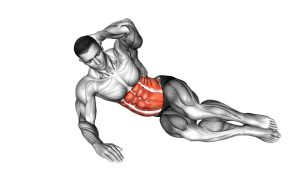
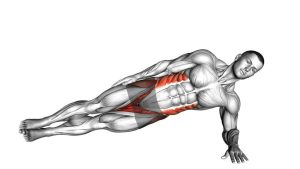
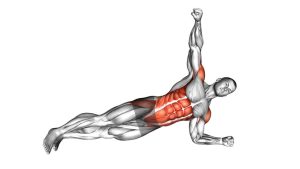
This exercise works best when the body stays long, stacked, and quiet. First, the bottom hand presses firmly into the floor. Then, the hips remain lifted while the feet stay stacked. As the top arm rises, the core must resist twisting, sagging, or rolling forward. Therefore, the goal is not fast arm movement. Instead, the goal is a stable side plank with smooth upper-body control.
Quick Overview
| Body Part | Core |
|---|---|
| Primary Muscle | Obliques |
| Secondary Muscle | Transverse abdominis, rectus abdominis, glutes, shoulder stabilizers, serratus anterior |
| Equipment | No equipment required; exercise mat optional |
| Difficulty | Intermediate |
Sets & Reps (By Goal)
- Core stability: 2–4 sets × 10–20 seconds per side
- Oblique endurance: 3–4 sets × 20–40 seconds per side
- Controlled arm-raise practice: 2–3 sets × 5–8 slow arm raises per side
- Warm-up activation: 1–2 sets × 10–15 seconds per side
- Strength progression: 3–5 sets × 15–30 seconds per side with strict alignment
Progression rule: Increase time only when your hips stay lifted, your feet remain stacked, and your torso does not rotate during the arm raise.
Setup / Starting Position
- Start on your side: Place one hand on the floor under the shoulder with the supporting arm straight.
- Stack your feet: Keep one foot directly over the other, as shown in the video.
- Lift the hips: Raise your hips until your body forms a straight line from head to ankles.
- Set the shoulder: Press the floor away so the supporting shoulder does not sink toward the ear.
- Place the top arm: Begin with the top arm resting along the side of the body.
- Brace gently: Tighten the core enough to prevent the ribs, hips, or shoulders from rolling forward.
Your starting position should feel strong before the arm moves. If balance is difficult, separate the feet slightly instead of stacking them.
Execution (Step-by-Step)
- Hold the side plank: Keep the supporting arm straight, the hips elevated, and the body aligned.
- Begin the arm raise: Slowly lift the top arm away from the side of the body.
- Move with control: Raise the arm upward until it reaches a vertical position above the shoulder.
- Keep the torso stable: Avoid turning the chest toward the floor or opening too far toward the ceiling.
- Pause briefly: Hold the top position while keeping the hips high and the shoulder stacked.
- Lower with control: Return the top arm toward the side of the body without dropping the hips.
- Repeat on both sides: Match the same tempo and alignment on the left and right side.
Pro Tips & Common Mistakes
- Press the floor away: This keeps the supporting shoulder active and prevents collapse.
- Keep your hips high: Sagging hips reduce core tension and shift stress into the shoulder or low back.
- Move the arm slowly: A smooth arm raise forces the obliques to stabilize the body.
- Avoid twisting: Do not let the chest roll forward as the arm moves upward.
- Stack the ribs and hips: Keep the torso in one long line instead of bending at the waist.
- Use shorter holds first: Clean 10-second holds are better than long, sloppy sets.
- Control your head position: Keep the neck neutral instead of letting the head drop toward the floor.
- Do both sides evenly: Side plank variations often reveal left-to-right stability differences.
FAQ
What muscles does the Side Plank Plus work?
The Side Plank Plus mainly works the obliques. Additionally, it trains the transverse abdominis, glutes, shoulder stabilizers, and serratus anterior because the body must stay lifted while the top arm moves.
Is the Side Plank Plus good for core stability?
Yes. This exercise is excellent for core stability because the torso must resist side bending and rotation. As a result, it builds strong anti-rotation control for athletic movement and general trunk strength.
Should my hips move during the arm raise?
No. Your hips should stay lifted and aligned. If they drop, rotate, or shift backward, reduce the range of the arm raise or shorten the set.
Is this exercise beginner-friendly?
It can be challenging for beginners. However, you can make it easier by holding a regular side plank first, lowering the bottom knee to the floor, or reducing the arm movement.
Why does my shoulder get tired during Side Plank Plus?
The supporting shoulder works hard to hold the body off the floor. Therefore, some shoulder fatigue is normal. However, sharp pain or joint discomfort means you should stop and adjust your setup.
How can I make the Side Plank Plus harder?
You can increase the hold time, slow down the arm raise, pause longer at the top, or perform more controlled repetitions. Still, only progress when your alignment stays clean.
Recommended Equipment
- Thick Exercise Mat — adds comfort for the hand, wrist, and side-body setup.
- Non-Slip Yoga Mat — helps keep the hand and feet stable during the side plank hold.
- Fitness Wrist Support Wraps — useful if wrist pressure limits your plank stability.
- Core Sliders — helpful for progressing bodyweight core and anti-rotation drills.
- Mini Resistance Bands — useful for glute activation and core warm-ups before side plank work.
Tip: Equipment is optional. However, a stable non-slip surface can make the Side Plank Plus safer and easier to control.