Somersault Stand-Up: Safe Form, Sets, Core Power Tips & FAQ
Learn the Somersault Stand-Up to build core power, rolling control, and explosive floor-to-stand strength with safe form, sets, tips, FAQs, and gear.
Somersault Stand-Up
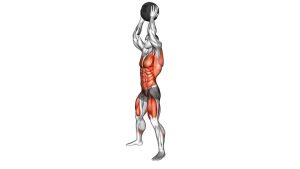
This exercise is best used as an athletic movement drill for people who already have basic floor mobility, squat control, and confidence rolling on the back. It begins from the floor, uses a rounded-body rock to generate momentum, then finishes by catching the body in a deep squat and standing tall. The movement should feel smooth, spring-like, and coordinated rather than forced.
Quick Overview
| Body Part | Plyometrics |
|---|---|
| Primary Muscle | Core muscles, especially rectus abdominis and deep abdominal stabilizers |
| Secondary Muscle | Hip flexors, glutes, quadriceps, hamstrings, calves, spinal stabilizers, and shoulders |
| Equipment | No equipment required; exercise mat or gymnastics mat recommended |
| Difficulty | Intermediate; requires coordination, mobility, balance, and safe rolling control |
Sets & Reps (By Goal)
- Skill practice: 3–5 sets × 3–5 controlled reps with full reset between reps
- Core coordination: 3–4 sets × 5–8 reps using smooth rhythm and clean foot placement
- Athletic conditioning: 4–6 sets × 6–10 reps with 60–90 seconds rest
- Warm-up mobility flow: 2–3 sets × 3–5 easy reps at low intensity
Progression rule: Master the roll-to-squat transition before increasing speed. Add reps only when every landing is balanced and the neck stays relaxed.
Setup / Starting Position
- Choose a soft surface: Use a thick exercise mat, gymnastics mat, or padded floor to protect your back and shoulders.
- Lie on your back: Start with knees bent, feet near the floor, and arms ready to swing for momentum.
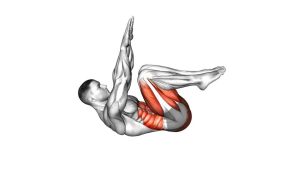
- Create a compact shape: Bring the knees toward the chest and keep the spine gently rounded.
- Keep the chin tucked lightly: Avoid placing pressure on the neck. The roll should pass across the upper back and shoulders, not the head.
- Prepare your feet: As you rock forward, aim to place both feet under your hips so you can catch the body in a squat.
Tip: If you cannot comfortably sit into a deep squat, practice squat mobility and basic rock-to-sit drills before attempting the full stand-up version.
Execution (Step-by-Step)
- Start on your back: Lie down with your knees bent and your arms relaxed near your sides.
- Tuck into the roll: Bring your knees toward your chest and round your back slightly to create a smooth rocking shape.
- Rock backward: Shift your weight onto the upper back and shoulders while keeping the head and neck protected.
- Reverse the momentum: Swing the legs forward and use your arms to help drive the torso upward.
- Place the feet quickly: Bring both feet to the floor underneath your body as your chest rises.
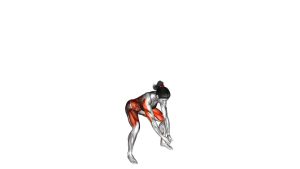
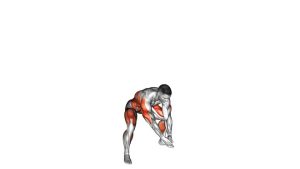
- Catch in a deep squat: Land softly with knees bent, hips low, and arms forward for balance.
- Stand tall: Push through the feet, extend the knees and hips, and finish in a stable upright position.
- Reset with control: Step back down or return to the floor carefully before beginning the next rep.
Pro Tips & Common Mistakes
- Stay compact: A tighter tuck helps you roll more smoothly and makes the stand-up easier.
- Use momentum, not strain: The movement should flow from the rock, leg swing, and arm drive.
- Protect the neck: Do not roll onto the head. Keep pressure on the upper back and shoulders.
- Land in a squat: Catching the body low gives you time to balance before standing.
- Avoid stiff legs: Straight legs make the transition harder and can cause you to fall backward.
- Do not rush the stand: First stabilize in the squat, then stand with control.
- Keep knees tracking well: Avoid letting the knees collapse inward during the squat catch.
- Use a padded mat: A hard floor can make the roll uncomfortable and reduce confidence.
FAQ
What muscles does the Somersault Stand-Up work?
The exercise mainly trains the core, especially the abdominal muscles that help roll and lift the torso. It also works the hip flexors, quads, glutes, hamstrings, and stabilizing muscles used during the squat and stand-up phase.
Is the Somersault Stand-Up good for beginners?
It is usually better for intermediate exercisers because it requires rolling control, coordination, and squat mobility. Beginners can start with rock-back drills, seated roll-ups, deep squat holds, and assisted floor-to-stand transitions.
Why can’t I stand up after the roll?
The most common reasons are not tucking tightly enough, placing the feet too far forward, lacking deep squat mobility, or losing momentum before the feet land. Practice catching in a low squat before trying to stand fully.
Should my head touch the floor during the roll?
No. The pressure should stay on the rounded upper back and shoulders. Avoid loading the head or neck. If you feel neck pressure, stop and use a smaller range of motion on a softer surface.
Can this exercise improve athletic performance?
Yes, it can help improve coordination, body awareness, core timing, agility, and the ability to transition quickly from the floor to standing. It is useful for athletic conditioning, martial arts-style movement, gymnastics preparation, and functional fitness.
What is the safest progression?
Start with a seated rock-back, then progress to a rock-back to deep squat, then a rock-back to assisted stand, and finally the full Somersault Stand-Up. Do not progress until each step feels smooth and controlled.
Recommended Equipment (Optional)
- Thick Exercise Mat — provides cushioning for the back, shoulders, and hips during rolling drills
- Folding Gymnastics Mat — ideal for dynamic floor skills, tumbling practice, and safer roll-to-stand training
- Non-Slip Yoga Mat — helps reduce sliding during setup and squat catch positions
- Fitness Knee Pads — useful for regressions, kneeling transitions, and floor-based practice
- Resistance Bands Set — helpful for warm-ups, hip activation, glute work, and mobility preparation
Tip: For this exercise, a safe padded surface is the most important tool. Prioritize comfort, grip, and enough space before increasing speed or volume.