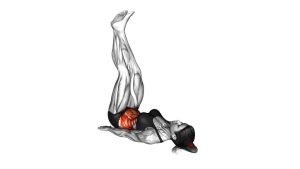
Pelvic Tilt Exercise: Proper Form, Core Benefits, Sets & Tips
Learn the pelvic tilt exercise for core control, posture, lower-back support, and beginner-friendly abdominal activation with step-by-step form.
Pelvic Tilt
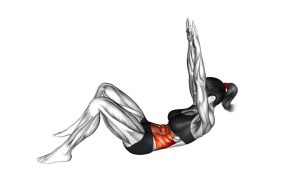
Although the pelvic tilt looks simple, it is one of the most valuable exercises for learning core control. Instead of lifting the hips like a bridge, you keep the pelvis on the floor and create a small controlled rotation. Therefore, the focus stays on the abdominals, spinal position, and smooth movement quality.
In addition, this exercise helps many beginners understand the difference between a relaxed lower-back arch and a supported posterior pelvic tilt. The motion should feel calm, precise, and easy to repeat. Because the range is small, the goal is not to force the back flat. Rather, the goal is to use gentle abdominal tension to guide the pelvis into a better position.
Quick Overview
| Body Part | Core |
|---|---|
| Primary Muscle | Rectus abdominis and transverse abdominis |
| Secondary Muscle | Obliques, glutes, pelvic stabilizers, and deep spinal stabilizers |
| Equipment | No equipment required. Optional: exercise mat, small towel, or yoga block for comfort |
| Difficulty | Beginner |
Sets & Reps (By Goal)
- Beginner core activation: Perform 2–3 sets of 8–12 slow reps with a 2-second hold.
- Lower-back warm-up: Use 1–2 sets of 10–15 gentle reps before strength training or mobility work.
- Posture and pelvic control: Complete 3 sets of 10 reps with a 3–5 second hold at the tilted position.
- Rehab-style control: Start with 2–3 sets of 6–10 reps using a small range and relaxed breathing.
- Daily desk reset: Try 1 set of 8–10 easy reps to reconnect with your core and pelvic position.
Progression rule: First, improve control and breathing. Next, increase the hold time by 1–2 seconds. Finally, progress to harder core drills only when you can tilt the pelvis without lifting the hips, flaring the ribs, or holding your breath.
Setup / Starting Position
- Lie on your back: Begin on a comfortable mat with your knees bent and your feet flat on the floor.
- Set your feet: Keep your feet about hip-width apart so your legs feel balanced and stable.
- Relax your upper body: Place your arms beside your body, then soften your shoulders, neck, and jaw.
- Find neutral spine: Allow a small natural curve under your lower back before you begin the first rep.
- Stack your ribs: Keep the ribcage calm because rib flare reduces abdominal control.
- Prepare your breath: Inhale gently, then use the exhale to connect with the lower abdominals.
A good setup should feel stable and relaxed. Moreover, your lower back should not be forced flat before the movement begins.
Execution (Step-by-Step)
- Start in neutral: Maintain a small natural curve under your lower back while your knees stay bent and your feet remain planted.
- Exhale gently: As you breathe out, draw the lower belly inward without clenching your jaw or tightening your shoulders.
- Rotate the pelvis backward: Imagine tipping the top of your pelvis toward your ribs while the tailbone subtly rolls upward.
- Flatten the lower back softly: Let the lumbar spine move toward the mat through abdominal control, not through aggressive pressure.
- Hold with control: Pause for 2–5 seconds while keeping the hips down, the ribs quiet, and the breathing smooth.
- Return to neutral: Slowly release the tilt until the natural lower-back curve comes back.
- Repeat cleanly: After each rep, reset your breath and posture before starting again.
Pro Tips & Common Mistakes
Pro Tips
- Use the exhale: Breathing out helps the lower abs engage more naturally.
- Keep the movement small: A subtle tilt is usually more effective than a forced motion.
- Control the ribs: If the ribs flare, reset your breath and reduce the range.
- Relax the upper body: Since this is a core-control drill, the neck and shoulders should stay quiet.
- Move both ways slowly: The return to neutral matters just as much as the tilt.
- Use body awareness: Place one hand on your lower belly and one hand near your pelvis to feel the rotation.
Common Mistakes
- Lifting the hips: This mistake turns the exercise into a bridge and shifts focus away from pelvic control.
- Pushing through the feet: The feet should stabilize your body; however, they should not drive the motion.
- Holding the breath: Breath-holding creates unnecessary tension and reduces coordination.
- Overarching between reps: Return to a natural neutral spine, not an exaggerated lower-back arch.
- Forcing the back down: Too much pressure can make the exercise feel stiff instead of controlled.
- Rushing the tempo: Fast reps reduce awareness, so keep every repetition smooth and deliberate.
FAQ
What is the pelvic tilt exercise good for?
The pelvic tilt is useful for core awareness, lower-back control, posture training, and pelvic positioning. In addition, it helps beginners learn how to engage the abdominals without relying on momentum.
Should my lower back touch the floor during a pelvic tilt?
Yes, your lower back should gently move toward the floor during the tilt. However, the pressure should feel controlled rather than forced.
Is the pelvic tilt the same as a glute bridge?
No. During a pelvic tilt, the hips stay on the floor while the pelvis rotates. By contrast, a glute bridge lifts the hips upward and uses more glute strength.
Can beginners do pelvic tilts?
Yes. Because the movement is low-impact and equipment-free, it is a great starting point for beginners. Also, the small range makes it easier to practice control safely.
How often can I do pelvic tilts?
Many people can practice pelvic tilts several times per week. For low-intensity posture practice, they may also be done daily as long as they feel comfortable.
Where should I feel the pelvic tilt?
You should mainly feel gentle engagement in the lower abdominals. Additionally, you may notice light glute and pelvic stabilizer activity, but the lower back should not feel painful.
Can pelvic tilts help with anterior pelvic tilt?
Pelvic tilts can help you learn how to move out of an excessive anterior pelvic position. Nevertheless, better long-term results usually come from combining them with glute training, hip flexor mobility, and full-core strengthening.
Recommended Equipment
- Exercise Mat — provides comfort for your spine, hips, and shoulders during floor-based core exercises.
- Thick Yoga Mat — adds extra cushioning, which may help beginners practice with less pressure on the back.
- Small Pilates Ball — can provide feedback and support during beginner core-control progressions.
- Foam Roller — useful for warm-ups, mobility work, and reducing tension around the hips and back.
- Resistance Bands Set — helpful for pairing pelvic tilts with glute activation, hip stability, and posture drills.
Equipment is optional for this exercise. However, a comfortable mat can make the movement easier to practice consistently.