Dumbbell Standing Biceps Curl: Proper Form, Sets, Muscles Worked & FAQ
Learn how to do the Dumbbell Standing Biceps Curl with proper form. Discover muscles worked, setup, step-by-step execution, sets and reps by goal, common mistakes, FAQs, and recommended equipment.
Dumbbell Standing Biceps Curl
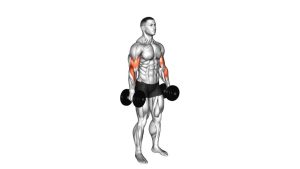
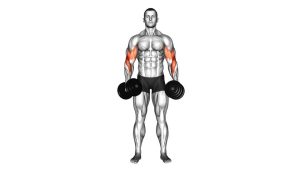
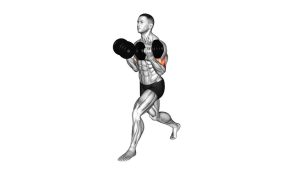
This exercise works best when performed with a strict torso, a full range of motion, and a controlled tempo. In the video, the movement is performed smoothly with minimal body sway, making it a strong example of clean curl mechanics. Focus on moving through the elbows, not the lower back or shoulders, and avoid using momentum just to lift heavier weights.
Quick Overview
| Body Part | Biceps |
|---|---|
| Primary Muscle | Biceps brachii |
| Secondary Muscle | Brachialis, brachioradialis, forearms |
| Equipment | Dumbbells |
| Difficulty | Beginner to Intermediate |
Sets & Reps (By Goal)
- Muscle growth: 3–4 sets × 8–12 reps with controlled lowering and 60–90 sec rest
- Strength focus: 4–5 sets × 5–8 reps with heavier dumbbells and 90–120 sec rest
- Technique / beginners: 2–3 sets × 10–15 reps with lighter weight and strict form
- Finisher / pump work: 2–3 sets × 12–20 reps with lighter load and short rest
Progression rule: Add reps before adding weight. Only increase load when you can complete every rep without torso swing, elbow flare, or shortened range of motion.
Setup / Starting Position
- Stand tall: Place your feet about hip- to shoulder-width apart for a stable base.
- Hold a dumbbell in each hand: Let your arms hang naturally by your sides.
- Set your posture: Keep your chest up, shoulders back and down, and core lightly braced.
- Elbows close to the body: Your upper arms should stay near your torso throughout the set.
- Start with palms forward or slightly turned in: Maintain a comfortable grip with neutral wrists.
Tip: Before your first rep, think “stand still and curl through the elbows”. That single cue prevents most common mistakes.
Execution (Step-by-Step)
- Brace and stay tall: Keep your torso steady and avoid leaning backward to start the curl.
- Curl the dumbbells upward: Flex at the elbows and bring the weights toward shoulder height.
- Keep the elbows mostly fixed: A tiny forward shift is natural, but do not let the shoulders take over.
- Squeeze at the top: Contract the biceps hard when the dumbbells reach the upper portion of the rep.
- Lower under control: Slowly return the dumbbells to the starting position without dropping them.
- Repeat smoothly: Maintain the same tempo and range on every rep.
Pro Tips & Common Mistakes
- Keep your torso still: Avoid swinging to create momentum.
- Don’t let the elbows drift too far forward: Too much shoulder movement reduces direct biceps tension.
- Use full range of motion: Fully extend at the bottom without relaxing all tension.
- Lower slower than you lift: The eccentric phase is where a lot of growth stimulus happens.
- Keep wrists neutral: Don’t bend them back excessively during the curl.
- Choose the right load: If you can’t control the last third of the lowering phase, the dumbbells are probably too heavy.
- Match both sides: Keep the same tempo and path with both arms to avoid uneven development.
FAQ
What muscles does the dumbbell standing biceps curl work?
The exercise primarily targets the biceps brachii. It also trains the brachialis, brachioradialis, and forearm muscles that help stabilize the dumbbells.
Should I curl both dumbbells at the same time or alternate them?
Both methods can work. Curling both at once is efficient and keeps tension symmetrical, while alternating reps can help you focus on one arm at a time.
How heavy should I go on standing dumbbell curls?
Use a weight that lets you keep your elbows close, control the top position, and lower the dumbbells slowly. If you need to swing, lean back, or shorten the movement, go lighter.
Is a slight elbow movement at the top okay?
A small amount can happen naturally, but the curl should still be driven mainly by the elbows. Large forward elbow travel usually turns it into more of a front-delt-assisted movement.
Are dumbbell curls better than barbell curls?
Dumbbell curls are excellent because they let each arm work independently, which can improve symmetry and comfort. Barbell curls can allow heavier loading, but dumbbells often feel more natural on the wrists and elbows.
Recommended Equipment
- Adjustable Dumbbells — ideal for progressive overload without needing multiple separate pairs
- Rubber Hex Dumbbells — a durable classic option for home or commercial-style training
- Compact Dumbbell Rack — helps organize your training space and keeps dumbbells easy to access
- Weightlifting Gloves — useful if you want extra grip comfort during higher-rep sets
- Adjustable Weight Bench — helpful if you want to add seated, incline, or concentration curl variations to your arm training
Tip: For this exercise, the most important investment is simply a good pair of dumbbells. Everything else is optional support equipment.