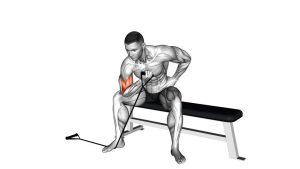
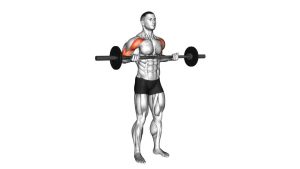
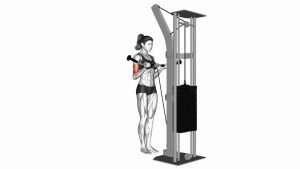
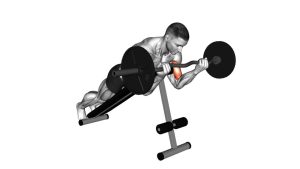
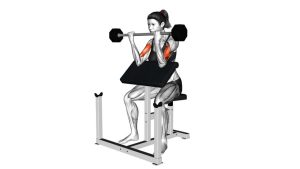
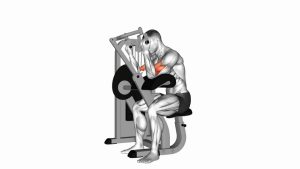
Dumbbell Standing Preacher Curl: Proper Form, Muscles Worked, Sets, Tips & FAQ
Learn how to do the Dumbbell Standing Preacher Curl with proper form to isolate the biceps and build stronger upper arms. Includes muscles worked, setup, execution, sets and reps, common mistakes, FAQ, and recommended equipment.
Dumbbell Standing Preacher Curl
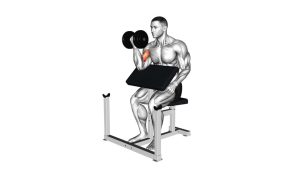
Because the preacher pad fixes the upper arm in place, this curl variation makes it much harder to cheat the weight up with body swing or shoulder movement. The result is a cleaner, more focused stimulus on the biceps and brachialis. Use a load you can control from the bottom to the top without jerking, twisting, or losing contact with the pad.
Quick Overview
| Body Part | Biceps |
|---|---|
| Primary Muscle | Biceps brachii |
| Secondary Muscle | Brachialis, brachioradialis, forearm flexors |
| Equipment | Dumbbell, preacher bench |
| Difficulty | Beginner to Intermediate |
Sets & Reps (By Goal)
- Muscle growth: 3-4 sets × 8-12 reps per arm with 60-90 seconds rest
- Strength-focused arm work: 4-5 sets × 6-8 reps per arm with 90-120 seconds rest
- Controlled isolation / mind-muscle connection: 2-4 sets × 10-15 reps per arm with slow tempo
- Finisher for arm day: 2-3 sets × 12-15 reps per arm with moderate weight and strict form
Progression rule: Add reps before adding load. Once you can complete all target reps with clean control, full pad contact, and a strong squeeze at the top, increase the dumbbell slightly.
Setup / Starting Position
- Stand behind the preacher bench: Position yourself so your working upper arm rests comfortably on the angled pad.
- Set the armpit near the top of the pad: The back of the upper arm should stay fully supported throughout the rep.
- Grab a dumbbell with a supinated grip: Your palm should face upward before the curl begins.
- Start near full extension: Lower the dumbbell until your elbow is almost straight, but avoid aggressively locking it out.
- Brace your torso: Keep your chest steady, shoulders square, and wrist neutral before starting the lift.
Tip: Use a lighter weight than you would for standing curls. The preacher position removes momentum and makes each rep feel harder.
Execution (Step-by-Step)
- Set tension at the bottom: Keep your upper arm pressed into the pad and engage the biceps before the dumbbell moves.
- Curl the weight upward: Flex at the elbow and raise the dumbbell in a smooth arc toward your shoulder.
- Keep the upper arm fixed: Do not let the elbow drift or lift off the pad as the dumbbell rises.
- Squeeze at the top: Pause briefly when the forearm reaches near vertical and contract the biceps hard without losing posture.
- Lower slowly: Reverse the motion under control until you return to the bottom position with tension still on the muscle.
- Repeat for the target reps: Maintain the same path and tempo on every repetition, then switch arms if training one side at a time.
Pro Tips & Common Mistakes
- Keep constant pad contact: The upper arm should stay planted against the preacher bench from start to finish.
- Control the eccentric: The lowering phase is one of the best parts of the exercise for biceps growth.
- Do not overload the movement: Too much weight usually leads to shoulder involvement and sloppy bottom-range mechanics.
- Keep your wrist neutral: Excessive wrist flexion or extension can reduce comfort and shift tension away from the biceps.
- Avoid elbow lockout: Slamming into the bottom can irritate the joint and reduce muscular control.
- Train both arms evenly: This variation is excellent for identifying left-to-right imbalances in strength and technique.
FAQ
What muscles does the Dumbbell Standing Preacher Curl work?
The main target is the biceps brachii. It also involves the brachialis, brachioradialis, and supporting forearm muscles that help stabilize the dumbbell.
Is this better than a regular dumbbell curl?
It is not always better, but it is more strict and isolating. The preacher bench reduces momentum and helps place more focused tension on the biceps, especially in the lower and middle range.
Should I do it one arm at a time or both arms together?
Most people perform it one arm at a time with a dumbbell. This makes it easier to focus on form, contraction quality, and correcting side-to-side imbalances.
Why does the bottom of the movement feel harder?
The preacher setup removes a lot of cheating and momentum, which makes the stretched portion of the curl more demanding. That is normal, but you should still stay controlled and avoid forcing the elbow into lockout.
Can beginners use the Dumbbell Standing Preacher Curl?
Yes. It is beginner-friendly as long as the weight is light enough to control. Start conservatively and focus on smooth reps, a stable upper arm, and full control through the lowering phase.
Recommended Equipment
- Adjustable Dumbbells — ideal for progressive overload and easy weight changes during biceps training
- Preacher Curl Bench — provides proper upper-arm support for strict preacher curl form
- Weight Bench with Preacher Pad — useful if you want a compact home-gym setup with arm isolation support
- Lifting Straps — optional for lifters whose grip fatigues before their biceps during higher-rep work
- Exercise Mat — helps create a more stable standing position and protects your floor in home setups
Choose equipment that allows strict execution, stable positioning, and smooth loading rather than chasing the heaviest setup possible.