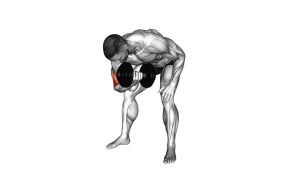
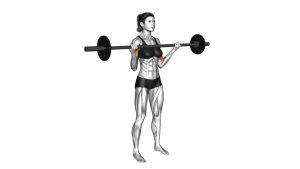
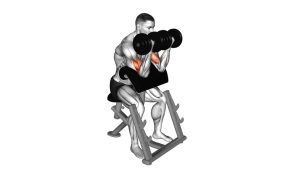
Suspender Arm Curl: Proper Form, Benefits, Sets, Tips & FAQ
Learn how to perform the Suspender Arm Curl with proper form to build stronger biceps and improve arm definition. Includes step-by-step execution, sets and reps by goal, common mistakes, FAQs, and recommended equipment.
Suspender Arm Curl
The Suspender Arm Curl is especially useful for lifters who want better biceps isolation without relying on heavy free weights. Because the resistance stays active from the stretched position to the top contraction, this movement can improve the mind-muscle connection, increase time under tension, and help build fuller upper arms. It works well as a main biceps exercise in a lighter workout or as a finishing movement after rows, pulldowns, or other pulling exercises.
Quick Overview
| Body Part | Biceps |
|---|---|
| Primary Muscle | Biceps brachii |
| Secondary Muscle | Brachialis, brachioradialis, forearm flexors |
| Equipment | Suspension trainer or resistance band system with handles |
| Difficulty | Beginner to Intermediate |
Sets & Reps (By Goal)
- Muscle growth: 3–4 sets × 8–15 reps with controlled tempo and 45–75 seconds rest
- Endurance / pump work: 2–4 sets × 15–20 reps with lighter resistance and shorter rest
- Technique practice: 2–3 sets × 10–12 reps with slow reps and strict form
- Finisher after back or arm training: 2–3 sets × 12–18 reps focusing on full squeeze
Progression rule: First improve rep quality, then add reps, then increase resistance. Do not progress by using body swing or shortening the range of motion.
Setup / Starting Position
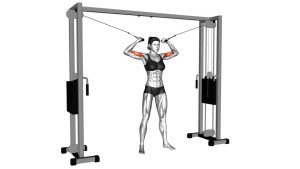
- Set the anchor: Attach the suspenders or band system securely behind you or slightly above shoulder height.
- Grab the handles: Use a supinated grip so your palms face upward or slightly forward.
- Stand tall: Place your feet about hip-width apart and keep your chest up with your core braced.
- Position the arms: Let your arms extend downward with a slight backward pull from the resistance.
- Lock in posture: Keep your shoulders relaxed, elbows close to your sides, and wrists straight before starting.
Tip: Step forward or backward slightly until you feel tension at the bottom without losing balance or shoulder position.
Execution (Step-by-Step)
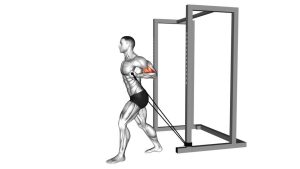
- Start under tension: Begin with your arms extended and the handles pulling lightly from behind.
- Curl the handles upward: Bend your elbows and bring your hands toward shoulder level in a smooth arc.
- Keep the elbows controlled: Let them stay close to your torso without flaring wide or drifting excessively forward.
- Squeeze at the top: Pause briefly when the biceps are fully contracted.
- Lower with control: Slowly extend your arms back to the starting position without letting the resistance snap you back.
- Repeat evenly: Maintain the same tempo and posture on every rep.
Pro Tips & Common Mistakes
- Keep tension at the bottom: Do not relax completely between reps if you want a stronger hypertrophy effect.
- Control the eccentric: Lower slowly for better biceps stimulus and safer elbow mechanics.
- Do not lean back: Swinging the torso reduces isolation and shifts work away from the biceps.
- Keep wrists neutral: Avoid excessive wrist bending to prevent unnecessary forearm strain.
- Avoid shoulder takeover: Do not let the shoulders roll forward or rise upward during the curl.
- Use a full but comfortable range: Extend fully at the bottom and squeeze at the top without forcing painful joint positions.
- Adjust resistance carefully: Too much tension often causes cheating before the biceps are truly fatigued.
FAQ
What muscles does the Suspender Arm Curl work?
The exercise mainly targets the biceps brachii. It also involves the brachialis, brachioradialis, and forearm muscles that help stabilize the grip and elbow.
Is the Suspender Arm Curl better than a dumbbell curl?
It is not necessarily better in every situation, but it provides continuous tension and a strong stretch at the bottom that many lifters find excellent for biceps isolation and higher-rep pump work.
Should I use heavy resistance for this exercise?
Usually, moderate resistance works best. If the load is too heavy, you will start leaning back, shortening the rep, or using your shoulders to help. Strict form matters more than maximum resistance here.
Where should I feel the exercise?
You should feel it mostly in the front of the upper arms, especially through the middle and top of the curl. You may also notice forearm involvement from gripping the handles, but the biceps should do most of the work.
Can beginners use the Suspender Arm Curl?
Yes. Beginners can use lighter resistance and focus on posture, elbow control, and slow tempo. It is a good option for learning how to isolate the biceps without lifting heavy free weights.
Recommended Equipment
- Suspension Trainer Straps — ideal for bodyweight-assisted and handle-based arm training variations
- Resistance Bands with Handles — versatile for standing curls, presses, rows, and travel workouts
- Door Anchor for Resistance Bands — helps create a secure anchor point at different heights for better setup options
- Exercise Grip Handles for Bands — useful for improving comfort and control during repeated curl sets
- Home Gym Exercise Mat — provides better footing and stability during standing resistance exercises
Tip: Choose equipment that allows smooth resistance and a secure anchor point. Stable setup equals better form and safer reps.