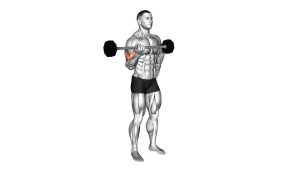
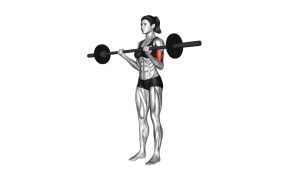
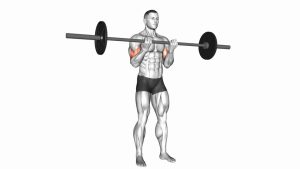
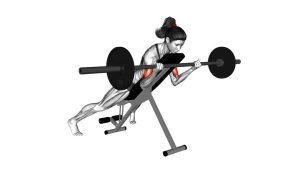
Barbell Standing Wide-Grip Biceps Curl: Form, Muscles Worked, Sets, Tips & FAQ
Learn how to perform the Barbell Standing Wide-Grip Biceps Curl with proper form. Discover muscles worked, setup, execution steps, sets and reps by goal, common mistakes, FAQs, and recommended equipment.
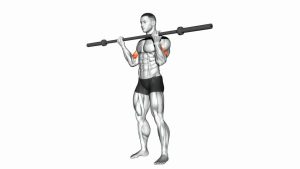
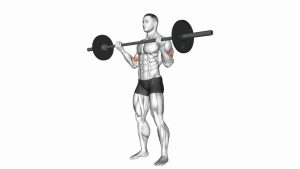
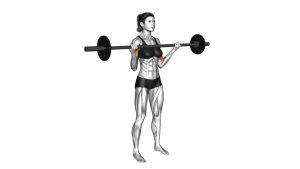
Barbell Standing Wide-Grip Biceps Curl
This variation works best when you use a moderate load and focus on strict technique. A wide grip can make the curl feel slightly less natural than a standard-width setup, so posture and elbow control matter even more. You should feel the biceps doing the work from the bottom to the top of each rep, with minimal help from the hips, lower back, or shoulders.
Quick Overview
| Body Part | Biceps |
|---|---|
| Primary Muscle | Biceps brachii (short head emphasis) |
| Secondary Muscle | Brachialis, brachioradialis, forearm flexors |
| Equipment | Barbell with weight plates |
| Difficulty | Beginner to Intermediate |
Sets & Reps (By Goal)
- Muscle growth: 3–4 sets × 8–12 reps with 60–90 seconds rest
- Strength focus: 4–5 sets × 5–8 reps with 90–120 seconds rest
- Technique and control: 2–3 sets × 10–15 reps with a slower tempo and lighter load
- Arm-finisher work: 2–3 sets × 12–15 reps with controlled reps and full squeeze
Progression rule: Increase weight only when you can complete all target reps without torso swing, elbow drift, or losing control of the lowering phase.
Setup / Starting Position
- Stand tall: Place your feet about hip- to shoulder-width apart and brace your core.
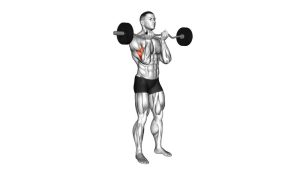
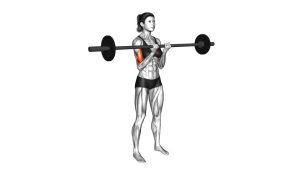
- Take a wide grip: Grab the bar wider than shoulder width with an underhand grip.
- Let the bar hang naturally: Start with arms extended and the bar resting near the upper thighs.
- Set your shoulders: Keep the chest up and shoulders back without shrugging.
- Lock in the elbows: Keep them close to your sides, allowing only a natural slight flare from the wider grip.
Tip: Choose a grip width that feels strong and comfortable. Too wide can reduce control and increase wrist strain.
Execution (Step-by-Step)
- Start from full extension: Keep the bar near your thighs with the biceps stretched and wrists neutral.
- Curl the bar upward: Bend at the elbows and drive the bar toward your upper torso without swinging your body.
- Keep the upper arms steady: Avoid turning the movement into a front raise by lifting the elbows too high.
- Squeeze at the top: Pause briefly when the bar reaches upper-ab level or lower chest level, depending on your structure.
- Lower under control: Slowly return the bar to the start until the arms are fully extended again.
Pro Tips & Common Mistakes
- Use strict form: Momentum reduces biceps tension and shifts stress to the lower back.
- Do not go too heavy: Wide-grip curls are most effective when the biceps stay under tension.
- Control the eccentric: Lowering slowly helps improve muscle recruitment and rep quality.
- Keep wrists neutral: Excessive wrist extension can create discomfort and weaken your pulling line.
- Do not let elbows drift forward too early: A small natural shift is fine, but excessive movement turns it into a different exercise.
- Train through full range: Avoid half reps unless they are used intentionally as an advanced intensity technique.
FAQ
What does the wide grip change in this curl?
A wider grip generally increases emphasis on the short head of the biceps, which can help develop the inner upper-arm look while still training the full biceps brachii.
Is this better than a standard barbell curl?
Not necessarily better—just different. A standard-width curl is more general, while the wide-grip version slightly shifts the emphasis. Both can be useful in a balanced arm program.
Should I lock out fully at the bottom?
Yes, in most cases you should return close to full elbow extension to train a complete range of motion, as long as you stay in control and do not relax completely between reps.
Can beginners do wide-grip barbell curls?
Yes. Beginners can use this movement effectively if they start with a manageable load, keep the torso steady, and focus on smooth reps instead of chasing heavy weight.
What is the biggest mistake in this exercise?
The most common mistake is using too much momentum. Leaning back and swinging the bar reduces biceps isolation and usually makes the set less effective.
Recommended Equipment
- Olympic EZ Curl Bar — a useful alternative curl bar option for lifters who want a more wrist-friendly grip
- Weight Plates for Barbell Training — essential for progressive overload and long-term arm development
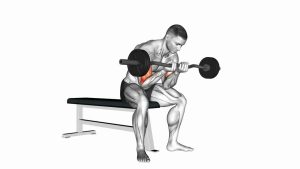
- Adjustable Workout Bench — helps expand your arm program with incline curls, concentration work, and seated variations
- Biceps Curl Support / Arm Blaster — helps keep the elbows in position and encourages stricter curl mechanics
- Lifting Straps — optional for reducing grip fatigue during high-volume upper-body training
Choose equipment that matches your training level and comfort. Good curl training is built on control, progressive overload, and consistent technique.