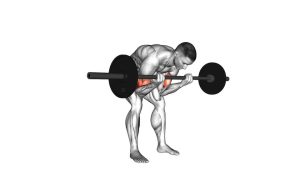
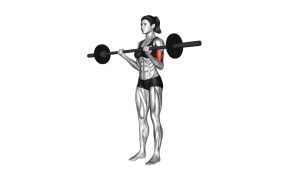
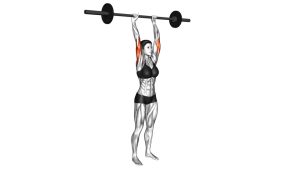
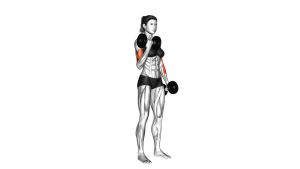
Barbell Alternate Biceps Curl: Form, Muscles Worked, Sets, Tips & FAQ
Learn how to perform the Barbell Alternate Biceps Curl with strict form to build stronger, fuller biceps. Includes muscles worked, setup, step-by-step execution, sets and reps by goal, common mistakes, FAQs, and recommended equipment.
Barbell Alternate Biceps Curl
This exercise works best when the movement stays smooth, deliberate, and strict. The goal is to load the biceps without turning the rep into a full-body swing. You should feel the front of the upper arms doing most of the work, with the forearms assisting to stabilize the bar. The alternating emphasis can help expose strength differences between arms and improve control during every rep.
Quick Overview
| Body Part | Biceps |
|---|---|
| Primary Muscle | Biceps brachii |
| Secondary Muscle | Brachialis, brachioradialis, forearm flexors |
| Equipment | Barbell (straight bar or EZ curl bar), optional collars |
| Difficulty | Beginner to Intermediate |
Sets & Reps (By Goal)
- Muscle growth: 3–4 sets × 8–12 reps with controlled tempo and 60–90 sec rest
- Strength-focused arm work: 4–5 sets × 5–8 reps with heavier weight and 90–120 sec rest
- Technique and control: 2–3 sets × 10–15 reps with lighter load and slower lowering phase
- Finisher / pump work: 2–3 sets × 12–15 reps with short rest and strict form
Progression rule: Add reps first, then increase load in small jumps. Only go heavier if you can keep the elbows stable and avoid torso swing.
Setup / Starting Position
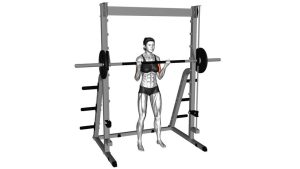
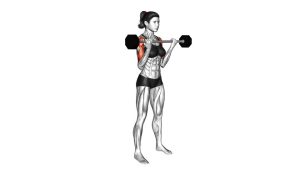
- Stand tall: Place your feet about hip-width apart and brace your core lightly.
- Grip the bar: Use an underhand grip around shoulder width or slightly narrower, depending on comfort.
- Let the bar hang naturally: Start with the bar near your thighs and arms fully extended.
- Pin the elbows close: Keep your elbows near your torso so the upper arms do not drift forward.
- Set posture: Chest up, shoulders down and back, wrists neutral, neck relaxed.
Tip: An EZ curl bar can feel more comfortable on the wrists for many lifters during high-volume biceps work.
Execution (Step-by-Step)
- Start from the bottom: With the bar at thigh level, tighten your grip and keep your body still.
- Begin the curl: Flex the elbows to raise the bar upward while keeping the elbows tucked.
- Apply alternating emphasis: Let one arm subtly lead the curl, then allow the other to match it as the bar rises.
- Lift under control: Bring the bar toward the upper abdomen or lower chest without swinging your torso.
- Squeeze at the top: Briefly contract the biceps hard while keeping tension on both arms.
- Lower slowly: Return the bar to the start under control, resisting gravity the whole way down.
- Repeat evenly: Alternate the leading side from rep to rep, or keep the emphasis balanced across the set.
Pro Tips & Common Mistakes
- Keep the elbows quiet: The more the elbows travel forward, the less strict the curl becomes.
- Do not lean back: Excess torso swing shifts tension away from the biceps and into momentum.
- Control the eccentric: Lowering slowly improves biceps tension and makes lighter weights more effective.
- Use a manageable load: Alternating emphasis works best when you can feel each side rather than just surviving the rep.
- Keep wrists stacked: Avoid excessive wrist extension to reduce strain and keep force transfer clean.
- Alternate with intention: The leading side should change subtly, not become a lopsided cheat curl.
- Do not rush the top: A brief squeeze helps reinforce the biceps contraction before lowering.
FAQ
What is the benefit of alternating emphasis during a barbell curl?
It can improve awareness of each arm, help expose left-to-right strength differences, and make the curl feel more controlled instead of purely symmetrical and automatic.
Is this better than regular barbell curls?
Not necessarily better for everyone, but it is a useful variation. Standard barbell curls are great for straightforward loading, while this version can add control, coordination, and unilateral focus.
Should I use a straight bar or an EZ curl bar?
Both can work. A straight bar often feels more traditional, while an EZ curl bar may be more wrist-friendly for lifters who feel discomfort with a fixed straight-bar grip.
How heavy should I go?
Choose a weight that lets you keep the torso still, the elbows close, and the lowering phase controlled. If you need to swing the bar up, the load is too heavy for this variation.
Can beginners use this exercise?
Yes. Beginners can use it with light weight to learn curl mechanics, but the best results come from mastering strict form before chasing heavy loads.
Recommended Equipment
- Olympic EZ Curl Bar — a wrist-friendlier bar option for biceps and triceps work
- Quick-Release Barbell Collars — helps keep plates secure during curls and other barbell lifts
- Lifting Wrist Wraps — useful for added wrist support during heavier curl sets
- Olympic Weight Plates — lets you progress loading gradually as your arm strength improves
- Home Gym Floor Mat — protects flooring and creates a more stable lifting area
Tip: For lifters who feel wrist discomfort on straight-bar curls, an EZ curl bar is often the easiest equipment upgrade to try first.