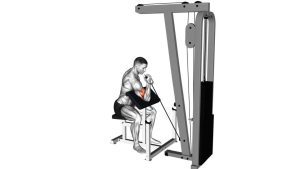
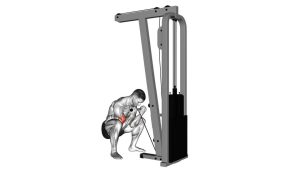
Cable Seated One-Arm Concentration Curl: Form, Muscles Worked, Sets, Tips & FAQ
Learn how to do the Cable Seated One-Arm Concentration Curl with proper form. Discover muscles worked, setup, step-by-step execution, sets and reps by goal, common mistakes, FAQs, and recommended equipment.
Cable Seated One-Arm Concentration Curl
This variation combines the strict feel of a concentration curl with the constant resistance of a cable. Because the pulley keeps tension on the arm through most of the rep, it is excellent for controlled hypertrophy work, cleaner reps, and reducing the urge to swing the weight. It works best with moderate loads, a fixed elbow position, and a deliberate squeeze at the top.
Quick Overview
| Body Part | Biceps |
|---|---|
| Primary Muscle | Biceps brachii |
| Secondary Muscle | Brachialis, brachioradialis, forearm flexors |
| Equipment | Low cable machine, single handle attachment, flat bench |
| Difficulty | Beginner to Intermediate |
Sets & Reps (By Goal)
- Muscle growth: 3-4 sets × 8-12 reps per arm, 45-75 sec rest
- Mind-muscle connection: 2-3 sets × 10-15 reps per arm with a 1-2 sec top squeeze
- Strict finishing work: 2-3 sets × 12-15 reps per arm using controlled tempo
- Technique practice: 2 sets × 8-10 reps per arm with light load and perfect form
Progression rule: Increase reps first, then raise the load slightly. Keep the elbow planted, range of motion clean, and tempo controlled before adding more weight.
Setup / Starting Position
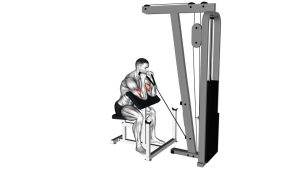
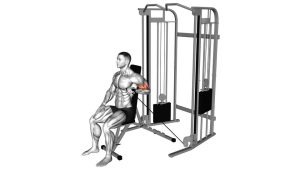
- Set the pulley low: Attach a single D-handle to the low cable pulley.
- Sit on a flat bench: Position yourself facing the machine at an angle that lets the cable track smoothly into your hand.
- Brace the working arm: Lean slightly forward and press the back of your upper arm or elbow area against the inside of your thigh.
- Plant your feet: Keep both feet flat on the floor for balance and torso control.
- Start fully extended: Let the arm lengthen at the bottom while keeping tension on the cable and your wrist neutral.
Tip: Sit close enough to maintain tension at the bottom, but not so close that the cable line feels cramped or pulls your shoulder forward.
Execution (Step-by-Step)
- Lock in your position: Keep your chest stable, elbow braced, and shoulders relaxed.
- Curl the handle upward: Flex the elbow and bring the handle toward your shoulder without lifting the elbow off the thigh.
- Squeeze at the top: When your forearm reaches the fully curled position, contract the biceps hard for 1-2 seconds.
- Lower slowly: Reverse the motion under control until the arm is nearly straight again.
- Repeat smoothly: Maintain continuous tension and avoid bouncing into the next repetition.
Pro Tips & Common Mistakes
- Keep the elbow planted: The more stable the elbow, the more isolated the biceps feel.
- Do not swing the torso: Momentum turns this into a sloppy curl instead of a strict isolation exercise.
- Control the eccentric: Lowering slowly helps maintain cable tension and improves hypertrophy stimulus.
- Use a neutral wrist: Avoid excessive wrist curling, which shifts stress away from the biceps.
- Do not overload too early: This movement is about precision and contraction, not maximum weight.
- Pause at the top: A brief squeeze can improve mind-muscle connection and make lighter loads more effective.
FAQ
What makes this different from a dumbbell concentration curl?
The cable provides more continuous tension through the rep, especially when you control the lowering phase. That makes it great for maintaining biceps engagement from bottom to top.
Should I use heavy weight on this exercise?
Usually no. This movement works best with moderate loads that let you keep the elbow fixed, the wrist stable, and the top contraction clean.
Where should I feel the cable seated one-arm concentration curl?
You should feel it mainly in the biceps of the working arm, with some assistance from the brachialis and forearm muscles. You should not feel the movement dominated by your shoulder or lower back.
Can beginners use this exercise?
Yes. It is beginner-friendly as long as the load stays light enough to control the cable path and keep the elbow braced.
When should I place it in my workout?
It fits best in the middle or end of an upper-body or arm workout after your heavier pulling and rowing movements are done.
Recommended Equipment
- Single D-Handle Cable Attachment — ideal for comfortable one-arm cable curls and better grip positioning
- Adjustable Weight Bench — useful for stable seated setup and many other upper-body exercises
- Resistance Bands Set — great for warm-ups, biceps activation, and travel-friendly arm training
- Lifting Straps — helpful if grip fatigue limits your pulling volume before arm isolation work
- Exercise Mat — adds floor comfort and can make your training area cleaner and more stable
Tip: Prioritize a comfortable cable handle and a stable bench first. Those two usually make the biggest difference for this exercise.