Dumbbell Standing Triceps Extension: Proper Form, Sets, Tips & FAQ
Learn how to perform the Dumbbell Standing Triceps Extension with proper form. Discover setup cues, step-by-step execution, sets by goal, common mistakes, FAQs, and recommended equipment.
Dumbbell Standing Triceps Extension
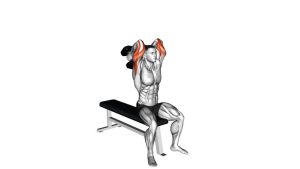
This exercise works best when you focus on controlled elbow movement rather than using momentum. The upper arms should stay relatively fixed while the forearms move through a full range of motion. You should feel a deep stretch in the triceps at the bottom and a strong contraction at the top. Avoid excessive lower-back arching, flared elbows, or rushing through the rep.
Quick Overview
| Body Part | Triceps |
|---|---|
| Primary Muscle | Triceps brachii (especially the long head) |
| Secondary Muscle | Anterior deltoids, forearms, core stabilizers |
| Equipment | One dumbbell |
| Difficulty | Beginner to Intermediate |
Sets & Reps (By Goal)
- Muscle growth: 3–4 sets × 8–12 reps with 60–90 sec rest
- Strength emphasis: 4–5 sets × 5–8 reps with 90–120 sec rest
- Endurance / toning: 2–3 sets × 12–20 reps with 45–60 sec rest
- Technique practice: 2–3 sets × 10–12 reps using a light weight and slow tempo
Progression rule: Increase reps first, then raise the load gradually once you can maintain a full range of motion, steady elbows, and a neutral torso.
Setup / Starting Position
- Stand tall: Place your feet about hip-width apart and keep your weight evenly distributed.
- Grip the dumbbell securely: Hold one dumbbell with both hands around the inner handle or top plate area.
- Raise it overhead: Press the dumbbell above your head until your arms are nearly straight.
- Brace your torso: Tighten your core and glutes to prevent the lower back from arching.
- Set elbow position: Keep your elbows close to your head and pointing forward as much as possible.
Tip: A staggered stance can help some lifters feel more stable, but the torso should still stay upright and controlled.
Execution (Step-by-Step)
- Start at lockout: Hold the dumbbell overhead with the elbows extended and the core braced.
- Lower slowly: Bend at the elbows and guide the dumbbell down behind your head in a controlled arc.
- Keep upper arms steady: Let the forearms move while the elbows stay relatively fixed in place.
- Reach the stretch: Lower until you feel a comfortable stretch in the triceps without losing posture.
- Extend back up: Contract the triceps and straighten the elbows to return the dumbbell to the overhead position.
- Repeat smoothly: Maintain the same path and tempo on every rep without swinging or leaning back.
Pro Tips & Common Mistakes
- Keep the elbows in: Slight flare is normal, but too much takes tension away from the triceps.
- Use full range of motion: Lower deep enough to feel the stretch, then fully extend at the top.
- Don’t rush the eccentric: A controlled lowering phase improves tension and protects the joints.
- Avoid lower-back arching: Brace the abs and squeeze the glutes to keep the spine neutral.
- Don’t use excessive weight: Too much load often turns the movement into a shoulder-and-back compensation pattern.
- Keep wrists stable: Avoid excessive wrist bending while supporting the dumbbell overhead.
FAQ
What muscles does the dumbbell standing triceps extension work?
It primarily targets the triceps brachii, especially the long head, while the shoulders, forearms, and core help stabilize the movement.
Why is the overhead position effective for triceps growth?
The overhead arm position places the long head of the triceps under more stretch, which can make this variation especially effective for upper-arm development.
Should I use one dumbbell or two?
Most people perform this exercise with one dumbbell held by both hands. That setup is usually easier to control and works well for focused triceps isolation.
Can beginners do this exercise?
Yes. Beginners can use a light dumbbell and focus on posture, elbow control, and smooth tempo before increasing the weight.
What are the most common mistakes?
The most common mistakes are flaring the elbows too much, arching the lower back, using momentum, and choosing a weight that is too heavy to control properly.
Recommended Equipment (Optional)
- Adjustable Dumbbell — versatile option for progressive overload and home triceps training
- Hex Dumbbell — simple, durable choice for overhead extensions and other arm exercises
- Weightlifting Bench — useful for pairing this movement with seated or lying triceps variations
- Lifting Gloves — can improve grip comfort and reduce hand fatigue during dumbbell work
- Resistance Bands Set — excellent for warm-ups, triceps finishers, and joint-friendly accessory work
Tip: Choose equipment that helps you maintain control, comfort, and progressive overload without sacrificing technique.