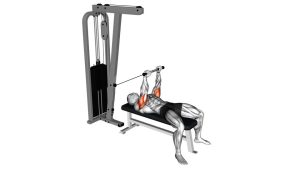
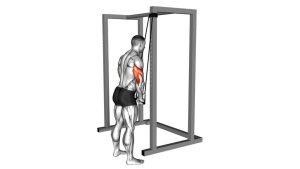
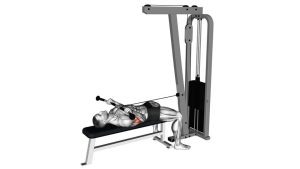
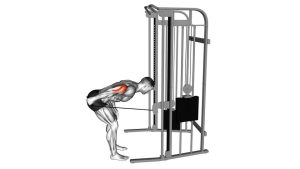
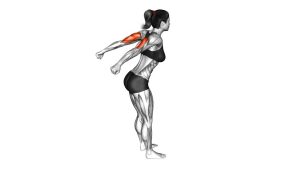
Cable Standing High Cross Triceps Extension: Form, Sets, Tips & FAQ
Learn the Cable Standing High Cross Triceps Extension with proper form, setup, execution cues, sets by goal, common mistakes, FAQs, and recommended cable attachments for better triceps growth.
Cable Standing High Cross Triceps Extension
This exercise works best when you focus on precision, elbow control, and continuous tension. Instead of trying to move the whole arm, think about keeping the shoulder quiet while the elbow extends fully. You should feel the triceps doing most of the work, not momentum, torso twisting, or excessive front-delt involvement.
Quick Overview
| Body Part | Triceps |
|---|---|
| Primary Muscle | Triceps brachii (long head emphasis) |
| Secondary Muscle | Lateral head of triceps, shoulder stabilizers, core stabilizers |
| Equipment | Cable machine with a high pulley and single D-handle attachment |
| Difficulty | Intermediate |
Sets & Reps (By Goal)
- Muscle growth: 3-4 sets × 10-15 reps per arm, 45-75 sec rest
- Controlled isolation work: 2-4 sets × 12-20 reps per arm, slow eccentric, 45-60 sec rest
- Accessory work after pressing: 2-3 sets × 10-12 reps per arm, moderate load, 45-60 sec rest
- Finisher / pump work: 2-3 sets × 15-20 reps per arm, light-to-moderate load, short rest
Progression rule: Add reps first, then increase load slightly once you can maintain a clean cross-body path, full elbow extension, and controlled returns without torso rotation.
Setup / Starting Position
- Set the pulley high: Position the cable above head level so the line of pull travels downward.
- Attach a single handle: A D-handle works best for a natural wrist position and one-arm control.
- Stand in a stable stance: Use a split or staggered stance for balance, with your core braced.
- Grab the handle with one hand: The working arm starts bent, with the elbow elevated and the forearm angled toward the cable.
- Lock in the upper arm: Keep the upper arm relatively fixed so the elbow becomes the main hinge of the movement.
- Keep the wrist neutral: Avoid curling or extending the wrist as you prepare to press through the rep.
Tip: Take a small step away from the stack until the cable already feels tight in the starting position.
Execution (Step-by-Step)
- Brace and align: Stand tall, lock in your stance, and keep your ribcage stacked over your hips.
- Start with the elbow bent: Let the forearm point up toward the cable while keeping the upper arm steady.
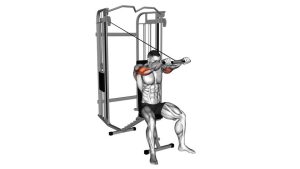
- Extend the elbow: Drive the handle down and across the body in a controlled cross-body arc.
- Squeeze at the bottom: Reach near full elbow extension and contract the triceps hard without slamming into lockout.
- Return slowly: Let the handle travel back up under control until you feel a stretch, but do not let the shoulder roll forward.
- Repeat smoothly: Keep each rep consistent with no jerking, twisting, or shrugging.
Pro Tips & Common Mistakes
- Keep the upper arm steady: Too much shoulder movement turns this into a mixed pressing pattern instead of a triceps isolation exercise.
- Use a smooth cross-body path: Don’t force a straight-down line if the handle naturally tracks slightly inward.
- Control the eccentric: The lowering phase helps maintain tension and improves elbow control.
- Don’t go too heavy: Excess load usually causes torso twisting, cable yanking, and poor peak contraction.
- Keep your wrist neutral: Let the triceps extend the elbow instead of compensating through the hand and forearm.
- Avoid aggressive lockout: Finish the rep strongly, but don’t snap the elbow straight at the bottom.
- Use a split stance if needed: A staggered base often makes the line of pull easier to resist.
- Train both arms evenly: Match reps and tempo on each side to avoid side-to-side differences.
FAQ
What part of the triceps does this exercise emphasize?
This variation strongly emphasizes the long head of the triceps because of the high cable angle and the stretched starting position, while still training the entire triceps through elbow extension.
Is this better than regular cable pushdowns?
It is not necessarily better, but it is different. Regular pushdowns are simpler and easier to load, while this version can feel better for lifters who want a cross-body cable path and more long-head tension.
Should I use heavy weight on this exercise?
Usually no. This movement is often most effective with moderate loads, strict form, and continuous cable tension. Going too heavy commonly reduces triceps isolation.
Can beginners use this exercise?
Yes, but many beginners do better first learning standard cable pushdowns or single-arm cable extensions before using this more technical high-cross variation.
How should this fit into a triceps workout?
It works well as a mid-workout or finishing isolation movement after compound presses, dips, or close-grip pressing variations.
Recommended Equipment
- AGQEOKD D Handle Cable Attachment — useful for one-arm cable work with a rotating grip that suits cross-body triceps extensions
- Bells of Steel Extra Long Tricep Rope Cable Attachment — ideal if you want more range of motion and a different triceps cable feel on extension variations
- WEBUP Stirrup Handle Single D-Handle — a practical single-handle option for unilateral cable training and stable wrist positioning
- Ergonomic Tricep Rope Pull Down Attachment — a comfortable rope alternative for triceps-focused cable sessions and accessory arm work
- WNOEY Cable Machine Attachment Set — a broader attachment kit if you want multiple cable options for triceps, back, and upper-body training
Tip: A single D-handle is the most directly relevant attachment for this exercise, while ropes and attachment kits add versatility for the rest of your triceps program.