Cable Bent-Over Single-Arm Neutral Grip Kickback: Form, Sets, Tips & FAQ
Learn how to do the Cable Bent-Over Single-Arm Neutral Grip Kickback with rope attachment to isolate the triceps, improve lockout strength, and build upper-arm definition.
Cable Bent-Over Single-Arm Neutral Grip Kickback with Rope Attachment
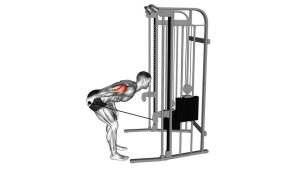
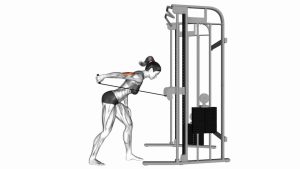
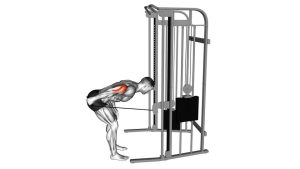
This movement is performed in a bent-over position with one arm working at a time. The torso stays supported and stable while the working elbow remains slightly behind the body. From there, the forearm extends backward until the arm reaches a strong lockout position. The goal is not to swing the arm or move heavy weight. Instead, the purpose is to isolate the triceps with smooth cable tension, a fixed elbow, and a controlled squeeze at the back of every rep.
Because the cable line pulls forward, your triceps must stay active even as you return to the starting position. This makes the exercise especially useful for athletes, bodybuilders, and general lifters who want more detail in the back of the upper arm. It also works well as a finishing exercise after heavier triceps presses, dips, skull crushers, or close-grip pressing movements.
Quick Overview
| Body Part | Triceps |
|---|---|
| Primary Muscle | Triceps brachii, especially the lateral head and long head during the lockout |
| Secondary Muscle | Rear deltoids, core stabilizers, upper back, forearms, and grip muscles |
| Equipment | Cable machine, single rope attachment, and flat bench or stable support |
| Difficulty | Intermediate because it requires strict elbow positioning and anti-rotation control |
Sets & Reps (By Goal)
- Muscle growth: 3–4 sets of 10–15 reps per arm with a 1-second squeeze at full extension.
- Triceps definition: 3–5 sets of 12–20 reps per arm using light-to-moderate weight and slow tempo.
- Strength accessory work: 3–4 sets of 8–12 reps per arm after heavier pressing or triceps movements.
- Mind-muscle connection: 2–3 sets of 15–20 reps per arm with very strict form and controlled breathing.
- Finisher: 2–3 sets of 15–25 reps per arm with short rest and constant cable tension.
Progression rule: Add reps first, then increase weight only when every rep stays controlled. If the elbow moves forward or the shoulder starts swinging, the load is too heavy for clean triceps isolation.
Setup / Starting Position
- Set the cable low: Attach a rope handle to a low cable pulley. The cable should pull slightly forward and downward from the machine.
- Position your body: Stand or kneel beside a flat bench. Place your non-working hand and same-side knee on the bench for support if needed.
- Hinge forward: Keep your torso angled forward with a flat back. Your spine should stay long, not rounded.
- Grip the rope: Hold the rope with a neutral grip, meaning your palm faces inward and your wrist stays straight.
- Set the elbow: Pull the working elbow slightly behind your torso and bend it around 90 degrees.
- Brace your body: Keep your ribs down, core tight, and hips square to the floor. Avoid twisting toward the cable stack.
- Create cable tension: Step far enough away from the machine so the cable is already tight before you begin the first rep.
Your starting position should feel stable and quiet. The working arm should be loaded, but the rest of the body should not be fighting to stay balanced.
Execution (Step-by-Step)
- Brace first: Tighten your core, keep your shoulders level, and lock the upper arm in place.
- Start from a bent elbow: Begin with the elbow flexed around 90 degrees and the rope close to your side.
- Extend the arm backward: Push the rope behind you by straightening the elbow. Do not lift the entire arm with your shoulder.
- Reach full extension: Finish with the arm nearly straight, but avoid aggressive hyperextension.
- Separate the rope slightly: At the back of the movement, let the rope ends spread just enough to intensify the triceps contraction.
- Squeeze the triceps: Pause briefly at the lockout and feel the back of the upper arm contract hard.
- Return slowly: Bend the elbow under control and allow the rope to move forward without letting the cable pull your arm out of position.
- Repeat with precision: Keep the same elbow position, torso angle, and tempo on every rep.
Pro Tips & Common Mistakes
Pro Tips
- Keep the elbow behind the torso: This improves triceps tension and prevents the movement from turning into a cable row.
- Use the rope naturally: Allow a slight outward spread at the end of the rep, but do not over-flare the wrist.
- Train one side carefully: Single-arm work helps you notice strength differences between arms and correct poor control.
- Use lighter weight than expected: This exercise works best when the triceps, not momentum, performs the movement.
- Pause at peak contraction: A short squeeze at full extension makes the exercise much more effective.
- Keep the shoulder quiet: The shoulder should stabilize the arm, not swing the rope backward.
Common Mistakes
- Swinging the torso: Rocking forward and backward reduces triceps isolation and turns the exercise into a momentum drill.
- Letting the elbow drift forward: Once the elbow moves, cable tension shifts away from the target muscle.
- Using too much weight: Heavy loads usually cause shoulder movement, shortened range, and poor lockout control.
- Bending the wrist: Keep the wrist neutral so the force transfers cleanly through the forearm into the triceps.
- Skipping the eccentric: Letting the cable snap back wastes half the rep and increases joint stress.
- Overextending the elbow: Finish strong, but do not force the joint past a comfortable lockout.
FAQ
What muscles does the Cable Bent-Over Single-Arm Neutral Grip Kickback work?
This exercise primarily works the triceps brachii, especially during the final lockout. The long head assists strongly because the upper arm stays slightly behind the torso. The rear deltoid, upper back, forearm, and core also help stabilize the body and keep the arm position controlled.
Is the cable version better than the dumbbell kickback?
The cable version often feels better for constant tension because the cable continues pulling during both the extension and return phase. A dumbbell kickback can be useful, but tension usually changes more throughout the rep. For strict isolation and a stronger squeeze, the cable rope version is usually easier to control.
Should I go heavy on this exercise?
No. This is not a max-strength movement. It works best with light-to-moderate weight, clean elbow control, and a strong contraction at the end of each rep. If you need to twist, swing, or shorten the range, the weight is too heavy.
Where should I feel the exercise?
You should feel the back of the upper arm working, especially near the lockout. You may also feel some stabilizing tension in the rear shoulder and upper back, but the triceps should be the main muscle doing the work.
Can beginners do this exercise?
Beginners can do it if they start light and focus on strict form. However, the movement requires good body positioning and elbow control, so beginners may first learn standard cable pressdowns before adding bent-over single-arm kickbacks.
How do I stop my shoulder from taking over?
Lower the weight, keep the elbow fixed, and slow down the rep. Think about moving only the forearm. If the upper arm swings backward during the rep, reset your position and use a smaller, cleaner range of motion.
Recommended Equipment
- Cable Rope Attachment — the main handle needed for neutral-grip rope kickbacks and pressdowns.
- Single Cable Handle / Strap Attachment — useful for single-arm cable exercises when you want a tighter grip option.
- Adjustable Weight Bench — provides stable support for bent-over single-arm cable work.
- Home Cable Pulley System — a compact option for performing cable triceps exercises at home.
- Weightlifting Gloves or Grip Pads — helps improve grip comfort when using rope attachments for higher-rep sets.
Choose equipment that allows smooth cable movement and secure attachment. A good rope handle and stable bench make this exercise easier to perform with strict triceps isolation.