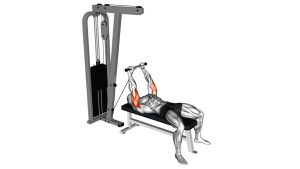
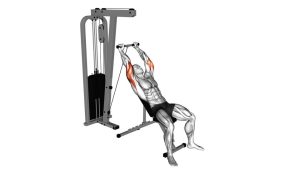
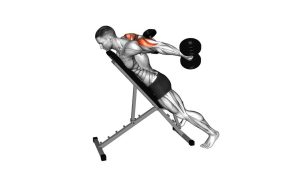
Old School Reverse Extension: Proper Form, Sets, Tips & FAQ
Learn the Old School Reverse Extension for triceps growth with strict behind-the-body form. Discover setup, execution, sets by goal, common mistakes, FAQs, and recommended equipment.
Old School Reverse Extension
This exercise works best with moderate weight, tight body control, and a clean range of motion. Because the bar travels behind the hips, even small changes in elbow position can shift tension away from the triceps. Focus on keeping the upper arms steady, minimizing momentum, and squeezing hard at the top without turning the movement into a shoulder swing.
Quick Overview
| Body Part | Triceps |
|---|---|
| Primary Muscle | Triceps brachii (long head emphasis) |
| Secondary Muscle | Lateral head of triceps, forearms, rear delts for stabilization |
| Equipment | Barbell or EZ-bar |
| Difficulty | Intermediate |
Sets & Reps (By Goal)
- Muscle growth: 3–4 sets × 8–12 reps with controlled tempo and 60–90 seconds rest
- Strict isolation focus: 3–4 sets × 10–15 reps using lighter weight and peak contraction
- Finisher / pump work: 2–3 sets × 12–20 reps with constant tension and short rest
- Strength-support accessory: 3 sets × 6–8 reps, only if technique stays perfectly strict
Progression tip: Add reps before adding load. This exercise punishes sloppy progression, so keep the motion clean, the elbows stable, and the torso quiet before moving heavier weight.
Setup / Starting Position
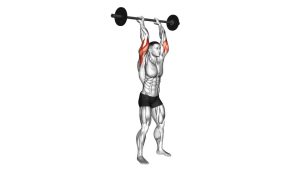
- Stand tall: Set your feet about hip-width apart and keep your chest up with the ribs stacked.
- Grip the bar securely: Use a comfortable overhand or slightly angled EZ-bar grip, roughly shoulder-width apart.
- Place the bar behind the body: Let the bar hang behind your thighs or glutes with the arms extended.
- Set the shoulders: Pull the shoulders gently back and down so the upper arms stay slightly behind the torso.
- Brace lightly: Tighten the core and avoid leaning forward or arching excessively.
A slightly narrower grip often helps many lifters keep the elbows tracking comfortably, but use the position that lets you feel the triceps most clearly.
Execution (Step-by-Step)
- Begin from full extension: Start with the arms straight behind the body and the bar under control.
- Bend at the elbows: Let the bar travel upward behind you by flexing the elbows while keeping the upper arms mostly fixed.
- Bring the bar toward the glutes or lower back area: Stop when you reach a strong contraction without forcing the range.
- Squeeze the triceps: Pause briefly at the top and keep the wrists neutral.
- Lower with control: Extend the elbows slowly until the arms are straight again behind the body.
- Repeat smoothly: Maintain the same bar path and avoid swinging the torso to finish reps.
Pro Tips & Common Mistakes
- Keep the upper arms quiet: Too much shoulder movement turns the exercise into a swing instead of a triceps isolation lift.
- Use moderate weight: This movement feels harder than it looks; chasing heavy load usually ruins the mechanics.
- Control the eccentric: Lowering the bar slowly improves tension and reduces unnecessary joint stress.
- Do not jam the elbows: Lock out firmly, but do not slam into hyperextension.
- Stay upright: Excessive forward lean changes the angle and reduces the behind-the-body emphasis.
- Avoid wrist collapse: Keep the wrists stacked and strong so the triceps stay the limiting factor.
- Use it later in the workout: It usually works best after compound pressing when you want focused triceps volume.
FAQ
What does the Old School Reverse Extension target most?
It primarily targets the triceps, with a strong emphasis on the long head because the arms stay slightly behind the torso throughout the movement.
Is this better with a barbell or an EZ-bar?
Many lifters find an EZ-bar more comfortable on the wrists, while a straight bar can feel more direct. Use the one that lets you keep stable wrists and strict form.
Should I go heavy on this exercise?
Usually no. This is a precision triceps isolation exercise. Moderate weight with clean reps is usually more productive than heavy loading with body swing.
Where should I feel it during the rep?
You should feel the work mostly in the back of the upper arms. If you mostly feel your shoulders, wrists, or lower back, your setup or load likely needs adjustment.
When should I place it in my workout?
It fits best in the middle or end of an upper-body or arm session, after bigger presses or dips, when you want focused triceps work with strict control.
Recommended Equipment (Optional)
- EZ Curl Bar — often more wrist-friendly than a straight bar for behind-the-body triceps work
- Weight Plates Set — lets you progress the movement in small, manageable load jumps
- Weightlifting Gloves — can improve grip comfort and reduce hand fatigue during strict reps
- Wrist Wraps — useful if you want a more supported wrist position under load
- Home Gym Mirror — helps you monitor elbow position, torso stillness, and bar path consistency
Tip: This exercise responds best to control, comfort, and repeatable technique. Choose equipment that helps you stay strict rather than simply lifting heavier.