Band Overhead Triceps Extension: Form, Sets, Tips & FAQ
Learn the Band Overhead Triceps Extension to build stronger triceps with resistance bands. Includes setup, step-by-step form, sets by goal, mistakes, FAQs, and equipment recommendations.
Band Overhead Triceps Extension
This exercise is excellent for building triceps strength, improving arm definition, and adding joint-friendly resistance to home workouts. Since the band creates more tension as it stretches, the top of the movement becomes the hardest part, making it useful for practicing a strong triceps lockout.
Quick Overview
| Body Part | Triceps |
|---|---|
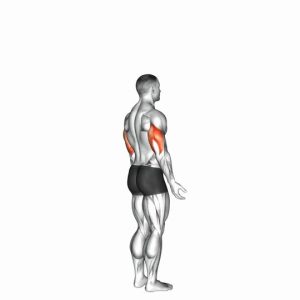
| Primary Muscle | Triceps brachii, especially the long head |
| Secondary Muscle | Shoulder stabilizers, core, forearms, and upper back stabilizers |
| Equipment | Resistance band |
| Difficulty | Beginner to Intermediate |
Sets & Reps (By Goal)
- Muscle growth: 3–4 sets × 10–15 reps with a controlled 2–3 second lowering phase.
- Strength endurance: 2–4 sets × 15–25 reps using smooth, continuous reps.
- Beginner technique: 2–3 sets × 8–12 reps with light band tension and strict elbow control.
- Finisher pump: 1–3 sets × 20–30 reps near the end of an arm workout.
Progression rule: Add reps first, then increase band tension. Better control matters more than using the thickest band.
Setup / Starting Position
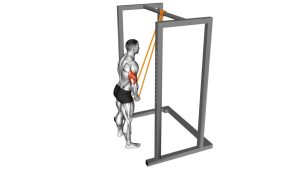
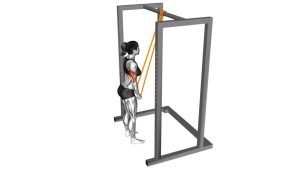
- Anchor the band securely: Step on the middle of the band or anchor it low behind you depending on the version used.
- Stand tall: Keep your feet about hip-width apart with the ribs stacked over the pelvis.
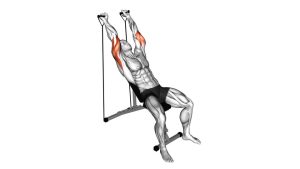
- Bring the hands overhead: Hold the band handles or ends behind the head with elbows bent.
- Set the elbows: Point the elbows mostly forward and upward instead of letting them flare far out to the sides.
- Brace lightly: Keep the core engaged so your lower back does not arch as the band pulls behind you.
Tip: If the band feels too aggressive at the top, step on only one side of the band or use a lighter resistance level.
Execution (Step-by-Step)
- Start with control: Begin with elbows bent and hands behind the head while keeping the upper arms close to vertical.
- Extend the elbows: Press the hands upward until the arms are nearly straight overhead.
- Squeeze the triceps: Pause briefly at the top and contract the back of the upper arms.
- Avoid locking aggressively: Straighten the arms without snapping the elbows or shrugging the shoulders.
- Lower slowly: Bend the elbows and return the hands behind the head under control.
- Repeat with rhythm: Keep each rep smooth, controlled, and focused on elbow motion only.
Pro Tips & Common Mistakes
- Keep elbows narrow: Wide elbows reduce triceps focus and may irritate the shoulders.
- Control the lowering phase: Letting the band snap back removes tension and increases joint stress.
- Do not overarch the back: Keep ribs down and glutes lightly engaged to maintain a neutral spine.
- Use the correct band: A band that is too heavy usually causes swinging, shrugging, or partial reps.
- Finish tall: Reach upward through the hands without lifting the shoulders into the ears.
- Train both stretch and squeeze: Lower deep enough to feel the triceps stretch, then extend fully for a strong contraction.
FAQ
What muscles does the Band Overhead Triceps Extension work?
It mainly works the triceps brachii. The overhead arm position places extra emphasis on the long head of the triceps, while the shoulders, core, and forearms help stabilize the movement.
Is this exercise good for building bigger arms?
Yes. It is especially useful for targeting the long head of the triceps, which contributes a lot to upper-arm size. Use controlled reps, consistent tension, and progressive overload for best results.
Why do I feel this in my shoulders?
Shoulder discomfort often happens when the elbows flare too wide, the band is too heavy, or the upper arms move too much. Reduce the resistance and keep your elbows pointing forward and upward.
Should I fully lock out my elbows?
You can straighten the elbows at the top, but avoid snapping into a hard lockout. Think of finishing with a strong triceps squeeze, not an aggressive joint lock.
Can beginners do this exercise?
Yes. Beginners should start with a light band, use slower reps, and focus on keeping the elbows stable before increasing resistance.
Recommended Equipment
- Resistance Bands with Handles — ideal for overhead extensions, curls, rows, presses, and full-body band training.
- Loop Resistance Bands Set — useful for lighter triceps work, warm-ups, mobility drills, and accessory exercises.
- Resistance Band Door Anchor — helps create stable low, mid, or high anchor points for more band exercise variations.
- Thick Exercise Mat — provides comfortable footing and support for home resistance-band workouts.
- Workout Gloves — improve grip comfort when holding band handles or band ends during higher-rep sets.
Tip: Choose a band that lets you complete the full range of motion without leaning, shrugging, or losing elbow position.