Dumbbell Kickbacks on Exercise Ball: Triceps Form, Sets, Tips & FAQ
Learn how to do Dumbbell Kickbacks on an Exercise Ball to train the triceps with better control, balance, and upper-arm stability. Includes setup, form cues, sets, mistakes, FAQs, and equipment.
Dumbbell Kickbacks on Exercise Ball
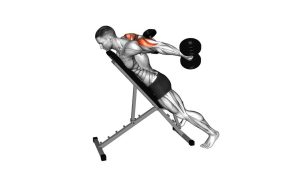
This variation is more challenging than a standard dumbbell kickback because the exercise ball creates an unstable support base. As a result, your triceps work to extend the elbows while your core, glutes, legs, shoulders, and upper back help keep the body steady. Therefore, use lighter dumbbells than you would use on a bench and focus on slow, clean reps.
Quick Overview
| Body Part | Triceps |
|---|---|
| Primary Muscle | Triceps brachii |
| Secondary Muscle | Rear deltoids, upper back stabilizers, core, glutes, and legs |
| Equipment | Dumbbells and exercise ball |
| Difficulty | Intermediate because balance and strict elbow control are required |
Sets & Reps (By Goal)
- Beginner control practice: 2–3 sets × 10–12 reps with very light dumbbells
- Triceps hypertrophy: 3–4 sets × 10–15 reps with a 1-second squeeze at full extension
- Muscular endurance: 2–4 sets × 15–20 reps using a smooth, controlled tempo
- Upper-body finisher: 2–3 sets × 12–18 reps after presses, dips, or push-ups
- Stability-focused training: 3 sets × 8–12 slow reps while keeping the torso quiet on the ball
Progression rule: First improve control, then increase reps, and only after that add load. Since the ball increases instability, heavier dumbbells can quickly turn this exercise into a swinging movement.
Setup / Starting Position
- Choose light dumbbells: Start lighter than normal because the ball makes balance harder.
- Position the ball: Place your chest and upper abdomen on the exercise ball.
- Set your feet wide: Keep both feet planted firmly on the floor for balance.
- Brace your core: Gently tighten your abs so your torso does not wobble excessively.
- Hold the dumbbells: Use a neutral grip with palms facing each other.
- Lift the elbows: Pull your elbows up and slightly behind your torso until your upper arms stay close to your sides.
- Set the starting angle: Bend the elbows to about 90 degrees before beginning each rep.
Tip: Your upper arms should stay almost fixed during the exercise. If your elbows drop, the triceps lose tension.
Execution (Step-by-Step)
- Stabilize first: Keep your chest supported on the ball, feet planted, and neck neutral.
- Lock in the upper arms: Hold your elbows high and close to your ribs without shrugging your shoulders.
- Extend the elbows: Straighten your arms by driving the dumbbells backward.
- Squeeze the triceps: Pause briefly when the arms reach full extension behind the body.
- Keep the wrists neutral: Do not bend the wrists or twist the dumbbells at the top.
- Return slowly: Bend the elbows and bring the dumbbells back to the starting position with control.
- Repeat with precision: Continue for the target reps while keeping the elbows stable and the torso quiet.
Pro Tips & Common Mistakes
Pro Tips
- Use a small pause: Hold the fully extended position for 1 second to increase triceps tension.
- Keep the elbows high: The more stable your upper arms are, the better the triceps isolation becomes.
- Move only at the elbow: Think of your forearms as the moving part while the upper arms stay parked.
- Control the lowering phase: A slow return keeps tension on the triceps and protects the elbows.
- Use the ball as support, not a trampoline: Stay steady instead of bouncing through reps.
Common Mistakes
- Swinging the dumbbells: This shifts work away from the triceps and increases shoulder stress.
- Dropping the elbows: Low elbows reduce the range and make the movement less effective.
- Using too much weight: Heavy dumbbells often cause momentum, poor balance, and incomplete extension.
- Arching the lower back: Keep the core engaged so the spine stays controlled on the ball.
- Looking forward too much: Keep the neck neutral instead of lifting the head aggressively.
- Rushing the reps: Fast reps usually mean less triceps tension and more body movement.
FAQ
What muscles do Dumbbell Kickbacks on an Exercise Ball work?
This exercise mainly targets the triceps brachii, especially during the elbow extension phase. In addition, the rear delts, upper back, core, glutes, and legs help stabilize your body on the ball.
Is this better than a regular dumbbell kickback?
It is not always better, but it is more stability-focused. A bench-supported kickback is usually easier for strict triceps isolation. However, the exercise ball version adds balance and core control, which makes it useful for lighter, more controlled training.
How heavy should the dumbbells be?
Use light to moderate dumbbells. If you cannot pause at full extension or your elbows move around, the weight is too heavy. For most people, this exercise works best with strict form rather than heavy loading.
Should my elbows stay still?
Yes. Your elbows should remain lifted and close to your sides. The main movement should happen at the elbow joint as the forearm extends backward.
Why do I feel this in my shoulders?
Some shoulder stabilization is normal. However, if your shoulders are doing most of the work, reduce the weight, keep the elbows closer to the body, and avoid swinging the dumbbells.
Can beginners do this exercise?
Beginners can do it if they already feel stable on an exercise ball. Otherwise, start with a bench-supported dumbbell kickback first, then progress to the ball version once balance improves.
Recommended Equipment
- Adjustable Dumbbells — ideal for changing resistance without needing multiple dumbbell pairs
- Anti-Burst Exercise Ball — provides the unstable support base needed for this variation
- Non-Slip Exercise Mat — helps keep the ball and feet more stable during setup
- Weightlifting Gloves — improves dumbbell grip and comfort during higher-rep triceps work
- Resistance Bands Set — useful for warm-ups, triceps activation, and upper-body accessory training
Tip: Choose equipment that helps you control the movement better. For this exercise, stability and clean elbow extension are more important than lifting the heaviest dumbbells possible.