Side-Lying Floor Triceps Roll: Form, Sets, Tips & FAQ
Learn the Side-Lying Floor Triceps Roll for controlled triceps isolation with minimal joint stress. Includes setup, execution, sets by goal, mistakes, FAQs, and recommended Amazon equipment.
Side-Lying Floor Triceps Roll
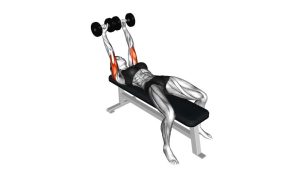
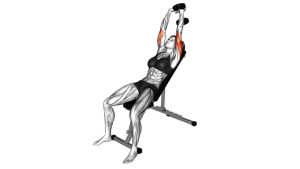
This exercise works best with a light-to-moderate load and precise form. Because you are lying on your side, momentum is reduced and it becomes easier to concentrate on the working arm. The goal is not to throw the weight forward, but to create a smooth rolling path that lets the triceps do most of the work. You should feel a clear contraction along the back of the upper arm, especially near lockout.
Quick Overview
| Body Part | Triceps |
|---|---|
| Primary Muscle | Triceps brachii |
| Secondary Muscle | Anterior deltoid, forearm stabilizers, rotator cuff stabilizers |
| Equipment | One dumbbell, exercise mat or padded floor |
| Difficulty | Beginner to Intermediate |
Sets & Reps (By Goal)
- Muscle building: 3–4 sets × 8–15 reps per arm, 45–75 sec rest
- Technique and control: 2–3 sets × 10–12 reps per arm, slow tempo, 30–60 sec rest
- Light accessory work: 2–3 sets × 12–20 reps per arm, moderate burn, 30–45 sec rest
- Joint-friendly pump finisher: 1–2 sets × 15–20 reps per arm with a lighter dumbbell
Progression rule: First improve control, then add reps, and only then increase load. If your shoulder starts taking over or the weight swings, reduce the dumbbell and tighten your form.
Setup / Starting Position
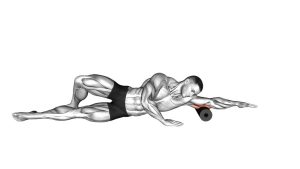
- Lie on your side: Position yourself on a mat or padded floor with your body stacked and stable.
- Hold one dumbbell in the top hand: Keep your grip firm but relaxed, with the wrist straight.
- Bend the working elbow: Start with the dumbbell near the torso or hip area and the elbow comfortably tucked.
- Brace your torso: Keep your core engaged so you do not rock backward or forward during the rep.
- Set the shoulder: Keep the top shoulder controlled and avoid shrugging toward the ear.
Tip: A folded towel or thicker mat can make the side-lying position more comfortable, especially at the shoulder and hip.
Execution (Step-by-Step)
- Start from the bent-arm position: Keep the elbow flexed and the dumbbell close to the body.
- Initiate the roll smoothly: Let the arm move through a small natural rolling path without jerking the shoulder.
- Extend the elbow: Press the dumbbell forward and slightly away from the body until the arm approaches full extension.
- Squeeze the triceps: Pause briefly near the top without slamming into lockout.
- Lower under control: Reverse the motion slowly and return to the starting position with the elbow bent.
- Repeat evenly: Keep every rep smooth, controlled, and matched from side to side.
Pro Tips & Common Mistakes
- Use a lighter dumbbell than expected: This is a control-based isolation move, not a momentum lift.
- Keep the wrist neutral: Avoid letting the hand bend backward under the load.
- Do not rush lockout: Smooth elbow extension creates better triceps tension.
- Avoid shoulder shrugging: Keep the neck relaxed and the shoulder packed down.
- Do not twist the torso: Your body should stay stable while the arm does the work.
- Control the eccentric: The lowering phase is where a lot of the quality stimulus comes from.
- Match both sides: Train the weaker arm with the same standard, not a heavier cheat rep.
FAQ
What muscle does the Side-Lying Floor Triceps Roll work most?
It mainly targets the triceps, with the back of the upper arm doing the majority of the work. The shoulder and forearm also help stabilize the movement.
Is this better than a regular triceps extension?
It is not automatically better, but it can be a very useful alternative. Many lifters like it because the side-lying setup reduces momentum and helps them focus on clean triceps contraction.
How heavy should I go?
Start lighter than you would for presses or standard extensions. The best version of this exercise is controlled, smooth, and free from shoulder compensation.
Can beginners use this exercise?
Yes. Beginners can use it well as long as they keep the load modest and focus on technique before intensity.
Where should I feel it?
You should feel it mostly in the triceps, especially during the extension and squeeze at the top. If you feel mostly shoulder strain, reduce the weight and tighten your setup.
Recommended Equipment
- Amazon Basics Neoprene Dumbbell Hand Weights — a beginner-friendly option for controlled unilateral arm work
- Hezeyferg Adjustable Dumbbell Set — useful if you want quick load changes as your triceps strength improves
- Retrospec Solana Yoga Mat — adds comfort under the shoulder, hip, and ribcage during side-lying work
- ProsourceFit Exercise Balance Pad — useful as extra cushioning under the elbow, shoulder, or side of the body
- Amazon Basics Rubber Hex Dumbbell — a solid choice if you prefer fixed dumbbells with a stable no-roll shape
Tip: For this movement, comfort and control matter as much as load. A good mat and a manageable dumbbell usually improve the exercise more than going heavy.