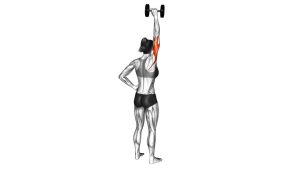
Dumbbell One-Arm Triceps Extension (On Bench): Form, Sets, Tips & FAQ
Learn how to do the Dumbbell One-Arm Triceps Extension on a bench with proper form. Discover setup, step-by-step execution, sets and reps by goal, common mistakes, FAQs, and recommended equipment.
Dumbbell One-Arm Triceps Extension (On Bench)
This exercise is especially useful for lifters who want to build stronger, more balanced upper arms while improving mind-muscle connection on each side independently. Because it is performed one arm at a time, it can help expose right-to-left strength differences and improve control without needing heavy load. The key is to move only at the elbow joint while keeping the torso steady and the upper arm in a consistent position.
Quick Overview
| Body Part | Triceps |
|---|---|
| Primary Muscle | Triceps brachii |
| Secondary Muscle | Rear deltoid, forearm stabilizers, core, upper back stabilizers |
| Equipment | Dumbbell, flat bench |
| Difficulty | Beginner to Intermediate |
Sets & Reps (By Goal)
- Muscle growth: 3–4 sets × 8–15 reps per arm, 45–75 sec rest
- Strength-focused isolation work: 3–5 sets × 6–10 reps per arm, 60–90 sec rest
- Technique and control: 2–3 sets × 10–15 reps per arm with slower tempo, 45–60 sec rest
- Finisher / pump work: 2–3 sets × 12–20 reps per arm, short rest, light-to-moderate load
Progression rule: Increase reps first, then load. Only add weight when you can keep the elbow steady, control the lowering phase, and fully contract the triceps without torso movement.
Setup / Starting Position
- Set your support position: Place one knee and the same-side hand on a flat bench for stability. Plant the opposite foot firmly on the floor.
- Hold the dumbbell in the free hand: Use a neutral grip and keep your wrist straight.
- Align your torso: Keep your back flat, chest open, and head in line with your spine.
- Position the working arm: Bring the upper arm close to your torso, with the elbow bent roughly to 90 degrees.
- Brace the core: Stay stable so the movement comes from the elbow, not from twisting or swinging.
Tip: Set the upper arm slightly behind the torso if it feels comfortable. This can improve triceps tension, especially near lockout.
Execution (Step-by-Step)
- Start from the bent-elbow position: Keep the upper arm still and close to the body.
- Extend the elbow: Drive the dumbbell backward by straightening the arm until the triceps are fully contracted.
- Pause briefly at lockout: Squeeze the triceps without jamming or hyperextending the elbow.
- Lower under control: Slowly bend the elbow and return the dumbbell to the starting position.
- Repeat smoothly: Maintain the same arm path, avoid torso rotation, and complete all reps on one side before switching arms.
Pro Tips & Common Mistakes
- Keep the elbow pinned: The more the upper arm moves, the less isolated the triceps become.
- Control the eccentric: Don’t let the dumbbell drop quickly. The lowering phase helps build tension and control.
- Don’t swing the weight: Momentum reduces triceps work and increases stress on the shoulder and lower back.
- Use a neutral wrist: Avoid excessive wrist extension or curling the dumbbell up with the forearm.
- Train both sides evenly: Match reps and quality on each arm to reduce imbalances over time.
- Choose load carefully: This is an isolation movement, so perfect execution matters more than heavy weight.
FAQ
What muscles does the Dumbbell One-Arm Triceps Extension (On Bench) work?
It primarily targets the triceps brachii. The rear deltoid, upper back, forearm stabilizers, and core also help stabilize the body and arm position.
Is this better than doing both arms at the same time?
It depends on your goal. The one-arm version is excellent for improving unilateral control, fixing left-to-right imbalances, and keeping attention on strict triceps mechanics.
How heavy should I go on this exercise?
Use a load that lets you keep the upper arm steady and the elbow moving smoothly. If you need to swing, twist, or rush the reps, the weight is too heavy.
Should I lock out the elbow fully?
You should extend fully enough to contract the triceps hard, but avoid snapping the elbow aggressively into lockout. Think controlled squeeze, not joint slam.
Where should I place this exercise in my workout?
It works well in the middle or toward the end of an upper-body or arm session, especially after compound pressing movements when you want extra direct triceps work.
Recommended Equipment
- Adjustable Dumbbell — ideal for progressive overload without needing a full rack of weights
- Flat Weight Bench — provides the stable support needed for the on-bench setup
- Fitness Lifting Gloves — can improve grip comfort during higher-rep dumbbell work
- Wrist Wraps — helpful if you want extra wrist support while isolating the triceps
- Home Gym Floor Mat — protects your training space and improves overall workout setup
Tip: For this exercise, a stable bench and a comfortable dumbbell grip matter more than fancy accessories.