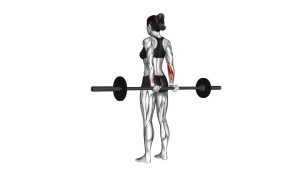
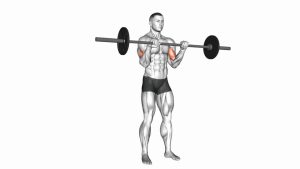
Barbell Reverse Preacher Curl: Proper Form, Sets, Tips & FAQ
Learn how to do the Barbell Reverse Preacher Curl with proper form to build forearms, brachioradialis, and grip strength. Includes setup, execution, sets by goal, common mistakes, FAQs, and recommended equipment.
Barbell Reverse Preacher Curl
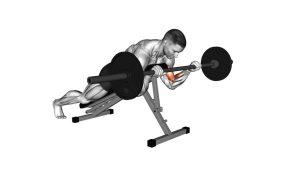
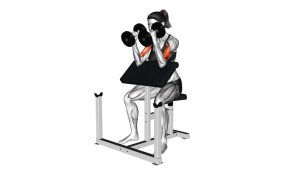
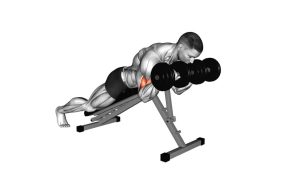
This exercise works best when you keep the movement strict and let the elbows do the work. The preacher pad limits body swing, which makes the reverse grip curl more effective for the forearms and brachioradialis. You should feel tension mainly through the top of the forearm and around the upper forearm near the elbow, not in the shoulders or lower back. Use a load you can control from bottom to top without bouncing the bar.
Quick Overview
| Body Part | Forearms |
|---|---|
| Primary Muscle | Brachioradialis |
| Secondary Muscle | Forearm extensors, brachialis, biceps brachii |
| Equipment | Barbell, preacher bench |
| Difficulty | Beginner to Intermediate |
Sets & Reps (By Goal)
- Forearm muscle growth: 3–4 sets × 8–12 reps with 60–90 seconds rest
- Strength and control: 4–5 sets × 5–8 reps with 90–120 seconds rest
- Arm accessory work: 2–4 sets × 10–15 reps with 45–75 seconds rest
- Finisher / pump work: 2–3 sets × 12–20 reps with light-to-moderate load
Progression rule: Add reps before adding weight. Once you can complete all target reps with strict form and a controlled lowering phase, increase the load slightly.
Setup / Starting Position
- Adjust the preacher bench: Set the pad so your upper arms rest comfortably and securely against it without your shoulders rolling forward.
- Take an overhand grip: Grab the barbell with hands about shoulder-width apart using a pronated grip.
- Plant your arms: Keep your upper arms fully supported on the pad and your chest steady against the bench.
- Start near full extension: Lower the bar until your elbows are almost straight, but avoid locking out hard.
- Set the wrists: Keep them mostly neutral so the forearms do the work instead of excessive wrist bending.
Tip: A slightly narrower grip often feels more natural for the wrists, but use the width that lets you curl smoothly without discomfort.
Execution (Step-by-Step)
- Brace and stay still: Keep your torso quiet, upper arms glued to the pad, and shoulders relaxed.
- Curl the bar upward: Bend at the elbows and raise the bar in a smooth arc while maintaining the overhand grip.
- Keep the wrists controlled: Do not let them collapse backward or excessively curl forward to cheat the rep.
- Squeeze near the top: Pause briefly when your forearms approach vertical and feel the contraction in the brachioradialis and forearms.
- Lower with control: Slowly return the bar to the starting position without dropping it or bouncing into the bottom.
- Repeat for clean reps: Maintain the same tempo and elbow position on every repetition.
Pro Tips & Common Mistakes
- Use a controlled eccentric: The lowering phase is where a lot of forearm stimulus happens, so do not rush it.
- Do not bounce at the bottom: Let the muscles stay under tension instead of rebounding off the joint position.
- Keep upper arms pinned: Lifting the elbows off the pad reduces isolation and turns the rep into a cheat curl.
- Choose the right weight: Reverse-grip preacher curls usually require less weight than standard preacher curls.
- Stay wrist-aware: A neutral wrist position helps shift the work to the target muscles and reduces joint strain.
- Train through a smooth range: Work as deep as you can while keeping tension and avoiding elbow discomfort.
FAQ
What muscles does the Barbell Reverse Preacher Curl work most?
It mainly targets the brachioradialis, which is a major upper-forearm muscle, while also training the forearm extensors, brachialis, and some biceps involvement.
Why use a reverse grip on the preacher bench?
The reverse grip shifts more emphasis toward the forearms and brachioradialis, while the preacher bench helps remove body swing and momentum.
Should I go all the way down at the bottom?
You should lower the bar through a full comfortable range, but avoid aggressively locking out the elbows or losing tension at the bottom.
Is this better for forearms than a regular curl?
For many lifters, yes. A regular underhand curl places more emphasis on the biceps, while the reverse grip makes this variation more forearm-dominant.
Can beginners do Barbell Reverse Preacher Curls?
Yes, as long as they begin with a manageable weight and focus on strict reps, controlled lowering, and comfortable wrist positioning.
Recommended Equipment
- Preacher Curl Bench — the key setup piece for isolating the arms and reducing momentum
- Olympic Barbell — ideal for stable loading and progressive overload over time
- Weight Plates Set — lets you fine-tune resistance for strict reverse preacher curls
- Wrist Wraps — helpful for extra wrist support if the overhand grip feels demanding
- Liquid Chalk — improves grip security and helps keep the bar steady during reps
Tip: Choose equipment that helps you keep the movement strict. Better control usually gives better forearm training than simply using more weight.