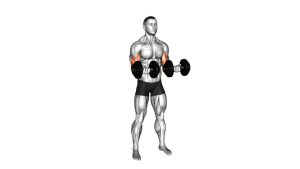
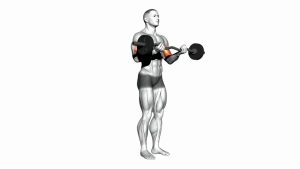
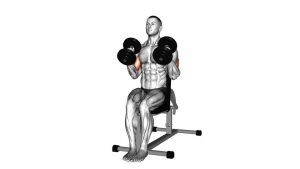
Cable Standing Reverse Curl (SZ Bar): Form, Muscles Worked, Sets, Tips & FAQ
Learn how to do the Cable Standing Reverse Curl with an SZ bar for stronger forearms, brachialis, and biceps. Includes setup, step-by-step form, sets by goal, mistakes to avoid, FAQs, and recommended equipment.
Cable Standing Reverse Curl (SZ Bar)
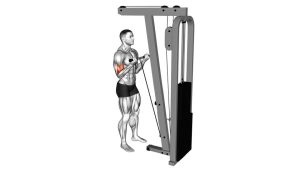
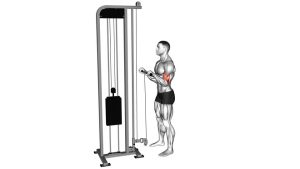
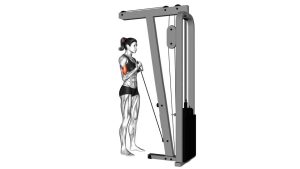
This exercise works best when you use a controlled tempo and let the elbows act like stable hinges. In the video, the movement is performed with a clean upright posture, a consistent overhand grip, and a smooth curl-and-lower pattern. Your goal should be to raise the bar with the forearms, keep the shoulders quiet, and lower the attachment under control rather than letting the weight stack pull it down.
Quick Overview
| Body Part | Forearms |
|---|---|
| Primary Muscle | Brachioradialis |
| Secondary Muscle | Brachialis and Biceps Brachii |
| Equipment | Cable machine with SZ / EZ curl bar attachment |
| Difficulty | Beginner to Intermediate |
Sets & Reps (By Goal)
- Muscle building: 3–4 sets × 8–12 reps with controlled tempo and 60–90 sec rest
- Forearm and grip emphasis: 3–4 sets × 10–15 reps with smooth lowering and 45–75 sec rest
- Strength technique work: 4–5 sets × 5–8 reps using strict form and 90–120 sec rest
- Finisher / pump work: 2–3 sets × 12–20 reps with lighter load and short rest
Progression rule: Add reps before load whenever possible. If your elbows drift forward, wrists collapse, or your torso starts swinging, the weight is too heavy.
Setup / Starting Position
- Attach the bar: Clip an SZ / EZ curl bar to the low pulley of a cable machine.
- Choose your stance: Stand tall facing the machine with feet about hip-width apart.
- Take an overhand grip: Grab the angled portions of the bar with palms facing down.
- Set posture: Keep chest up, ribs stacked, shoulders down, and eyes forward.
- Start position: Let the bar hang near the upper thighs with arms extended but not aggressively locked out.
Tip: Step back just enough to keep tension on the cable at the bottom without letting the stack slam between reps.
Execution (Step-by-Step)
- Brace lightly: Stay upright and keep your elbows close to your torso.
- Curl the bar upward: Flex at the elbows and bring the SZ bar up in a smooth arc.
- Keep the grip pronated: Maintain palms-down positioning throughout the rep.
- Pause near the top: Stop when the bar reaches the upper abdomen or lower chest area, depending on your build and cable setup.
- Lower under control: Extend the elbows slowly until the arms are nearly straight again.
- Repeat cleanly: Keep the tempo consistent and avoid using momentum to start the next rep.
Pro Tips & Common Mistakes
- Use less weight than a regular curl: Reverse curls are usually weaker because of the overhand grip.
- Keep wrists steady: Don’t let them fold backward excessively as the bar rises.
- Elbows stay pinned: A small natural shift is fine, but don’t turn it into a front delt movement.
- Control the eccentric: Lowering slowly improves tension and keeps the movement strict.
- Avoid torso swing: Leaning back to cheat the rep takes tension away from the target muscles.
- Use the SZ bar angle well: Find the grip that feels strongest and most natural for your wrists.
FAQ
What muscles does the Cable Standing Reverse Curl work most?
It mainly emphasizes the brachioradialis and brachialis, with the biceps still assisting. The overhand grip shifts the feel away from a classic biceps-only curl.
Why use an SZ / EZ bar instead of a straight bar?
Many lifters find the angled grip more comfortable on the wrists and elbows, especially during reverse-grip curling patterns.
Is this better for forearms than a standard curl?
It is usually better for adding direct forearm and brachioradialis work because the pronated grip increases their contribution.
Should I go all the way down at the bottom?
Yes, return to a near-full elbow extension while keeping tension on the cable. Avoid slamming into a hard lockout or letting the weight stack crash.
Can beginners use this exercise?
Yes. It works well for beginners as long as they start light, use strict form, and don’t try to load it like a normal underhand curl.
Recommended Equipment
- EZ Curl Cable Attachment — the most direct attachment for this exact exercise setup
- Single D-Handle Cable Attachment — useful for one-arm cable curls, unilateral arm work, and accessory training
- Wrist Wraps for Weightlifting — helpful if reverse-grip work makes your wrists feel unstable under load
- Cable Machine Attachment Set — a versatile bundle if you want multiple bars and handles for arm training
- Resistance Bands Set — useful for warm-ups, elbow prep, and extra forearm or arm-volume work outside the machine
Tip: Choose attachments with smooth rotation, solid knurling or grip texture, and secure carabiner compatibility for better comfort and control.