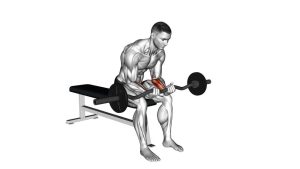
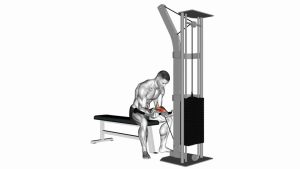
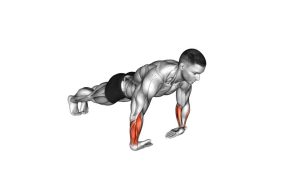
Dumbbell Reverse Wrist Curl: Proper Form, Forearm Benefits, Sets & FAQ
Learn how to do the Dumbbell Reverse Wrist Curl with proper form to build stronger forearm extensors and improve wrist stability. Includes setup, execution, sets by goal, mistakes, FAQs, and recommended equipment.
Dumbbell Reverse Wrist Curl
This exercise is best performed with light to moderate weight and full control. Because the wrist extensors are smaller muscles, the goal is not to move heavy load, but to create clean tension through deliberate wrist extension. When done correctly, you should feel the effort concentrated in the top side of the forearm, with minimal involvement from the shoulders, upper arms, or torso.
Quick Overview
| Body Part | Forearms |
|---|---|
| Primary Muscle | Wrist extensors |
| Secondary Muscle | Brachioradialis and forearm stabilizers |
| Equipment | Dumbbell and a bench, thigh support, or flat surface for forearm bracing |
| Difficulty | Beginner |
Sets & Reps (By Goal)
- Forearm muscle growth: 3-4 sets × 12-20 reps with slow lowering and short rest
- Wrist strength and endurance: 2-4 sets × 15-25 reps with smooth, controlled tempo
- Warm-up or joint preparation: 1-2 sets × 15-20 light reps before pulling or grip work
- Balanced arm training: Pair 2-3 sets after wrist curls or biceps work to train the opposite side of the forearm
Progression note: Increase reps first, then add small amounts of weight. Forearm extensor work responds best to precise execution, not sloppy loading.
Setup / Starting Position
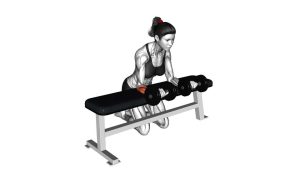
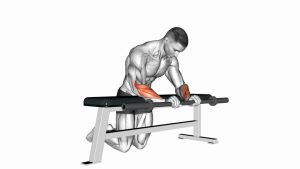
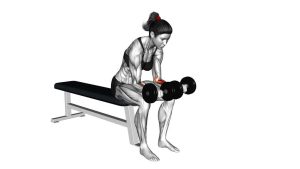
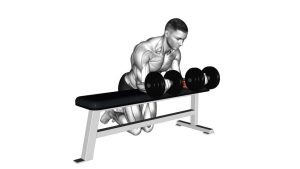
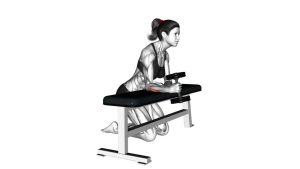
- Sit down and brace the forearms: Rest your forearms on your thighs or on a bench so only the hands and wrists can move freely off the edge.
- Use a pronated grip: Hold the dumbbells with your palms facing down.
- Position the wrists just off the edge: Let the wrists hang slightly so the dumbbells start in a stretched position.
- Keep the elbows quiet: Your forearms should stay planted throughout the set.
- Set your posture: Stay tall through the chest and avoid leaning or bouncing the torso to help the movement.
Tip: Use lighter dumbbells than you think you need. This exercise becomes far more effective when the wrist extensors, not momentum, control every rep.
Execution (Step-by-Step)
- Start from the stretched bottom: With palms down, allow the wrists to drop slightly into flexion while maintaining full control of the dumbbells.
- Extend the wrists upward: Lift the back of the hands toward the forearms by actively raising through the wrists only.
- Pause briefly at the top: Squeeze the forearm extensors for a moment without letting the elbows lift or shoulders tense up.
- Lower slowly: Return the dumbbells to the starting position under control, resisting gravity on the way down.
- Repeat smoothly: Keep the reps short, deliberate, and consistent from start to finish.
Pro Tips & Common Mistakes
- Keep the movement wrist-only: The forearms should stay fixed while the wrists move through the rep.
- Use a full controlled eccentric: Lowering slowly often creates more useful tension than rushing the negative.
- Do not go too heavy: Excessive load usually shortens the range and shifts tension away from the target muscles.
- Avoid jerking the dumbbells up: Momentum reduces isolation and increases wrist stress.
- Do not let the wrists collapse uncontrollably: The bottom stretch should be gentle and stable, not loose or sloppy.
- Train both sides of the forearm: Pair reverse wrist curls with regular wrist curls for more balanced forearm development.
- Keep your grip firm but not crushing: Over-gripping can create unnecessary tension that makes the motion less smooth.
FAQ
What muscles does the Dumbbell Reverse Wrist Curl work?
It mainly targets the wrist extensors, which run along the top side of the forearm. It also involves smaller stabilizers and can lightly recruit the brachioradialis depending on setup and grip control.
Is the Dumbbell Reverse Wrist Curl good for bigger forearms?
Yes. It helps build the extensor side of the forearm, which is often undertrained compared with the flexor side. Including both wrist curls and reverse wrist curls can lead to more complete forearm development.
Should I use heavy or light weight for reverse wrist curls?
Most people get better results with light to moderate weight. The wrist extensors are relatively small muscles, so strict reps and longer tension usually work better than heavy cheating reps.
Can beginners do this exercise safely?
Yes, as long as they start light and keep the movement controlled. Beginners should focus on smooth reps, stable forearms, and avoiding any sharp discomfort in the wrists.
When should I place this exercise in my workout?
It usually works best near the end of an upper-body or arm workout, after bigger pulling or curling movements. It can also be used as focused forearm accessory work on grip-training days.
Recommended Equipment (Optional)
- Adjustable Dumbbells — ideal for fine weight jumps when training smaller forearm muscles
- Light Dumbbell Set — useful for beginners learning strict wrist extension with lighter resistance
- Weight Bench — provides a stable surface for forearm support and cleaner setup
- Wrist Roller Forearm Trainer — a strong accessory for additional forearm endurance and grip work
- Grip Strength Trainer — complements reverse wrist curls by improving hand and forearm strength
Tip: Choose equipment that helps you maintain control and consistency. For this exercise, stable support and manageable resistance matter more than maximum load.