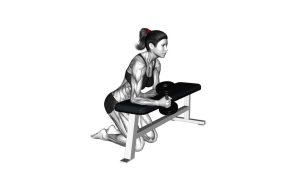
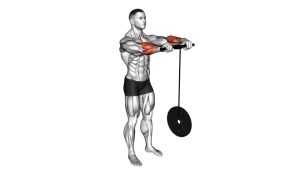
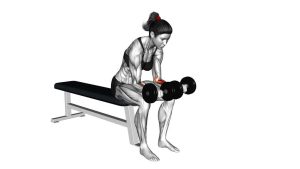
Dumbbell One-Arm Reverse Wrist Curl: Form, Sets, Tips & FAQ
Learn how to do the Dumbbell One-Arm Reverse Wrist Curl to strengthen forearm extensors, improve wrist control, and build balanced grip strength with proper form, sets, tips, FAQs, and equipment.
Dumbbell One-Arm Reverse Wrist Curl
This exercise is especially useful because many forearm routines overemphasize the wrist flexors while neglecting the extensors. Strong wrist extensors help balance the forearm, improve joint control, and support healthier pressing, pulling, carrying, and gripping mechanics. The movement should feel controlled and precise, not heavy or jerky.
Quick Overview
| Body Part | Forearms |
|---|---|
| Primary Muscle | Forearm extensors |
| Secondary Muscle | Grip stabilizers, wrist stabilizers, brachioradialis support |
| Equipment | Dumbbell, bench or seated support surface |
| Difficulty | Beginner to Intermediate |
Sets & Reps (By Goal)
- Beginner wrist control: 2–3 sets × 10–15 reps per side using a very light dumbbell.
- Forearm endurance: 2–4 sets × 15–25 reps per side with a slow, smooth tempo.
- Strength and hypertrophy: 3–4 sets × 8–15 reps per side with controlled lowering.
- Grip balance / accessory work: 2–3 sets × 12–20 reps after pulling, curling, or grip training.
Progression rule: Add reps first, then increase dumbbell weight slowly. Wrist extensors are small muscles, so small weight jumps are usually better than large increases.
Setup / Starting Position
- Sit on a bench or chair: Keep your feet planted and torso upright.
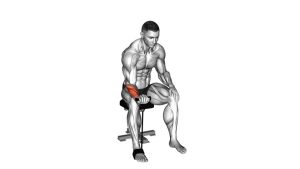
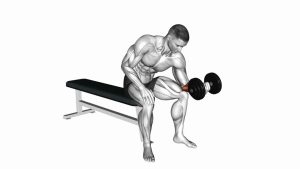
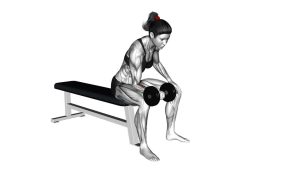
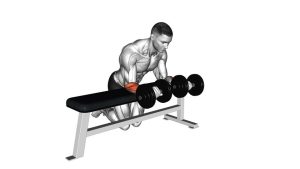
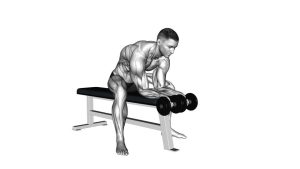
- Support one forearm: Rest your forearm on your thigh or a bench with the wrist hanging just beyond the edge.
- Use a pronated grip: Hold the dumbbell with your palm facing down.
- Stabilize the elbow: Keep the elbow and forearm still so the movement comes only from the wrist.
- Start slightly lowered: Let the wrist drop into a comfortable flexed position without forcing a deep stretch.
Setup tip: The wrist should be free to move, but the forearm should stay anchored. If the forearm lifts, the weight is probably too heavy.
Execution (Step-by-Step)
- Brace the forearm: Keep your forearm pressed gently into your thigh or bench.
- Lift the back of the hand: Extend the wrist upward, raising the dumbbell through a small controlled arc.
- Pause at the top: Briefly squeeze the forearm extensors without bending the elbow or shrugging the shoulder.
- Lower slowly: Return the dumbbell under control until the wrist reaches the starting position.
- Repeat cleanly: Keep each rep smooth, avoiding bouncing, swinging, or using momentum.
Pro Tips & Common Mistakes
- Use light weight: Reverse wrist curls do not need heavy loading to be effective.
- Control the eccentric: Lowering slowly builds strength and protects the wrist joint.
- Keep the forearm planted: If the forearm moves, the target muscles lose tension.
- Avoid gripping too hard: Hold the dumbbell securely, but do not crush it so hard that the hand takes over.
- Do not rush reps: Fast reps often turn this into a momentum movement instead of a true wrist extensor exercise.
- Train both sides evenly: Start with the weaker wrist and match the same reps on the stronger side.
- Stay within pain-free range: Mild muscular fatigue is fine; sharp wrist or elbow discomfort is not.
FAQ
What muscles does the Dumbbell One-Arm Reverse Wrist Curl work?
It primarily works the forearm extensors, the muscles on the back side of the forearm responsible for lifting the wrist upward. It also trains grip stabilizers and wrist control.
Should I use heavy weight for this exercise?
No. This exercise works best with a light to moderate dumbbell and strict control. The wrist extensors are smaller muscles, so heavy weight often causes cheating, discomfort, or poor range of motion.
Where should I feel the exercise?
You should feel it along the top/back side of the forearm. You may also feel light grip fatigue, but the main effort should come from wrist extension, not elbow bending or shoulder movement.
Is this exercise good for grip strength?
Yes. It supports grip strength by improving wrist balance and extensor strength. It is especially useful when paired with wrist curls, hammer curls, farmer carries, and pulling exercises.
Can beginners do the Dumbbell One-Arm Reverse Wrist Curl?
Yes. Beginners can perform it safely with a light dumbbell, a supported forearm, and slow reps. Start with higher reps and focus on clean technique before increasing weight.
Recommended Equipment
- Adjustable Dumbbells — ideal for small weight progressions when training wrist and forearm muscles.
- Light Dumbbell Set — useful for beginners who need precise, low-load forearm training options.
- Flat Workout Bench — provides stable forearm support and better wrist positioning during curls.
- Wrist Wraps — optional support for lifters who need extra wrist awareness during training.
- Forearm Grip Strengthener — helpful accessory for improving hand strength alongside wrist extensor work.
Tip: For reverse wrist curls, choose equipment that allows small load increases. Going too heavy too quickly can irritate the wrist or elbow.