Dumbbell One-Arm Wrist Curl: Forearm Flexor Form, Sets, Tips & FAQ
Learn how to perform the Dumbbell One-Arm Wrist Curl with proper seated setup, wrist-only movement, forearm flexor control, sets by goal, common mistakes, FAQs, and recommended equipment.
Dumbbell One-Arm Wrist Curl
This exercise is excellent for building forearm strength, improving grip support, and developing better wrist control for pulling, curling, carrying, and gripping movements. Because the arm is supported, the Dumbbell One-Arm Wrist Curl makes it easier to isolate the wrist flexors without using the shoulder, upper arm, or torso for momentum.
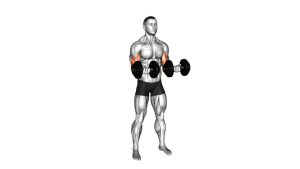
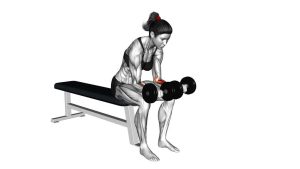
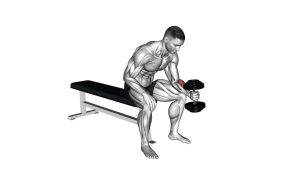
In the video, the model sits on a flat bench with the working forearm resting on the thigh. The wrist hangs slightly beyond the knee, allowing the dumbbell to travel freely. She lowers the dumbbell into wrist extension, then curls it up by flexing the wrist while keeping the elbow and forearm stable.
Quick Overview
| Body Part | Forearms |
|---|---|
| Primary Muscle | Wrist flexors of the forearm, especially flexor carpi radialis and flexor carpi ulnaris |
| Secondary Muscle | Finger flexors, grip muscles, palmaris longus, forearm stabilizers, and light brachioradialis support |
| Equipment | Dumbbell and flat bench or stable seated surface |
| Difficulty | Beginner-friendly, but requires strict wrist control and light loading discipline |
Sets & Reps (By Goal)
- Beginner technique practice: 2–3 sets × 10–12 reps per arm using a light dumbbell and slow control.
- Forearm muscle growth: 3–4 sets × 12–20 reps per arm with a strong top squeeze and controlled lowering.
- Grip support and wrist endurance: 2–4 sets × 15–25 reps per arm with steady tempo and minimal rest.
- Strength-focused forearm work: 3–5 sets × 8–12 reps per arm using a challenging but strict load.
- Finisher after arm training: 1–3 sets × 20–30 reps per arm using light weight and constant tension.
Progression rule: Add reps before adding weight. Wrist curls respond best to clean range of motion, slow lowering, and consistent tension. If your elbow lifts, your shoulder moves, or the dumbbell swings, the weight is too heavy.
Setup / Starting Position
- Sit near the edge of a flat bench: Plant both feet on the floor and lean slightly forward so you can support the working forearm comfortably on your thigh.
- Hold one dumbbell in the working hand: Use a secure but not overly tense grip. The palm should face upward or mostly upward depending on your wrist comfort and dumbbell position.
- Anchor the forearm on the thigh: Place the forearm along the thigh with the wrist hanging just beyond the knee. The wrist must have enough space to move up and down freely.
- Keep the elbow still: The elbow and forearm should stay in contact with the thigh. This support helps isolate the wrist flexors instead of turning the movement into an arm curl.
- Start in the bottom position: Let the wrist extend downward under control so the dumbbell hangs below the hand. You should feel a mild stretch through the inner forearm.
Setup checkpoint: The dumbbell should move because your wrist bends, not because your elbow lifts or your torso rocks.
Execution (Step-by-Step)
- Brace your seated position: Keep your feet planted, torso steady, shoulder relaxed, and working forearm supported on the thigh.
- Lower into the stretch: Begin with the wrist extended downward. Do not drop the dumbbell aggressively; let the forearm flexors lengthen under control.
- Curl the wrist upward: Flex the wrist and bring the dumbbell up toward the forearm. Keep the elbow and forearm anchored on the thigh.
- Squeeze at the top: Pause briefly when the wrist reaches its comfortable top range. Focus on contracting the inner forearm without bending the elbow.
- Lower slowly: Reverse the movement and allow the wrist to extend downward again. Control the eccentric phase instead of letting the dumbbell fall.
- Reset before the next rep: Return to the bottom position with control, keep the wrist comfortable, and repeat for the target number of reps.
Pro Tips & Common Mistakes
Pro Tips
- Use wrist-only motion: The forearm should stay planted while the hand curls the dumbbell up and down.
- Pause at the top: A short squeeze improves forearm flexor activation and prevents rushed reps.
- Control the lowering phase: The eccentric portion builds strength and keeps tension on the target muscles.
- Keep the wrist path smooth: Curl up in a clean arc and avoid twisting the dumbbell side to side.
- Train both arms evenly: Match reps, tempo, and range of motion on both sides to reduce strength imbalance.
Common Mistakes
- Using too much weight: Heavy loading often causes bouncing, elbow lifting, and wrist discomfort.
- Lifting the elbow off the thigh: This shifts work away from the wrist flexors and turns the exercise into a partial arm curl.
- Dropping into the bottom: Letting the dumbbell fall can irritate the wrist. Lower slowly into a comfortable stretch.
- Over-gripping the dumbbell: A secure grip is needed, but excessive squeezing can make the wrist stiff and reduce smooth motion.
- Rushing high reps: Fast reps reduce muscle tension. Use a controlled tempo even during endurance sets.
- Moving the shoulder or torso: The body should stay quiet so the forearm flexors do the work.
FAQ
What muscles does the Dumbbell One-Arm Wrist Curl work?
It mainly works the wrist flexors on the inner side of the forearm. These include muscles such as the flexor carpi radialis, flexor carpi ulnaris, palmaris longus, and finger flexors. Your grip muscles also help hold the dumbbell securely.
Should my forearm stay on my thigh the whole time?
Yes. Keeping the forearm supported helps isolate the wrist. If the forearm or elbow lifts, the movement becomes less targeted and you may start using the biceps, shoulder, or torso instead of the wrist flexors.
How heavy should the dumbbell be?
Start light. The wrist is a smaller joint, and strict control matters more than heavy weight. Choose a dumbbell that lets you perform all reps smoothly without swinging, pain, or losing range of motion.
Is this exercise good for grip strength?
Yes, it can support grip strength by strengthening the wrist flexors and finger flexors. However, for complete grip development, combine it with carries, holds, reverse wrist curls, and forearm extensor work.
Should I let the dumbbell roll into my fingers at the bottom?
Some lifters allow a small controlled finger extension at the bottom to increase range, but beginners should first master a secure grip and simple wrist flexion. Do not let the dumbbell roll too far or feel unstable.
Can I do this exercise every day?
Light forearm work can often be practiced frequently, but loaded wrist curls should still be managed carefully. Start with 2–3 sessions per week and adjust based on soreness, wrist comfort, and recovery.
Why do I feel this in my wrist joint instead of my forearm?
You may be using too much weight, dropping too low, moving too fast, or bending the wrist beyond a comfortable range. Reduce the load, shorten the range slightly, and focus on smooth muscle tension through the inner forearm.
Recommended Equipment
- Adjustable Dumbbells — useful for progressing wrist curls gradually without needing many separate dumbbells
- Hex Dumbbell Set — stable, easy-to-grip dumbbells for controlled forearm and arm training
- Flat Weight Bench — gives you a stable seated base for wrist curls, concentration curls, and other arm exercises
- Wrist Wraps — optional support for lifters who need extra wrist awareness during heavier training sessions
- Grip Strengthener — helpful accessory for building hand strength alongside forearm flexor training
Tip: For this exercise, the most important equipment choice is a dumbbell you can control. A lighter dumbbell with perfect wrist motion is better than a heavy dumbbell that forces swinging or wrist pain.