Barbell Seated Twist on Stability Ball: Form, Benefits, Sets & Core Tips
Learn how to do the Barbell Seated Twist on a Stability Ball with proper form. Build oblique strength, rotational core control, balance, and waist stability.
Barbell Seated Twist on Stability Ball
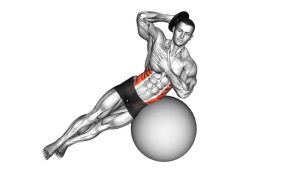
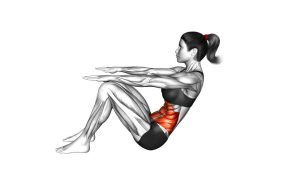
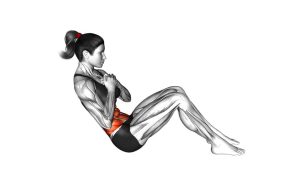
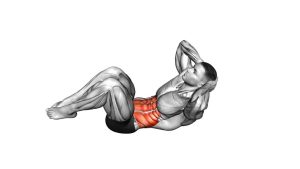
This exercise is best used when you already have good basic core control and can rotate your torso without collapsing, leaning, or using momentum. Because the stability ball moves underneath you, your abs must do more than twist: they must also stabilize the pelvis, control posture, and prevent unwanted rocking. The barbell adds rotational load, making the exercise more demanding than a basic seated torso twist.
The goal is not to twist as far as possible. Instead, the goal is to rotate with control through a safe range while keeping the hips mostly forward, the feet grounded, and the rib cage moving as one unit. A clean repetition should look smooth, balanced, and deliberate.
Quick Overview
| Body Part | Obliques |
|---|---|
| Primary Muscle | Obliques |
| Secondary Muscle | Rectus abdominis, transverse abdominis, spinal erectors, hip stabilizers |
| Equipment | Barbell and stability ball |
| Difficulty | Intermediate |
Sets & Reps (By Goal)
- Core control and technique: 2–3 sets × 8–10 reps per side using a light bar.
- Oblique endurance: 3 sets × 12–16 total twists with slow, steady tempo.
- Rotational strength: 3–4 sets × 6–10 reps per side with controlled loading.
- Warm-up activation: 1–2 sets × 8 reps per side before rotational sports or core training.
- Balance and stability focus: 2–3 sets × 30–45 seconds of continuous controlled twisting.
Progression rule: Increase control before increasing weight. Add load only when your hips stay stable, your feet remain planted, and the barbell stays level through every rotation.
Setup / Starting Position
- Place the stability ball on a flat surface: Make sure the ball is properly inflated and does not slide. Use a non-slip floor or mat if needed.
- Sit tall on the ball: Position your hips near the center of the ball with both feet planted firmly on the floor.
- Set your feet wide enough for balance: Keep your knees bent around 90 degrees and your feet slightly wider than hip-width.
- Position the barbell safely: Rest the barbell across your upper traps, not on the neck. Hold it with both hands wide enough to keep it secure.
- Brace your core: Keep your ribs down, chest lifted, shoulders relaxed, and spine neutral.
- Start facing forward: Your head, chest, and barbell should begin centered before the first twist.
Execution (Step-by-Step)
- Brace before moving: Take a small breath in, tighten your abs gently, and press both feet into the ground.
- Rotate from the torso: Turn your rib cage and shoulders to one side while keeping the barbell level.
- Keep the hips stable: The pelvis should remain mostly forward. Do not let the knees or hips swing with the twist.
- Control the end range: Pause briefly when you reach a comfortable rotation. Do not force your spine into a deep twist.
- Return to center: Rotate back slowly with control, keeping your posture tall and your core engaged.
- Repeat to the opposite side: Rotate smoothly in the other direction while maintaining the same tempo and posture.
- Continue alternating sides: Each side should look even, balanced, and controlled.
Pro Tips & Common Mistakes
Pro Tips
- Use a slow tempo: Rotate for 2 seconds, pause briefly, then return for 2 seconds.
- Keep the barbell level: A tilted bar usually means you are leaning instead of rotating.
- Brace lightly but consistently: Your abs should stay active through the full set.
- Rotate through the upper torso: Think about turning the ribs rather than twisting aggressively from the lower back.
- Start with an unloaded bar: Technique matters more than resistance on this movement.
Common Mistakes
- Using too much weight: Heavy loading can turn the exercise into a risky lower-back twist.
- Letting the hips follow: If the hips rotate too much, the obliques lose targeted tension.
- Leaning side to side: The motion should be rotation, not bending.
- Bouncing on the ball: Stay quiet and controlled instead of using momentum.
- Twisting too far: Forcing range can stress the spine. Stop at a controlled, comfortable position.
- Holding the breath: Breathe naturally while keeping your core braced.
FAQ
What muscles does the Barbell Seated Twist on Stability Ball work?
It primarily works the obliques, which rotate and stabilize the torso. It also trains the rectus abdominis, transverse abdominis, spinal stabilizers, and hip stabilizers because the ball creates an unstable seated base.
Is this exercise good for building a smaller waist?
It can strengthen and condition the waist muscles, especially the obliques. However, waist size also depends on body fat, nutrition, genetics, and overall training. Use this exercise for core strength and rotational control, not as a direct fat-loss shortcut.
Should beginners do this exercise?
Complete beginners should first learn basic core drills, seated torso rotations without weight, and stability ball balance. Once they can stay upright and rotate smoothly, they can progress to a light bar or dowel.
How heavy should the barbell be?
Start with an unloaded bar, body bar, or PVC pipe. Only add weight when your movement stays controlled, your lower back feels comfortable, and you can keep the ball stable throughout the set.
Should I twist fast or slow?
Slow is better. Fast twisting increases momentum and reduces control. A slower tempo keeps tension on the obliques and lowers the chance of losing balance or over-rotating the spine.
Can this exercise hurt my lower back?
It can if you use too much weight, force the twist, lose posture, or rotate mostly from the lumbar spine. Keep the load light, brace your abs, and rotate only through a comfortable range.
Recommended Equipment
- Stability Ball / Exercise Ball — the main support tool for seated balance and core stability work.
- Weighted Body Bar — a safer lighter alternative before progressing to a full barbell.
- Standard Barbell — useful once you can control the twist with perfect posture.
- Non-Slip Exercise Mat — helps keep the ball and feet stable during rotational movement.
- Barbell Pad — adds comfort when resting the bar across the upper traps.
Tip: For this exercise, the best equipment setup is the one that lets you move with control. Avoid heavy loading until your balance, posture, and rotation are consistent.