Weighted Front Plank: Form, Benefits, Sets, Tips & FAQ
Learn how to do the Weighted Front Plank with safe form, core bracing tips, sets by goal, common mistakes, FAQs, and recommended equipment.
Weighted Front Plank
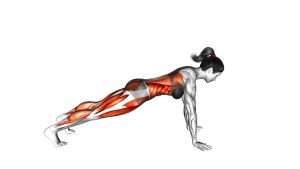
This exercise works best when the position stays clean from start to finish. The goal is not to hold the longest possible time with poor posture. Instead, focus on creating full-body tension through the abs, glutes, quads, shoulders, and forearms. A proper weighted front plank should feel like a controlled core brace, not a painful lower-back hold.
Quick Overview
| Body Part | Core |
|---|---|
| Primary Muscle | Rectus abdominis and transverse abdominis |
| Secondary Muscle | Obliques, glutes, hip flexors, serratus anterior, shoulders, quads, and spinal stabilizers |
| Equipment | Weight plate, exercise mat, and optional partner assistance |
| Difficulty | Intermediate to Advanced |
Sets & Reps (By Goal)
- Core strength: 3–5 sets × 15–30 seconds with a challenging but controlled weight.
- Muscular endurance: 2–4 sets × 30–60 seconds with a moderate load and perfect alignment.
- Beginner weighted progression: 2–3 sets × 10–20 seconds using a very light plate.
- Advanced core training: 4–6 sets × 20–40 seconds with heavier loading and full-body tension.
Progression rule: Increase hold time before increasing weight. Once you can hold 30–45 seconds with excellent form, add a small amount of load.
Setup / Starting Position
- Place a mat on the floor: Use a stable surface that allows your elbows and forearms to stay comfortable.
- Set your forearms: Position your elbows directly under your shoulders with your forearms parallel or slightly angled inward.
- Extend your legs back: Step both feet behind you and keep them about hip-width apart for balance.
- Add the weight carefully: Place a weight plate across the upper back, not on the lower spine. A partner can help for safer setup.
- Brace before lifting fully: Tighten your abs, squeeze your glutes, and lock your body into a straight line.
If the plate slides or shifts, use a smaller plate, improve your upper-back position, or ask a partner to place it more securely.
Execution (Step-by-Step)
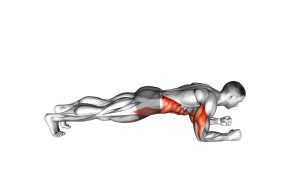
- Start in a strong forearm plank: Keep your elbows under your shoulders and press your forearms into the floor.
- Brace your core: Pull your ribs slightly down, tighten your abs, and avoid letting your lower back arch.
- Squeeze your glutes: This helps keep the pelvis neutral and prevents the hips from dropping.
- Keep your body long: Maintain a straight line from head to heels without lifting the hips too high.
- Hold with control: Breathe in short, steady breaths while keeping tension through the entire body.
- End before form breaks: Lower your knees gently or remove the weight safely when you can no longer hold alignment.
Pro Tips & Common Mistakes
- Place the weight high enough: Keep the plate on the upper back instead of the lumbar spine.
- Do not chase long holds: A clean 20-second hold is better than a sloppy 60-second hold.
- Keep the ribs down: Rib flare often leads to lower-back arching and reduced abdominal tension.
- Use the glutes: Strong glute engagement protects the lower back and improves body alignment.
- Avoid shoulder collapse: Push the floor away slightly so your chest does not sink between your shoulders.
- Control your breathing: Do not hold your breath for the entire set. Use short controlled breaths while staying braced.
- Progress slowly: Add weight only when your plank remains stable, quiet, and pain-free.
FAQ
What muscles does the weighted front plank work?
The weighted front plank mainly works the abs, especially the rectus abdominis and transverse abdominis. It also trains the obliques, glutes, shoulders, quads, and spinal stabilizers because the whole body must stay rigid under load.
Where should I place the weight plate?
Place the plate across the upper back, near the shoulder blade area. Avoid placing heavy weight directly on the lower back because that can increase spinal stress.
Is the weighted front plank good for building abs?
Yes. It is useful for building stronger abs because it increases the demand on your core during an isometric hold. However, visible abs also depend on nutrition, body fat level, and overall training consistency.
How heavy should I go on weighted planks?
Start light. A small plate is enough if you are new to this variation. Add weight only when you can hold a normal front plank with strong form for at least 45–60 seconds.
Why do I feel weighted planks in my lower back?
Lower-back pressure usually means your hips are dropping, your ribs are flaring, or the load is too heavy. Reduce the weight, shorten the set, squeeze your glutes harder, and focus on keeping the ribs pulled down.
Recommended Equipment
- Weight Plate — the main loading tool for progressing the weighted front plank.
- Exercise Mat — adds comfort for the forearms and improves floor grip.
- Bumper Plates — useful for safer and more comfortable loaded plank progressions.
- Forearm Plank Pads — helps reduce elbow pressure during longer plank holds.
- Weighted Vest — an alternative loading option that distributes weight more evenly.
Tip: For most lifters, a weight plate is the simplest option. However, a weighted vest may feel more secure if plates slide during the hold.