Suspender Pendulum Exercise: Form, Core Control, Tips & FAQ
Learn the Suspender Pendulum with video-based form cues, setup, execution, core-control tips, common mistakes, FAQs, and gear options.
Suspender Pendulum
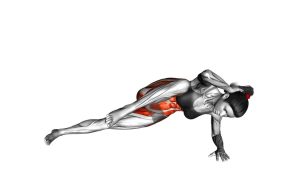
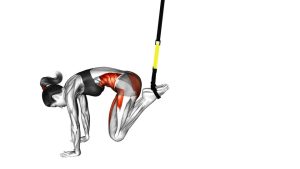
This exercise is built around control, balance, and steady body alignment. Because the feet are elevated in suspension straps, the body must resist unwanted swinging while guiding the legs from one side to the other. As a result, the exercise demands careful plank positioning, firm hand contact, and smooth lateral movement.
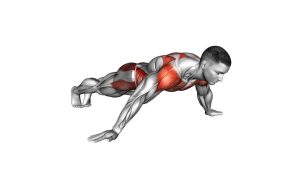
Based strictly on the video, the subject keeps both hands on the floor, both feet suspended behind the body, and the torso in a plank-like line. The legs travel side to side while the shoulders remain comparatively stable. However, the exact breathing pattern, strap length, and foot-loop attachment details are not clearly visible.
Quick Overview
| Body Part | Core |
|---|---|
| Primary Muscle | Core stabilizers / abdominals, based on the visible suspended plank position |
| Secondary Muscle | Obliques, shoulders, chest, hip stabilizers, and lower-back stabilizers may assist during the visible side-to-side plank control |
| Equipment | Suspension trainer / suspender straps |
| Difficulty | Advanced, because the feet are suspended and the body must control lateral swinging |
Sets & Reps (By Goal)
- Core control: 2–3 sets × 6–10 controlled swings per side
- Plank stability: 3 sets × 20–30 seconds of smooth side-to-side movement
- Strength endurance: 3–4 sets × 8–12 swings per side
- Technique practice: 2 sets × slow reps only, stopping before form breaks
Progression rule: First improve control and reduce unwanted swinging. After that, add time, reps, or range only if the hands stay planted and the torso remains stable.
Setup / Starting Position
- Set the suspension straps: Position the straps so both feet can be held off the floor. The exact strap height is not clearly visible in the video.
- Place the feet in the straps: Secure both feet in the loops. The exact foot-loop contact point is unclear from the footage.
- Move into a high plank: Place both hands flat on the floor with the arms extended.
- Align the body: Create a long plank-like line from the shoulders toward the suspended feet.
- Set the upper body: Keep the hands fixed and the shoulders steady before starting the pendulum motion.
- Prepare the swing: Brace enough to control the legs as they move side to side.
In the video, the subject begins from a stable plank position with the feet suspended behind the body. No additional equipment besides the straps is clearly visible.
Execution (Step-by-Step)
- Start in the suspended plank: Keep both hands planted and both feet supported by the straps.
- Stabilize the shoulders: Hold the upper body steady before moving the legs.
- Swing the legs to one side: Move the suspended feet and legs laterally in a controlled arc.
- Allow slight hip rotation: In the video, the hips appear to rotate slightly as the legs travel to the side.
- Return through center: Bring the legs back under the body with smooth control.
- Move to the opposite side: Continue the pendulum pattern by guiding the legs toward the other side.
- Repeat with rhythm: Keep the motion continuous, but avoid rushing or losing plank alignment.
Pro Tips & Common Mistakes
Pro Tips
- Keep the hands grounded: The hands stay planted throughout the visible movement, so avoid stepping or shifting them between reps.
- Control the swing: Let the legs move side to side, but do not let the straps pull the body out of position.
- Use a steady rhythm: Smooth movement is more useful than fast swinging.
- Keep the shoulders stable: The upper body should act like a strong base while the lower body moves.
- Limit the range if needed: Smaller swings are better when control starts to break.
Common Mistakes
- Swinging too aggressively: Excess momentum can turn the exercise into uncontrolled strap movement.
- Letting the hips drop: Dropping out of the plank position reduces control and may overload the lower back.
- Moving the hands: Hand repositioning is not visible in the demonstration, so keep the base steady.
- Rushing through center: Passing through the middle too quickly makes the pendulum harder to control.
- Over-rotating: The video shows side movement with slight rotation, not a full body twist.
FAQ
What is the Suspender Pendulum?
The Suspender Pendulum is a suspension-based plank exercise. In the video, the feet are held in straps while the hands stay on the floor, then the legs swing side to side in a controlled pendulum pattern.
What muscles does the Suspender Pendulum work?
The movement visibly uses a suspended plank position, so it is mainly categorized as a core stability exercise. The abdominals, obliques, shoulders, and hip stabilizers may assist. However, exact muscle activation cannot be directly confirmed from the video alone.
Is the Suspender Pendulum beginner-friendly?
Based on the visible setup, this is not a beginner-level movement. The feet are suspended, the hands support the body, and the legs move laterally, which makes the exercise more demanding than a standard plank.
Should the movement be fast or slow?
The video shows a controlled and rhythmic movement. Therefore, the best approach is to move smoothly rather than relying on speed or uncontrolled momentum.
Do the hips rotate during the exercise?
In the video, the hips appear to rotate slightly as the legs move from side to side. However, the movement does not appear to be a full twisting exercise.
What should I do if I cannot control the swing?
Reduce the range of motion and slow down the movement. Additionally, stop the set before the hips drop, the hands shift, or the straps start pulling the body out of control.
Recommended Equipment
- Suspension Trainer System — the main tool needed for suspended-foot plank variations.
- TRX-Style Suspension Straps — useful for pendulum-style core exercises with adjustable strap length.
- Suspension Trainer Door Anchor — helps set up straps when a fixed overhead anchor is not available.
- Non-Slip Exercise Mat — supports hand comfort and helps reduce slipping during plank work.
- Push-Up Handles — optional hand-support tool for users who prefer a raised grip during floor plank positions.
Choose equipment that stays secure during suspended movement. If the straps, anchor, or floor surface feel unstable, do not perform the exercise.