Weighted Plate Sit-Up to Overhead Press: Form, Muscles Worked, Sets & FAQ
Learn how to do the Weighted Plate Sit-Up to Overhead Press with proper form. Discover muscles worked, setup, step-by-step execution, sets by goal, common mistakes, FAQs, and recommended equipment.
Weighted Plate Sit-Up to Overhead Press
This exercise is useful for lifters who want to build stronger abs while improving upper-body coordination. Because the load moves from the chest to an overhead position, your trunk has to stay braced throughout the rep. Done correctly, it can help develop better core tension, body control, and resistance to collapsing during flexion-based movements.
Quick Overview
| Body Part | Abs |
|---|---|
| Primary Muscle | Rectus abdominis |
| Secondary Muscle | Obliques, hip flexors, anterior deltoids, deep core stabilizers |
| Equipment | Weight plate, exercise mat or padded floor surface |
| Difficulty | Intermediate |
Sets & Reps (By Goal)
- Core strength: 3–4 sets × 6–10 reps with controlled tempo and 60–90 sec rest
- Muscular endurance: 2–4 sets × 10–15 reps with lighter weight and 45–75 sec rest
- Conditioning circuits: 2–3 sets × 8–12 reps combined with other core movements
- Movement quality / coordination: 2–3 sets × 6–8 slow reps focusing on smooth transitions
Progression rule: Master the sit-up and overhead press pattern with light resistance first, then increase plate weight gradually while keeping the lowering phase slow and controlled.
Setup / Starting Position
- Lie on your back: Position yourself on a mat with knees bent and feet flat on the floor.
- Hold the plate securely: Grip the weight plate with both hands and keep it close to your chest.
- Brace your core: Tighten your abs before starting and keep your neck in a neutral position.
- Set your feet: Plant them firmly so your lower body stays stable during the sit-up.
- Prepare for control: Think about lifting with your abs rather than swinging the arms or using momentum.
Tip: A light plate is usually best when learning the movement. The goal is smooth coordination, not rushing into heavy loading.
Execution (Step-by-Step)
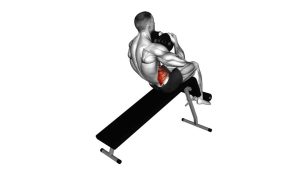
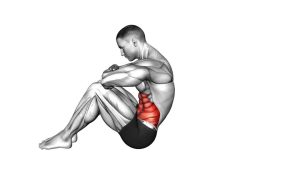
- Begin the sit-up: Curl your torso upward by contracting your abs while keeping the plate close to your chest.
- Rise with control: Continue lifting until you approach an upright seated position without yanking with the arms.
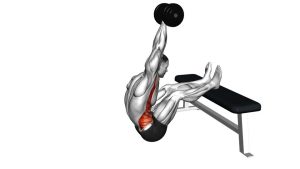
- Press the plate overhead: As you reach the top, extend your arms and press the plate straight overhead.
- Pause briefly: Hold the top position for a moment while staying tall and braced through the trunk.
- Lower the plate: Bring the weight back down toward your chest under control.
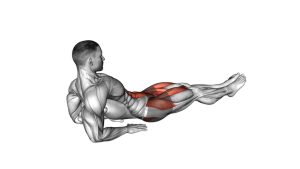
- Return to the floor slowly: Lower your torso back to the starting position one segment at a time rather than dropping back.
- Reset and repeat: Re-brace your core before starting the next repetition.
Pro Tips & Common Mistakes
- Keep the movement controlled: Avoid using momentum to throw yourself up.
- Do not rush the lowering phase: The eccentric portion helps build core strength and control.
- Press overhead only after sitting up: Do not start the press too early, or you may lose balance and tension.
- Keep the neck relaxed: Do not lead with the head or yank the chin forward.
- Choose the right load: Too much weight can turn the exercise into a sloppy, hip-flexor-dominant sit-up.
- Stay planted through the feet: A stable base helps keep the rep smooth and repeatable.
- Do not arch hard overhead: Keep ribs down and abs engaged when the plate reaches the top.
FAQ
What muscles does the Weighted Plate Sit-Up to Overhead Press work?
The main target is the rectus abdominis. It also trains the obliques, hip flexors, anterior deltoids, and deep core stabilizers as you lift and control the weight.
Is this exercise for beginners?
It is usually better suited for intermediate trainees. Beginners should first master standard sit-ups, dead bugs, or bodyweight core drills before adding a plate and overhead press.
Should I use a heavy plate for this exercise?
Not at first. Start with a light plate that allows you to control both the sit-up and the overhead press. Form and tempo matter more than heavy loading here.
Where should I feel this movement most?
You should mainly feel it in the abs, with secondary effort in the shoulders and hip flexors. If your lower back or neck takes over, reduce the weight and slow the movement down.
Can I use this in an ab workout?
Yes. It works well as a featured weighted core movement in ab training, total-body circuits, or conditioning sessions when you want more challenge than a basic sit-up.
Recommended Equipment (Optional)
- Weight Plate — the main loading tool for this exercise; choose a grip-friendly plate you can control safely
- Exercise Mat — adds comfort and support for floor-based core training
- Ab Mat — useful for core sessions when you want extra support or a more comfortable setup
- Medicine Ball — a good alternative if you want a different style of weighted core work
- Foam Pad or Training Pad — helpful if you want additional cushioning for floor exercises and recovery work
These gear categories are widely available on Amazon, including weight plates, ab mats, exercise mats, and medicine balls.