Lying Single-Leg Circle: Core Stability, Form, Benefits & Tips
Learn the Lying Single-Leg Circle for core control, hip mobility, and lower-ab stability with step-by-step form, sets, tips, FAQs, and equipment.
Lying Single-Leg Circle
This exercise is useful for improving coordination between the hips and the core. Because one leg moves through a circular path while the body stays still, the abdominal muscles must resist unwanted rotation, arching, and shifting. That makes the Lying Single-Leg Circle a valuable choice for Pilates routines, home core workouts, warm-ups, mobility sessions, and beginner-friendly trunk control training.
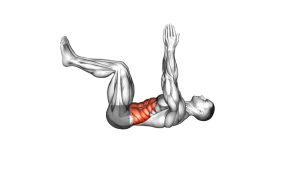
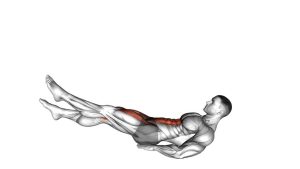
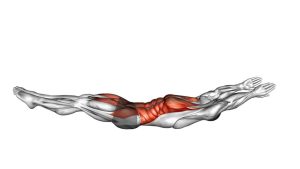
In the video demonstration, the model lies on her back with the arms placed beside the body for support. One leg performs a controlled circular motion, while the other leg remains extended and stable. The circle is performed smoothly from the hip joint. The torso does not twist, the shoulders stay relaxed, and the abdominal wall remains active throughout the full repetition.
Quick Overview
| Body Part | Core |
|---|---|
| Primary Muscle | Lower abdominals, rectus abdominis, deep core stabilizers |
| Secondary Muscle | Hip flexors, obliques, adductors, quadriceps, pelvic stabilizers |
| Equipment | Bodyweight only; optional exercise mat |
| Difficulty | Beginner to intermediate, depending on circle size and leg position |
Sets & Reps (By Goal)
- Beginner core control: 2 sets × 5–8 circles per leg, each direction
- Pilates-style endurance: 2–3 sets × 8–12 circles per leg, each direction
- Hip mobility warm-up: 1–2 sets × 6–10 slow circles per leg
- Lower-ab stability focus: 3 sets × 6–10 controlled circles per leg with a smaller range
- Advanced control variation: 3 sets × 10–15 circles per leg while keeping the non-working leg slightly elevated
Progression rule: Improve control before increasing range. A small circle with a steady pelvis is better than a wide circle with a rocking torso.
Setup / Starting Position
- Lie on your back: Place your body flat on an exercise mat with your head, shoulders, ribs, and pelvis aligned.
- Set your arms: Keep your arms straight beside your body with your palms pressing lightly into the floor for balance.
- Extend both legs: Start with both legs long. Keep the knees straight but not aggressively locked.
- Brace the core: Gently draw the ribs down and keep the lower back controlled against the mat or in a neutral position.
- Lift one leg: Raise the working leg upward until it is near vertical or at a controlled angle that you can manage without back arching.
- Stabilize the opposite leg: Keep the non-working leg extended and still. It can rest on the floor for an easier version or hover slightly for more challenge.
- Prepare to move from the hip: Keep the pelvis heavy, shoulders relaxed, and face neutral before starting the circle.
Tip: Beginners should keep the non-working leg on the floor. This makes it easier to control the pelvis and protect the lower back.
Execution (Step-by-Step)
- Start with the leg lifted: Keep the working leg long and controlled above the hip. Your arms stay grounded, and your core stays active.
- Cross slightly inward: Move the raised leg gently across the midline of the body. Do not let the opposite hip lift off the floor.
- Circle outward: Sweep the leg away from the center in a smooth arc. The motion should come from the hip, not from swinging the foot.
- Lower with control: Continue the circular path downward without letting the lower back arch or the ribs flare.
- Return to the top: Complete the circle by bringing the leg back to the starting position above the hip.
- Repeat slowly: Perform all reps in one direction, then reverse the circle with the same level of control.
- Switch legs: Lower the working leg carefully, reset your posture, and repeat the same number of circles on the other side.
Pro Tips & Common Mistakes
Pro Tips
- Think “circle from the hip”: The leg should trace the shape smoothly while the knee and ankle stay relaxed.
- Keep the circle moderate: A smaller circle helps you train better core control and reduces hip compensation.
- Use your arms lightly: Press the palms into the floor just enough to support stability, not to force the movement.
- Control your breathing: Exhale during the harder part of the circle and inhale as you reset the leg path.
- Move slowly: A slower tempo increases abdominal demand and makes poor form easier to notice.
- Keep both sides even: Match the circle size and rep count on the right and left leg.
Common Mistakes
- Arching the lower back: This usually means the circle is too large or the leg is dropping too low.
- Rocking the hips: The pelvis should stay stable while the leg moves around the hip joint.
- Using momentum: Fast circles reduce core activation and increase the chance of losing control.
- Bending the working knee too much: A slight softness is fine, but excessive bending changes the movement pattern.
- Tensing the neck and shoulders: Keep the upper body relaxed so the core and hips do the work.
- Making the circle too wide: Bigger is not always better. Control is the main target of this exercise.
FAQ
What muscles does the Lying Single-Leg Circle work?
The exercise mainly works the lower abdominals, deep core stabilizers, and hip flexors. It also involves the obliques, adductors, quadriceps, and pelvic stabilizers because the body must resist rotation while the leg moves.
Is the Lying Single-Leg Circle a core exercise or a hip exercise?
It is both. The moving leg trains hip mobility and control, while the abdominals stabilize the pelvis and spine. The best reps happen when the hip moves freely but the torso stays still.
Should my lower back stay flat during the movement?
Your lower back should stay controlled. Some people use a neutral spine, while others lightly press the lower back toward the mat. The key is to avoid excessive arching as the leg lowers or circles outward.
How big should the leg circle be?
The circle should only be as large as you can control. If your hips shift, your ribs flare, or your lower back lifts, make the circle smaller. Quality matters more than range.
Can beginners do this exercise?
Yes. Beginners should keep the non-working leg on the floor and use a small circle. As control improves, the circle can become slightly larger or the opposite leg can hover for more challenge.
Why do I feel my hip flexors more than my abs?
The hip flexors help move the leg, so some activation is normal. However, if they dominate completely, reduce the circle size, slow down, and focus on keeping the ribs and pelvis stable.
Recommended Equipment (Optional)
- Exercise Mat — provides cushioning for the spine, hips, and shoulders during floor-based core work
- Pilates Mat — thicker than many standard mats and useful for controlled Pilates movements
- Pilates Ring — helpful for adding light inner-thigh and core activation in related Pilates drills
- Mini Resistance Bands — useful for hip stability, glute activation, and warm-up work before leg-circle training
- Yoga Block — can be used as a support tool for mobility drills, alignment practice, and modified core positions
Tip: The Lying Single-Leg Circle does not require equipment, but a supportive mat can make the exercise more comfortable and easier to control.