Bear Plank: Proper Form, Core Benefits, Sets, Tips & FAQ
Learn the Bear Plank to build core strength, shoulder stability, and full-body control. Includes setup, steps, sets, mistakes, FAQs, and gear.
Bear Plank
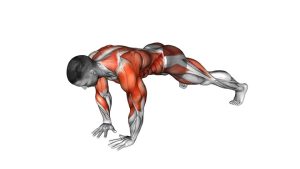
This exercise is best performed with slow breathing, a neutral spine, and steady pressure through both hands and feet. Because the knees stay only a few centimeters above the floor, the movement should feel controlled rather than rushed. As a result, the Bear Plank is excellent for improving core bracing, shoulder stability, and full-body coordination without needing equipment.
Quick Overview
| Body Part | Core |
|---|---|
| Primary Muscle | Rectus abdominis and deep core stabilizers |
| Secondary Muscle | Shoulders, serratus anterior, hip flexors, quadriceps, glutes |
| Equipment | No equipment required; optional exercise mat |
| Difficulty | Beginner to Intermediate |
Sets & Reps (By Goal)
- Core activation: 2–3 sets of 10–20 seconds with controlled breathing.
- Beginner strength: 3 sets of 15–25 seconds with 45–60 seconds of rest.
- Core endurance: 3–4 sets of 25–45 seconds while keeping the knees low.
- Workout finisher: 2–3 rounds of 30 seconds after your main core training.
- Form practice: 4–6 short holds of 8–12 seconds with perfect positioning.
Progression rule: First increase hold quality, then increase time. If your hips rise, lower back sags, or shoulders collapse, shorten the hold and reset your position.
Setup / Starting Position
- Start on all fours: Place your hands under your shoulders and your knees under your hips.
- Set your feet: Tuck your toes into the floor so you can lift the knees smoothly.
- Stack your joints: Keep wrists, elbows, and shoulders aligned while your hips stay over your knees.
- Brace your core: Gently tighten your abs as if preparing for a small push.
- Keep your spine neutral: Look slightly down and keep your head in line with your back.
Use a mat if the floor feels uncomfortable. However, avoid overly soft surfaces because they can make your wrists and shoulders less stable.
Execution (Step-by-Step)
- Press into the floor: Push evenly through both hands while keeping your shoulders stable.
- Lift the knees slightly: Raise both knees only a few centimeters above the ground.
- Hold the hover: Keep your hips low, spine flat, and knees close to the floor.
- Breathe under tension: Take slow breaths without letting your belly drop or your ribs flare.
- Stay still: Avoid rocking forward, shifting side to side, or pushing the hips high.
- Lower with control: Return the knees to the floor gently when the hold is complete.
Pro Tips & Common Mistakes
- Keep the knees low: The exercise becomes more effective when the knees hover close to the floor instead of rising high.
- Do not round the upper back aggressively: Stay active through the shoulders, but keep the spine controlled.
- Avoid lower-back sagging: Brace your abs before lifting your knees.
- Do not hold your breath: Controlled breathing helps you maintain tension without unnecessary strain.
- Spread your fingers: A wider hand contact improves stability and reduces wrist pressure.
- Keep your neck neutral: Look down slightly instead of craning your head forward.
- Reset before fatigue breaks form: Short, clean holds are more useful than long sloppy holds.
FAQ
What muscles does the Bear Plank work?
The Bear Plank mainly works the core muscles, especially the abs and deep stabilizers. Additionally, it trains the shoulders, serratus anterior, hip flexors, quadriceps, and glutes because the body must stay steady while the knees hover.
Is the Bear Plank good for beginners?
Yes. The Bear Plank can be beginner-friendly when performed with short holds and strict form. However, beginners should start with 10–15 second holds before increasing time.
How high should my knees be during a Bear Plank?
Your knees should hover only a few centimeters above the floor. If they lift too high, the movement becomes less precise and may shift tension away from the core.
Why does my lower back sag during the Bear Plank?
Lower-back sagging usually means your core brace is fading or the hold is too long. Therefore, shorten the set, tighten your abs before lifting, and keep your ribs pulled slightly down.
Can I do Bear Planks every day?
You can practice Bear Planks frequently if the volume is low and your joints feel good. For strength-focused training, 2–4 times per week is usually enough.
Recommended Equipment
- Thick Exercise Mat — adds comfort for knees, hands, and floor-based core exercises.
- Wrist Support Workout Gloves — useful if your wrists need extra support during hands-loaded positions.
- Core Sliders — helpful for progressing into dynamic bear plank variations later.
- Resistance Bands Set — supports warm-ups, shoulder activation, and full-body stability drills.
- Balance Pad — adds an optional stability challenge once basic Bear Plank form is controlled.
Tip: Master the bodyweight Bear Plank first. After that, add equipment only when your spine, shoulders, and knees stay stable.