Dumbbell Side Bridge with Bent Leg: Form, Sets, Tips & FAQ
Learn the dumbbell side bridge with bent leg to train obliques, core stability, and hip control with safe form, sets, tips, FAQs, and equipment.
Dumbbell Side Bridge with Bent Leg
This exercise works best when the hips move smoothly while the torso stays firm. Because the dumbbell adds resistance directly over the hip area, the side abs must work harder to lift and hold the pelvis. Therefore, the goal is to raise the hips with control, keep the shoulder stable, and avoid letting the body roll forward or backward.
Quick Overview
| Body Part | Core |
|---|---|
| Primary Muscle | Obliques |
| Secondary Muscle | Transverse abdominis, glutes, hip stabilizers, shoulder stabilizers |
| Equipment | Dumbbell and exercise mat |
| Difficulty | Intermediate because the bent-leg base helps support the body, but the dumbbell adds load |
Sets & Reps (By Goal)
- Core stability: 2–3 sets × 8–12 controlled reps per side
- Oblique strength: 3–4 sets × 6–10 reps per side with a moderate dumbbell
- Muscle endurance: 2–3 sets × 12–15 reps per side with a lighter dumbbell
- Technique practice: 1–2 sets × 6–8 slow reps per side without rushing the hip lift
Progression rule: First improve control and hip height. Then, increase reps. Finally, use a slightly heavier dumbbell only when both sides stay stable.
Setup / Starting Position
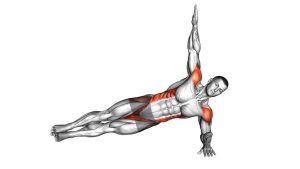
- Lie on your side: Place one forearm on the floor with the elbow under or near the shoulder.
- Bend the bottom leg: Keep the lower knee bent and grounded so it can support the side bridge.
- Extend the top leg: Keep the upper leg straight, aligned with the body, and stable.
- Place the dumbbell: Hold or rest the dumbbell on the upper side of the hip, as shown in the video.
- Set the torso: Keep the chest facing sideways, the neck neutral, and the hips ready to lift.
Tip: Start with a small range of motion if the dumbbell feels unstable. Control matters more than height.
Execution (Step-by-Step)
- Brace the core: Lightly tighten the side abs before lifting the hips.
- Press through the forearm and lower knee: Keep the support points firm against the floor.
- Lift the hips upward: Raise the pelvis until the body forms a stronger diagonal line from shoulder to leg.
- Keep the dumbbell steady: Do not let the weight slide, bounce, or pull the torso forward.
- Pause briefly at the top: Hold the elevated position for a moment while keeping the obliques engaged.
- Lower with control: Bring the hips back down slowly instead of dropping into the floor.
- Repeat on both sides: Perform the same number of reps with the same level of control on each side.
Pro Tips & Common Mistakes
- Lift from the side abs: Think about bringing the lower side of your waist away from the floor.
- Keep the elbow stable: Do not let the supporting shoulder shrug toward the ear.
- Avoid torso rotation: Keep the chest facing sideways throughout the rep.
- Use a controlled tempo: Lift smoothly, pause briefly, and lower slowly.
- Do not overload too early: A heavy dumbbell can make the movement sloppy and reduce oblique control.
- Keep the dumbbell secure: Hold it in place if needed, especially during the lowering phase.
- Match both sides: Because this is a unilateral core exercise, train the weaker side with extra attention.
FAQ
What muscles does the dumbbell side bridge with bent leg work?
It mainly targets the obliques. In addition, it trains deep core stability, hip control, glute support, and shoulder stability because the body must stay balanced in a side-bridge position.
Is the bent-leg version easier than a full side plank?
Yes, the bent lower leg gives more support than a full straight-leg side plank. However, because this version uses a dumbbell on the hip, it can still feel challenging.
Where should I place the dumbbell?
Place it on the upper side of the hip, as shown in the video. Keep it steady with your hand if needed so the weight does not slide during the hip lift.
Should I move fast or slow?
Move slowly. A controlled tempo helps the obliques do the work and reduces the chance of twisting, bouncing, or dropping the hips.
Why do I feel this in my shoulder?
The supporting shoulder helps stabilize the body. However, sharp pain or heavy shoulder discomfort may mean your elbow position, load, or shoulder control needs adjustment.
Can beginners do this exercise?
Beginners can start with the same bent-leg side bridge pattern without a dumbbell. After control improves, they can add a light dumbbell and progress gradually.
Recommended Equipment
- Hex Dumbbell — ideal for adding stable resistance to the hip during the side bridge
- Adjustable Dumbbell — useful when you want small load increases without buying multiple dumbbells
- Thick Exercise Mat — adds comfort for the forearm, elbow, knee, and side-plank setup
- Neoprene Dumbbell Set — lighter options for beginners practicing weighted core control
- Workout Knee Pad — helpful for protecting the bent lower knee during repeated sets
Tip: Choose a dumbbell that stays stable on the hip and allows smooth reps. If the weight causes twisting or dropping, it is too heavy for this variation.