Dumbbell Front Plank Arm Raise: Core Stability, Form, Sets & Tips
Learn the Dumbbell Front Plank Arm Raise to build core stability, shoulder control, and anti-rotation strength with proper form, sets, tips, and FAQs.
Dumbbell Front Plank Arm Raise
This exercise is best performed with light-to-moderate dumbbells because balance and control matter more than heavy loading. Also, the dumbbells create a firm hand position, while the single-arm reach challenges the body to stay square to the floor. You should feel the core working hard to prevent twisting, while the front shoulder controls the arm raise.
Quick Overview
| Body Part | Core |
|---|---|
| Primary Muscle | Rectus abdominis, transverse abdominis, and obliques |
| Secondary Muscle | Anterior deltoids, serratus anterior, chest, triceps, glutes, quads, and spinal stabilizers |
| Equipment | Pair of dumbbells |
| Difficulty | Intermediate because it requires plank strength, shoulder stability, and anti-rotation control |
Sets & Reps (By Goal)
- Core stability: 3–4 sets × 6–10 reps per side with slow control.
- Shoulder control: 2–4 sets × 6–8 reps per side using a lighter dumbbell.
- Muscular endurance: 2–3 sets × 10–14 total alternating reps.
- Beginner progression: 2–3 sets × 4–6 reps per side with feet wider than shoulder-width.
Progression rule: First improve control, then add reps. After that, increase dumbbell weight only if the hips stay level and the arm raise remains smooth.
Setup / Starting Position
- Place two dumbbells on the floor: Set them slightly narrower than shoulder-width or directly under the shoulders.
- Grip the dumbbells firmly: Keep the wrists neutral and the arms straight.
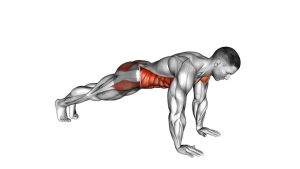
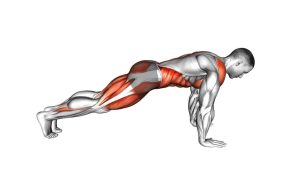
- Step into a high plank: Extend both legs back and keep the body long from head to heels.
- Set your feet wider for balance: A wider stance helps reduce unwanted hip rotation.
- Brace before moving: Tighten the abs, squeeze the glutes lightly, and keep the head neutral.
Tip: If the dumbbells roll or feel unstable, use hex dumbbells instead of round dumbbells.
Execution (Step-by-Step)
- Start in a strong plank: Keep both hands on the dumbbells, elbows straight, shoulders stacked, and core braced.
- Shift weight carefully: Press the supporting dumbbell into the floor while keeping the hips square.
- Raise one arm forward: Lift the working dumbbell in front of the body with a mostly straight arm.
- Reach under control: Move the dumbbell forward until the arm is close to shoulder height or the highest position you can control.
- Pause briefly: Hold the top position without letting the torso twist or the hips sag.
- Lower slowly: Return the dumbbell to the floor with control.
- Repeat or alternate: Perform all reps on one side or switch sides after each controlled rep.
Pro Tips & Common Mistakes
- Keep the body line straight: Avoid letting the hips drop as the dumbbell lifts.
- Brace before every rep: Exhale slightly, tighten the abs, and then raise the arm.
- Do not rush: Fast reps usually create twisting instead of true core stability.
- Avoid overreaching: Raise only as high as your shoulder and trunk can control.
- Keep the supporting shoulder active: Push the floor away so the chest does not collapse.
- Use lighter dumbbells first: The exercise becomes harder because one arm leaves the floor, not because the dumbbell must be heavy.
- Control the return: Do not drop the dumbbell back to the floor.
FAQ
What muscles does the Dumbbell Front Plank Arm Raise work?
It mainly trains the abs, obliques, and deep core stabilizers. Additionally, it works the shoulders, chest, triceps, glutes, and legs because the whole body must stabilize during the arm raise.
Is this exercise better for abs or shoulders?
It is primarily a core stability exercise. However, the front shoulder also works strongly because it raises and controls the dumbbell while the body stays in a plank.
Should I use heavy dumbbells?
No. Start light because the main goal is anti-rotation control. Once your hips stay level and your shoulder stays stable, you can slowly increase the load.
Why do my hips rotate during the movement?
Hip rotation usually means the load is too heavy, the stance is too narrow, or the core is not braced before the arm lift. Therefore, widen your feet, slow the rep down, and use a lighter dumbbell.
Can beginners do this exercise?
Beginners can use a modified version by raising the arm without weight, using very light dumbbells, or performing the movement from the knees. After that, they can progress to the full plank version.
Recommended Equipment
- Hex Dumbbells — stable dumbbells that are less likely to roll during plank exercises
- Adjustable Dumbbells — useful for progressing the exercise gradually without needing many separate weights
- Non-Slip Exercise Mat — improves comfort and helps keep the feet from sliding
- Push-Up Handles — an alternative grip option if dumbbells feel uncomfortable on the wrists
- Core Sliders — useful for pairing with advanced plank and anti-rotation core drills
Tip: For this specific exercise, hex dumbbells are usually the best choice because they stay more stable on the floor.