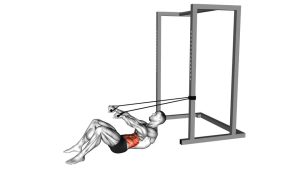
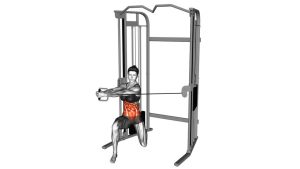
Band Standing Crunch: Proper Form, Benefits, Sets, Tips & FAQ
Learn the Band Standing Crunch for stronger abs with step-by-step form, sets by goal, common mistakes, FAQs, and resistance band equipment tips.
Band Standing Crunch
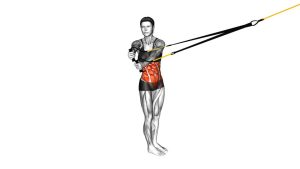
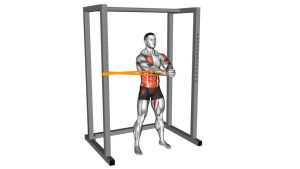
This movement is useful for home workouts, gym warm-ups, and core-focused training because it creates constant tension without needing a cable machine. The band challenges your abs most when you crunch down and also forces you to control the return phase. When performed correctly, the movement feels like a strong abdominal squeeze, not a hip hinge, shoulder pull, or lower-back strain.
The best reps are smooth, compact, and intentional. Your hands should stay close to your head or upper chest, while your elbows move only because your torso is curling. Keep your hips stable, avoid swinging, and focus on bringing the ribcage down toward the pelvis. This makes the exercise more effective for the abs and safer for the spine.
Quick Overview
| Body Part | Core |
|---|---|
| Primary Muscle | Rectus abdominis |
| Secondary Muscle | Obliques, transverse abdominis, hip stabilizers, and spinal stabilizers |
| Equipment | Resistance band and high anchor point |
| Difficulty | Beginner to Intermediate |
Sets & Reps (By Goal)
- Core activation: 2–3 sets × 10–12 reps with light band tension.
- Muscle building: 3–4 sets × 10–15 reps with moderate tension and a strong squeeze.
- Core endurance: 2–4 sets × 15–20 reps with a smooth rhythm and strict control.
- Strength-focused core work: 3–5 sets × 8–12 reps with heavier band resistance.
- Beginner practice: 2 sets × 8–10 reps while learning the crunch path.
Progression rule: Add reps first, then increase band tension. If heavier resistance makes you pull with your arms or hinge from the hips, return to a lighter band.
Setup / Starting Position
- Anchor the band high: Attach the resistance band above head level to a secure rack, pull-up bar, door anchor, or stable high point.
- Stand facing away or slightly away from the anchor: Step forward until the band has light tension before the first rep.
- Set your feet: Stand about shoulder-width apart with knees soft and weight balanced through the mid-foot.
- Grip the band: Hold both ends near your face, temples, or upper chest. Keep your hands fixed in that position.
- Brace lightly: Pull your ribs down slightly, tighten your abs, and avoid arching the lower back.
- Keep the hips stable: Your pelvis should stay mostly in place while your upper body curls forward.
- Start tall: Begin upright with your chest lifted, shoulders relaxed, and band tension controlled.
Tip: The band should pull from above and behind you. If the anchor is too low, the exercise becomes less effective and may turn into an awkward arm pull.
Execution (Step-by-Step)
- Begin from a tall stance: Keep your hands close to your head or upper chest. Do not let the band pull your shoulders backward.
- Exhale and crunch down: Curl your upper torso forward by bringing your ribs toward your pelvis.
- Keep your arms quiet: Your elbows may travel down slightly, but they should move because your torso is flexing, not because your arms are pulling.
- Squeeze your abs at the bottom: Pause briefly when your abdominal contraction is strongest.
- Avoid folding at the hips: Your spine should round under control. Do not simply push your hips back and bow forward.
- Return slowly: Resist the band as you come back to the upright position.
- Reset your brace: Keep the ribs controlled before starting the next repetition.
Pro Tips & Common Mistakes
Pro Tips
- Think ribs to pelvis: This cue helps you target the abs instead of turning the rep into a bowing motion.
- Use a controlled exhale: Breathe out as you crunch down to improve abdominal contraction.
- Keep tension at the top: Do not fully relax between reps. Stay braced before the next crunch.
- Pause at the bottom: A short squeeze makes the rep more effective and reduces momentum.
- Use a band you can control: Stronger resistance only helps if the abs remain the main driver.
Common Mistakes
- Pulling with the arms: The arms should hold the band in place, not drag the body down.
- Hinging from the hips: Pushing the hips back reduces abdominal work and changes the movement pattern.
- Arching at the top: Overextending the lower back between reps can create unnecessary stress.
- Using too much band tension: Heavy resistance often causes shoulder pulling and poor control.
- Rushing the return: The upward phase should be slow enough to keep the abs engaged.
- Letting the neck lead: Keep the head relaxed and allow the torso, not the neck, to create the crunch.
FAQ
What muscles does the Band Standing Crunch work?
The main target is the rectus abdominis, which is the front abdominal muscle responsible for trunk flexion. The obliques, transverse abdominis, and stabilizing muscles around the hips and spine also help control the movement.
Is the Band Standing Crunch good for beginners?
Yes. It is beginner-friendly when the band tension is light and the movement is controlled. Beginners should focus on learning the crunch pattern before adding more resistance.
Should I feel this exercise in my lower back?
No. You may feel your trunk stabilizers working, but the main contraction should be in the abs. If your lower back feels strained, reduce the resistance, shorten the range of motion, and avoid arching at the top.
Is this better than a cable crunch?
It depends on your goal and equipment. Cable crunches allow precise loading, while band standing crunches are more portable and easier to perform at home. Both can be effective when you use proper spinal flexion and avoid pulling with the arms.
How high should the band be anchored?
The band should be anchored above head level. A higher anchor helps the resistance pull from the right direction and makes it easier to crunch down against tension.
Can I do Band Standing Crunches every day?
You can perform light core activation work frequently, but harder sets should usually be spaced out. If your abs are sore or your form gets worse, allow recovery before training the movement again.
Recommended Equipment
- Resistance Bands Set — useful for adjusting resistance levels as your core strength improves.
- Door Anchor for Resistance Bands — helps create a secure high anchor point for home training.
- Loop Resistance Bands — compact bands that can work well with racks, bars, and sturdy anchor points.
- Resistance Band Handles — improves grip comfort when performing higher-rep band crunches.
- Exercise Mat — useful for pairing this exercise with floor-based core work in the same session.
Tip: Always check that your band and anchor are secure before starting. A loose anchor can interrupt the movement and create unnecessary risk.