Russian Twist with Hands on Chest: Core Form, Benefits & Tips
Learn the Russian Twist with Hands on Chest to train obliques, core rotation, and trunk control with safe form, sets, tips, FAQs, and gear.
Russian Twist with Hands on Chest
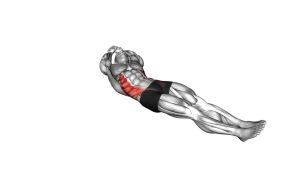
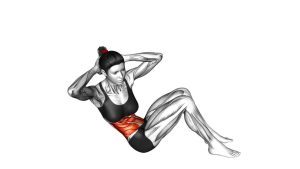
This Russian Twist variation is useful when you want to build core control without using a dumbbell, kettlebell, or medicine ball. Since the arms do not swing across the body, the exercise encourages cleaner rotation through the trunk. As a result, it is a smart choice for beginners, home workouts, warm-ups, and core endurance sessions.
However, the movement should stay controlled rather than fast. Keep the chest lifted, lean back only as far as you can manage, and rotate from the rib cage instead of yanking the neck or shoulders. In addition, maintain steady breathing so your lower back does not take over.
Quick Overview
| Body Part | Core |
|---|---|
| Primary Muscle | Obliques |
| Secondary Muscle | Rectus abdominis, transverse abdominis, hip flexors, spinal stabilizers |
| Equipment | No equipment required |
| Difficulty | Beginner to intermediate, depending on lean angle and foot position |
Sets & Reps (By Goal)
- Beginner core control: 2–3 sets × 8–12 reps per side with a slow tempo
- Core endurance: 3–4 sets × 12–20 reps per side with steady breathing
- Oblique strength focus: 3–5 sets × 10–15 reps per side with a brief pause at each side
- Warm-up activation: 1–2 sets × 8–10 reps per side before full-body training
- Home ab finisher: 2–3 rounds × 30–45 seconds while keeping the movement controlled
Progression rule: First improve control, range, and breathing. Then, increase reps or time. After that, you may progress to a weighted Russian twist only if your lower back stays comfortable.
Setup / Starting Position
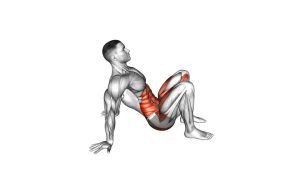
- Sit on the floor: Bend your knees and place your feet in front of you.
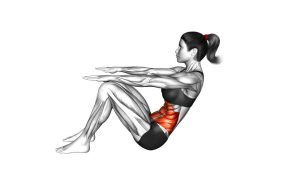
- Lean back slightly: Create a diagonal torso angle while keeping your spine long and your chest lifted.
- Place hands on chest: Cross your arms or rest your hands lightly on your upper chest.
- Brace your core: Tighten your midsection as if preparing for a light punch to the stomach.
- Set your gaze: Keep your head aligned with your chest so the neck follows the torso naturally.
- Control the feet: Keep the feet planted for an easier version. For a harder variation, lift them only if your hips and spine stay stable.
Tip: If your lower back rounds immediately, sit taller and reduce the lean angle. A smaller lean with better control is more effective than a deep lean with poor posture.
Execution (Step-by-Step)
- Start in the center: Sit tall, brace your abs, and keep your hands fixed on your chest.
- Rotate to one side: Turn your shoulders and rib cage toward the right or left while keeping your hips mostly steady.
- Pause briefly: Hold the end position for a moment without collapsing your chest or twisting the neck separately.
- Return through center: Bring your torso back to the middle with control instead of bouncing.
- Rotate to the other side: Repeat the same motion in the opposite direction.
- Continue alternating: Move side to side with a smooth rhythm while keeping your core engaged.
Pro Tips & Common Mistakes
- Rotate from the torso: Turn your rib cage and shoulders instead of only moving your head.
- Keep hands quiet: Since your hands stay on your chest, do not use your arms to create momentum.
- Avoid rounding the lower back: Sit tall and keep your chest open throughout the set.
- Do not rush reps: Fast twisting often shifts tension away from the obliques and into the spine or hips.
- Control the lean angle: A deeper lean makes the exercise harder, so only lean back as far as you can control.
- Keep breathing: Exhale gently as you rotate, then inhale as you pass through the center.
- Stabilize the hips: Let the torso rotate while the pelvis stays mostly forward.
- Use a moderate range: You do not need to twist aggressively to train the obliques well.
FAQ
What muscles does the Russian Twist with Hands on Chest work?
It mainly works the obliques, which help rotate and stabilize the torso. Additionally, the rectus abdominis, transverse abdominis, hip flexors, and spinal stabilizers assist during the seated lean and controlled rotation.
Is this version easier than a weighted Russian twist?
Yes. Because there is no external load, this version is usually easier and safer for learning proper rotation. However, it can still feel challenging when you lean back, move slowly, and keep your hips stable.
Should my feet stay on the floor?
For most beginners, yes. Keeping the feet on the floor improves balance and reduces lower-back stress. Once your form is stable, you can lift the feet slightly to increase difficulty.
Why do I feel Russian twists in my hip flexors?
You may feel the hip flexors because they help hold the seated lean position. To reduce this, sit taller, decrease the lean angle, and focus on bracing your abs before each rotation.
Can Russian twists help build visible abs?
They can strengthen and shape the core muscles, especially the obliques. Nevertheless, visible abs also depend on overall training, nutrition, body-fat level, and consistency.
Is the Russian Twist safe for the lower back?
It can be safe when performed with control, a neutral spine, and a comfortable range of motion. If twisting causes lower-back discomfort, reduce the range, keep the feet down, or choose a more stable core exercise.
Recommended Equipment (Optional)
- Exercise Mat — adds floor comfort and support during seated core exercises
- Thick Yoga Mat — helpful if your tailbone or lower back feels pressure on hard floors
- Medicine Ball — useful for progressing to a weighted Russian twist variation
- Adjustable Dumbbell — allows gradual loading once bodyweight form is controlled
- Core Sliders — useful for adding related ab, plank, and anti-rotation exercises
Tip: Equipment is optional for this variation. Master the hands-on-chest version first, then add load only when your spine, hips, and breathing stay controlled.