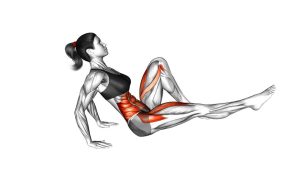
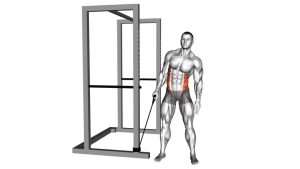
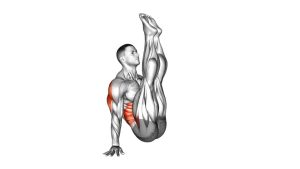
Side Plank: Proper Form, Core Benefits, Sets, Tips & FAQ
Learn how to do the Side Plank with proper form to strengthen obliques, core stability, hips, and shoulders. Includes steps, tips, FAQs, and equipment.
Side Plank
This movement works best when the body stays stacked, steady, and controlled. Because the Side Plank is a static hold, quality matters more than duration. Keep your elbow under your shoulder, your hips lifted, your legs extended, and your neck aligned with your spine. In addition, avoid letting the hips sag toward the floor, because that reduces oblique tension and shifts stress into the shoulder or lower back.
Quick Overview
| Body Part | Core |
|---|---|
| Primary Muscle | Obliques |
| Secondary Muscle | Transverse abdominis, glute medius, quadratus lumborum, shoulder stabilizers |
| Equipment | None; optional exercise mat |
| Difficulty | Beginner to Intermediate |
Sets & Reps (By Goal)
- Core endurance: 2–4 sets × 20–45 seconds per side, resting 30–60 seconds between sides.
- Beginner control: 2–3 sets × 10–20 seconds per side, using perfect alignment and calm breathing.
- Strength-focused hold: 3–5 sets × 20–40 seconds per side, keeping the hips high and body rigid.
- Warm-up activation: 1–2 sets × 10–20 seconds per side before lifting, running, or athletic training.
Progression rule: Add time only when your hips stay lifted, your shoulder stays stable, and your spine stays neutral. First improve control; then increase hold duration.
Setup / Starting Position
- Lie on your side: Position your body in a straight line with your legs extended and stacked.
- Place your forearm down: Keep your elbow directly under your shoulder so the upper arm is vertical.
- Stack your joints: Align your shoulders, hips, knees, and ankles without rolling forward or backward.
- Brace your core: Gently tighten your abs as if preparing for light contact around the waist.
- Set your top hand: Place the top hand on your hip, or keep it relaxed along your side if preferred.
Tip: If the full version feels too demanding, bend the knees and perform a knee-supported side plank first.
Execution (Step-by-Step)
- Lift your hips: Press through your forearm and the side of your bottom foot to raise your hips off the floor.
- Create one long line: Keep your head, ribs, hips, knees, and ankles aligned from top to bottom.
- Hold steady: Brace your obliques and glutes while preventing your waist from dropping toward the floor.
- Breathe with control: Take slow breaths without letting the ribs flare or the hips rotate.
- Lower with control: After the target time, gently lower your hips back to the floor and switch sides.
Pro Tips & Common Mistakes
- Keep the elbow under the shoulder: This improves support and reduces unnecessary shoulder strain.
- Do not let the hips sag: A low hip position usually means the obliques are no longer controlling the hold.
- Avoid rotating the chest down: Keep the torso stacked so the exercise trains side-body stability correctly.
- Keep the neck neutral: Do not drop the head or look sharply upward. Instead, keep the neck long and relaxed.
- Squeeze the glutes lightly: This helps the pelvis stay stable and prevents the lower back from arching.
- Stop before form breaks: A shorter clean hold is more effective than a longer hold with poor alignment.
FAQ
What muscles does the Side Plank work?
The Side Plank mainly targets the obliques. However, it also works the transverse abdominis, glute medius, quadratus lumborum, and shoulder stabilizers because the whole body must stay lifted and aligned.
Is the Side Plank good for beginners?
Yes. Beginners can start with short holds or use a knee-supported version. As control improves, the full forearm side plank becomes easier to hold with proper form.
How long should I hold a Side Plank?
Most people can start with 10–20 seconds per side. Then, gradually work toward 30–45 seconds while keeping the hips high and the body straight.
Why do my hips drop during the Side Plank?
Hip dropping usually happens when the obliques, hips, or shoulder stabilizers fatigue. Therefore, reduce the hold time, reset your position, and focus on clean alignment before increasing duration.
Can Side Planks help with core stability?
Yes. Side Planks train anti-lateral flexion, which means your core resists bending sideways. As a result, they are useful for posture, athletic movement, lifting stability, and general trunk control.
Recommended Equipment (Optional)
- Thick Exercise Mat — adds comfort under the forearm and side of the foot during holds
- Non-Slip Yoga Mat — helps prevent sliding and improves stability on hard floors
- Forearm Exercise Pad — useful if elbow pressure limits your side plank comfort
- Mini Resistance Bands — helpful for progressing side plank variations and hip stability drills
- Core Sliders — useful for advanced core progressions after mastering the basic hold
Tip: Equipment is optional. However, a comfortable mat can make the Side Plank easier to practice consistently, especially if your elbow or forearm feels pressure on the floor.