Knee Touch Crunch: Proper Form, Benefits, Sets, Tips & FAQ
Learn the Knee Touch Crunch to target your abs with controlled upper-body flexion. Includes form cues, sets, mistakes, FAQs, and gear.
Knee Touch Crunch
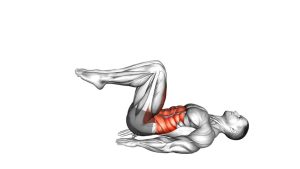
This movement is best performed with a smooth curl of the upper torso, not with momentum. Because the visible exercise uses bent knees, planted feet, and a forward arm reach, the goal is to bring the ribs toward the pelvis while keeping the lower body quiet. Additionally, the range of motion stays small, which makes the exercise useful for beginners and home core workouts.
Quick Overview
| Body Part | Abs |
|---|---|
| Primary Muscle | Rectus abdominis |
| Secondary Muscle | Deep core stabilizers and hip flexors lightly as stabilizers |
| Equipment | No equipment required |
| Difficulty | Beginner |
Sets & Reps (By Goal)
- Beginner core control: 2–3 sets × 10–12 reps with slow, clean form.
- Ab endurance: 3–4 sets × 15–20 reps with a steady tempo.
- Core warm-up: 1–2 sets × 8–12 reps before a larger workout.
- Home abs finisher: 2–3 sets × 20–30 seconds of controlled reps.
Progression rule: First, improve control and range consistency. Then, add reps or slow the lowering phase before increasing total volume.
Setup / Starting Position
- Lie on your back: Position yourself flat on the floor or on an exercise mat.
- Bend your knees: Keep both knees bent with the feet planted on the ground.
- Set your feet: Place the feet about hip-width apart and keep them stable throughout the movement.
- Reach your arms forward: Extend your arms along the sides of your thighs toward your knees.
- Brace gently: Tighten your abs lightly before you begin, while keeping the neck and jaw relaxed.
The video shows a simple floor-based setup with no external load. Therefore, body position and controlled motion are the main priorities.
Execution (Step-by-Step)
- Start from the floor: Keep your knees bent, feet planted, and arms reaching forward beside your thighs.
- Curl your upper body: Lift your head, shoulders, and upper back by contracting your abs.
- Reach toward the knees: Slide your hands forward until your fingers move close to, or lightly touch, the knees.
- Pause briefly: Hold the top position for a moment while keeping the lower body still.
- Lower with control: Slowly return your shoulders and upper back toward the starting position.
- Repeat smoothly: Continue the same short-range crunch pattern without bouncing or pulling the neck.
Pro Tips & Common Mistakes
- Reach, don’t swing: Use the arms as a guide toward the knees, not as momentum.
- Keep the feet planted: The lower body should stay stable from start to finish.
- Lift through the ribs: Think about curling the ribs toward the pelvis instead of yanking the head forward.
- Use a short range: A small, controlled crunch is enough when the abs stay engaged.
- Lower slowly: The descent matters because it keeps tension on the abs.
- Avoid neck pulling: Since the hands are not behind the head, keep the neck relaxed and let the abs do the work.
- Do not rush reps: Faster reps usually reduce abdominal control and increase compensation.
FAQ
What muscles does the Knee Touch Crunch work?
The Knee Touch Crunch mainly works the rectus abdominis, which is the front abdominal muscle. Additionally, the deeper core muscles help stabilize the trunk during the movement.
Is the Knee Touch Crunch good for beginners?
Yes. Because it uses no equipment and has a short range of motion, it is beginner-friendly. However, beginners should move slowly and avoid pulling the neck forward.
Should my hands touch my knees every rep?
Your hands can lightly reach toward or touch the knees, depending on your mobility and control. Nevertheless, the main goal is abdominal contraction, not forcing the longest possible reach.
Why do I feel this in my neck?
Neck tension usually happens when the head leads the movement instead of the abs. To fix it, keep the chin slightly tucked, relax the jaw, and make the crunch smaller.
Is this exercise the same as a sit-up?
No. A Knee Touch Crunch is a smaller movement. You lift the shoulders and upper back, while a sit-up brings more of the torso off the floor.
Recommended Equipment (Optional)
- Exercise Mat — adds comfort and support for floor-based crunches.
- Thick Yoga Mat — useful if your spine or tailbone feels uncomfortable on hard floors.
- Ab Workout Mat — provides extra lower-back support during crunch variations.
- Core Sliders — helpful for pairing this exercise with other low-equipment core drills.
- Adjustable Ankle Weights — optional for advanced core circuits, but not needed for the basic version.
Tip: For this exercise, comfort and consistency matter more than equipment. Start with a mat, then progress volume only when your form stays clean.