Standing Ab Twist: Form, Benefits, Sets, Tips & FAQ
Learn the Standing Ab Twist for stronger obliques, better core control, and torso rotation. Includes form steps, sets, tips, FAQs, and equipment.
Standing Ab Twist
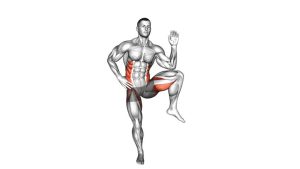
This exercise works best when the movement stays clean, upright, and controlled. Because the body is standing, the legs create a stable base while the core manages the rotation. As a result, the Standing Ab Twist is useful for beginners, warm-ups, light conditioning, and bodyweight core training.
Quick Overview
| Body Part | Core |
|---|---|
| Primary Muscle | Obliques |
| Secondary Muscle | Rectus abdominis, transverse abdominis, spinal stabilizers, hip stabilizers |
| Equipment | No equipment required |
| Difficulty | Beginner |
Sets & Reps (By Goal)
- Beginner core practice: 2–3 sets × 10–16 total twists
- Warm-up activation: 1–2 sets × 12–20 total twists
- Core endurance: 3–4 sets × 20–30 total twists
- Low-impact conditioning: 2–4 rounds × 30–45 seconds
Progression rule: First improve control and posture. Then, add more reps or time only when you can twist without swinging your arms or rotating the hips excessively.
Setup / Starting Position
- Stand tall: Place your feet about shoulder-width apart and keep your weight balanced.
- Soften the knees: Avoid locking the knees so your base stays stable and comfortable.
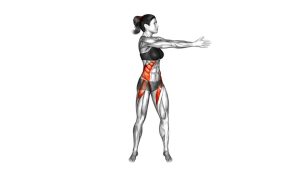
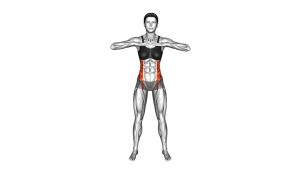
- Lift the arms forward: Keep the arms in front of the torso with a slight bend, as shown in the video.
- Brace lightly: Tighten the midsection enough to control the twist without holding your breath.
- Keep the chest tall: Maintain an upright spine before starting the rotation.
The starting position should feel athletic but relaxed. Additionally, the shoulders should stay down instead of shrugging toward the ears.
Execution (Step-by-Step)
- Begin from center: Stand upright with your arms held in front of your torso.
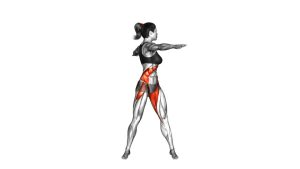
- Rotate to one side: Turn your shoulders and torso smoothly while keeping the hips mostly stable.
- Control the end range: Stop when you reach a comfortable twist without leaning or forcing the spine.
- Return to center: Bring your torso back under control instead of snapping back quickly.
- Twist to the other side: Repeat the same controlled rotation in the opposite direction.
- Continue alternating: Move side to side with steady breathing and consistent posture.
Pro Tips & Common Mistakes
- Rotate through the torso: Let the shoulders and ribs turn together while the hips stay mostly forward.
- Do not rush: A slower twist usually trains the obliques better than fast, loose swinging.
- Keep your spine tall: Avoid bending forward, arching back, or leaning side to side.
- Control your arms: The arms should help guide the motion, not pull your body around.
- Brace gently: Keep the abs active, but continue breathing normally.
- Use a comfortable range: More rotation is not always better if control is lost.
- Avoid excessive hip movement: Some natural movement may happen, but the exercise should not become a hip swing.
FAQ
What muscles does the Standing Ab Twist work?
The Standing Ab Twist mainly targets the obliques. It also involves the rectus abdominis, transverse abdominis, and smaller stabilizing muscles that help control torso rotation.
Is the Standing Ab Twist good for beginners?
Yes. It is beginner-friendly because it uses bodyweight only and does not require floor work. However, beginners should move slowly and focus on clean rotation instead of speed.
Should my hips move during the exercise?
The hips should stay mostly stable and forward-facing. A small amount of natural movement may happen, but the main action should come from the torso and shoulders.
Can I do Standing Ab Twists every day?
You can use them often as a light core drill or warm-up. Nevertheless, if your lower back feels irritated, reduce volume and check your twisting range.
How do I make the Standing Ab Twist harder?
First, increase control, reps, or time. After that, you may hold a light medicine ball or small dumbbell, but only if you can keep the movement smooth and stable.
Recommended Equipment (Optional)
- Exercise Mat — useful for warm-ups, stretching, and core sessions before or after standing drills
- Medicine Ball — adds light resistance once bodyweight twisting feels controlled
- Light Dumbbells — optional for advanced variations when strict control is maintained
- Resistance Bands Set — helpful for pairing the exercise with anti-rotation and core stability drills
- Fitness Timer — helps track timed sets for warm-ups, circuits, and conditioning rounds
Tip: Keep resistance light if you add equipment. The Standing Ab Twist should still feel controlled, balanced, and core-driven.