Stick-Assisted Isometric Core Hold: Form, Benefits, Sets & Tips
Learn the Stick-Assisted Isometric Core Hold to build anti-rotation strength, core control, posture stability, and better bracing.
Stick-Assisted Isometric Core Hold
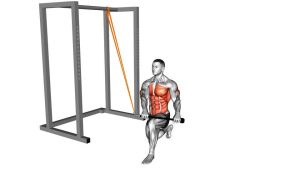
This exercise works best when the body stays quiet. The front foot should remain planted, the rear knee should stay grounded, and the torso should stay tall while both hands hold the stick. Because the goal is stability, every second of the hold should feel controlled rather than rushed.
Quick Overview
| Body Part | Core |
|---|---|
| Primary Muscle | Obliques and deep core stabilizers |
| Secondary Muscle | Rectus abdominis, transverse abdominis, glutes, hip stabilizers, and shoulder stabilizers |
| Equipment | Stick, dowel, broomstick, or stable vertical pole |
| Difficulty | Beginner to intermediate, depending on hold time and resistance angle |
Sets & Reps (By Goal)
- Core activation: 2–3 sets × 10–20 seconds per side
- Anti-rotation strength: 3–4 sets × 20–30 seconds per side
- Posture and control practice: 2–3 sets × 15–25 seconds with slow breathing
- Warm-up use: 1–2 sets × 10–15 seconds per side before strength training
Progression rule: First increase hold quality, then hold duration. After that, increase the lever challenge only if your hips, ribs, and shoulders stay controlled.
Setup / Starting Position
- Set the half-kneeling base: Place one knee on the floor and plant the opposite foot forward with the knee bent.
- Hold the stick: Grip the stick with both hands in front of the body while keeping the arms extended but not locked aggressively.
- Stack the torso: Keep the ribs over the hips, the chest tall, and the spine neutral.
- Brace gently: Tighten the core as if preparing to resist a twist, while still breathing normally.
- Stabilize the lower body: Keep the front foot flat and the rear knee grounded so the pelvis does not shift.
Execution (Step-by-Step)
- Start tall: Begin in the half-kneeling position with the stick held firmly in front of you.
- Create light tension: Apply steady pressure into the stick without yanking, leaning, or twisting.
- Resist rotation: Keep your torso facing forward as your core works to prevent unwanted movement.
- Hold the position: Maintain a neutral spine, stable hips, and relaxed shoulders for the target time.
- Breathe under tension: Inhale through the nose and exhale slowly without losing abdominal control.
- Finish smoothly: Release the tension slowly, reset your posture, then switch sides if needed.
Pro Tips & Common Mistakes
- Keep the movement isometric: Do not turn it into a pulling or rowing exercise.
- Stay tall through the spine: Avoid collapsing the ribs forward or arching the lower back.
- Control the pelvis: Do not let the hips rotate as the hands hold the stick.
- Use steady pressure: A smooth hold trains the core better than sudden jerky force.
- Relax the neck: Keep the head neutral and avoid lifting the shoulders toward the ears.
- Match both sides: Since this is an anti-rotation drill, train left and right sides evenly.
- Do not chase fatigue too early: Stop the set when posture starts to break.
FAQ
What is the Stick-Assisted Isometric Core Hold?
It is a static core stability exercise where you hold a stick while resisting rotation. The body stays mostly still, while the core works to maintain posture and alignment.
Where should I feel this exercise?
You should feel controlled tension through the sides of the waist, deep abs, and hips. However, you should not feel sharp pain in the lower back or excessive strain in the shoulders.
Is this exercise good for obliques?
Yes. Because the exercise resists twisting, it strongly challenges the obliques. In addition, it trains the deeper stabilizers that help protect the spine during rotation-based movements.
Should the stick move during the hold?
No major movement is needed. The stick acts as a support and resistance reference, while your torso stays stable and controlled.
Can beginners do this exercise?
Yes. Beginners can start with short holds and light pressure. Then, as control improves, they can slowly increase hold time or tension.
Recommended Equipment (Optional)
- Wooden Exercise Dowel — simple tool for stick-assisted core drills and mobility work
- Pilates Stick Bar — useful for light resistance, alignment practice, and controlled core training
- Exercise Mat — adds knee comfort during half-kneeling holds
- Yoga Knee Pad — extra cushioning for the rear knee during kneeling exercises
- Resistance Bands Set — helpful for progressing anti-rotation work after mastering the stick hold
Tip: Choose equipment that helps you keep clean alignment. If a tool makes your posture worse, reduce the challenge or return to the basic stick-assisted version.