Russian Twist Chop: Core Rotation Form, Sets, Tips & FAQ
Learn the Russian Twist Chop for stronger abs, obliques, and rotational core control. Includes form steps, sets, tips, mistakes, FAQs, and gear.
Russian Twist Chop
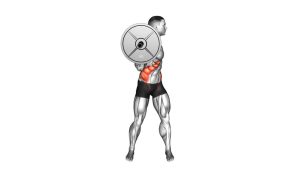
This exercise works best when the lower body stays steady and the torso rotates as one connected unit. Instead of swinging the arms quickly, keep the hands linked with the chest and guide each twist toward the outside of the hip. As a result, the abs and obliques stay active through the full range of motion.
Quick Overview
| Body Part | Core |
|---|---|
| Primary Muscle | Obliques |
| Secondary Muscle | Rectus abdominis, transverse abdominis, hip flexors, lower-back stabilizers |
| Equipment | None; optional exercise mat |
| Difficulty | Beginner to Intermediate |
Sets & Reps (By Goal)
- Core control: 2–3 sets × 10–16 total reps with a slow, clean rotation.
- Muscular endurance: 3–4 sets × 20–30 total reps with steady breathing.
- Beginner practice: 2 sets × 8–12 total reps with a smaller twist range.
- Finisher: 2–3 rounds × 30–45 seconds while maintaining posture.
Progression rule: First improve control, posture, and range. Then, if form stays stable, increase total reps or time under tension.
Setup / Starting Position
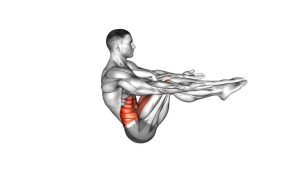
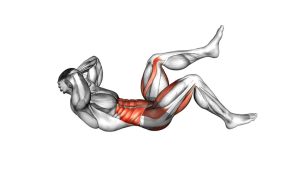
- Sit on the floor: Bend your knees and position your legs in front of you.
- Lean back slightly: Recline just enough to engage your abs without rounding heavily.
- Clasp your hands: Keep both hands together in front of your torso.
- Brace your core: Keep your ribs controlled and your chest lifted.
- Set your gaze: Look toward your hands as your torso rotates side to side.
In the video, the movement appears bodyweight-only. Therefore, start without load before adding any resistance.
Execution (Step-by-Step)
- Start centered: Hold your hands in front of your midline while keeping your torso slightly leaned back.
- Rotate to one side: Turn your chest and hands together toward the outside of one hip.
- Control the chop: Move your hands down and across in a smooth chopping path without throwing the arms.
- Return through center: Bring your torso back to the middle with control.
- Rotate to the opposite side: Repeat the same motion toward the other hip.
- Continue alternating: Keep each rep even, smooth, and core-driven.
Pro Tips & Common Mistakes
- Keep the twist controlled: Fast swinging reduces core tension and increases sloppy rotation.
- Avoid collapsing backward: Stay tall through the chest even while leaning back.
- Move as one unit: Hands, chest, and shoulders should rotate together.
- Do not over-twist: Use a range you can control without pulling the lower back.
- Keep the hips stable: Excessive leg movement usually means the core is losing control.
- Breathe steadily: Exhale lightly as you rotate, then inhale as you pass through center.
- Use a mat: A mat can make the seated position more comfortable and stable.
FAQ
What muscles does the Russian Twist Chop work?
The Russian Twist Chop mainly targets the obliques. It also trains the rectus abdominis, transverse abdominis, and trunk stabilizers because the torso must stay controlled while rotating.
Is the Russian Twist Chop good for beginners?
Yes, it can be beginner-friendly when performed slowly and without added weight. However, beginners should use a smaller range of motion and focus on posture before increasing reps.
Should my feet be on the floor or lifted?
Both versions exist. However, if your torso control is not consistent, keep your feet lightly on the floor. Once your posture stays stable, you can try a more challenging version.
Why do I feel this in my hip flexors?
You may feel the hip flexors if you lean back too far or brace poorly. To fix this, sit taller, reduce the recline, and make the twist smaller.
Can I add weight to this exercise?
Yes, but only after you can control the bodyweight version. Start with a light medicine ball or small dumbbell and avoid rushing the twist.
Recommended Equipment
- Non-Slip Exercise Mat — helps cushion the hips and keeps the seated position more stable.
- Light Medicine Ball — useful later for adding resistance to the chopping motion.
- Core Sliders — helpful for pairing this exercise with other core stability drills.
- Resistance Bands Set — useful for rotational core progressions and anti-rotation training.
- Small Dumbbell Set — optional progression tool once bodyweight form is clean and controlled.
Tip: Start with bodyweight first. Then, only add equipment when your spine position, tempo, and rotation remain consistent.