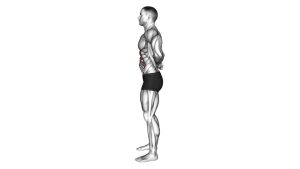
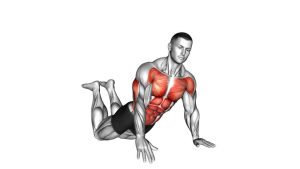
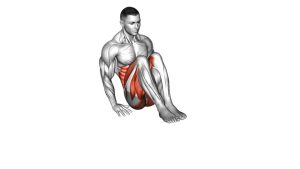
Half Squat Side Reach: Core, Legs, Form, Sets & Tips
Learn the Half Squat Side Reach for core control, obliques, legs, balance, and mobility with setup, steps, sets, mistakes, FAQs, and gear.
Half Squat Side Reach
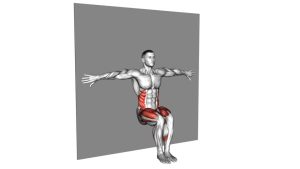
This exercise works best when the lower body stays quiet while the upper body moves with purpose. Because the knees and hips remain bent, the legs must hold the half squat position while the trunk rotates and reaches. As a result, the movement builds coordination, balance, and functional core strength.
Quick Overview
| Body Part | Core |
|---|---|
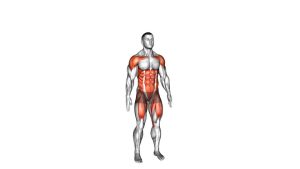
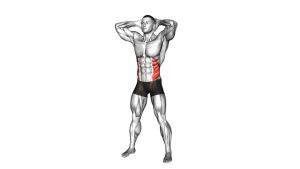
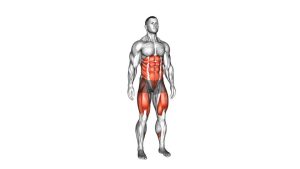
| Primary Muscle | Obliques |
| Secondary Muscle | Quadriceps, glutes, abs, hip stabilizers, shoulders |
| Equipment | None |
| Difficulty | Beginner |
Sets & Reps (By Goal)
- Beginner control: 2–3 sets × 8–10 reaches per side, slow tempo, 45–60 sec rest
- Core endurance: 3–4 sets × 12–16 reaches per side, steady rhythm, 45 sec rest
- Lower-body burn: 3 sets × 30–45 seconds, continuous alternating reaches, 60 sec rest
- Warm-up mobility: 1–2 sets × 8 reaches per side, easy range, no fatigue focus
Progression rule: First improve control and balance. Then add more reps, a longer squat hold, or a slower reach before adding load.
Setup / Starting Position
- Stand tall: Place your feet about shoulder-width apart with your toes pointing slightly outward or straight ahead.
- Lower into a half squat: Bend the knees and push the hips back until you reach a comfortable partial squat depth.
- Brace your core: Keep your ribs stacked over your hips and avoid collapsing through the lower back.
- Relax the shoulders: Let your arms prepare to reach while your neck stays neutral.
- Set your balance: Keep your weight spread through both feet before starting the side reach.
Tip: The squat should feel stable and controlled. You do not need to squat deeply for this exercise to be effective.
Execution (Step-by-Step)
- Hold the half squat: Keep your knees bent, hips back, and chest controlled.
- Reach to one side: Extend one arm across and slightly downward toward the opposite side.
- Rotate gently: Allow a small torso turn, but do not twist aggressively through the spine.
- Return to center: Bring the arm and torso back to the middle while staying in the squat.
- Reach to the other side: Repeat the same motion on the opposite side with smooth control.
- Continue alternating: Move side to side without standing up between reps.
Pro Tips & Common Mistakes
- Stay low: Avoid standing up between reaches. The half squat hold is part of the exercise.
- Control the knees: Keep both knees aligned with the toes instead of letting them cave inward.
- Reach with purpose: Do not swing the arms quickly. Instead, guide the movement with the core.
- Keep the spine long: Avoid rounding the back as you reach across the body.
- Use a comfortable range: A smaller controlled reach is better than a large sloppy reach.
- Breathe steadily: Exhale during the reach and inhale as you return to center.
- Avoid rushing: Fast reps often reduce core control and turn the movement into momentum.
FAQ
What muscles does the Half Squat Side Reach work?
It mainly works the obliques and deep core muscles while the legs hold the half squat. Additionally, the quadriceps, glutes, hips, shoulders, and upper back help stabilize the movement.
Is the Half Squat Side Reach good for beginners?
Yes. It is beginner-friendly because it uses bodyweight only and allows a short range of motion. However, beginners should use a shallow squat and slow reaches until balance improves.
Should I squat deeply during this exercise?
No. A half squat is enough. The goal is not maximum squat depth; instead, the goal is to maintain a stable lower-body base while reaching side to side.
Can I use this exercise as a warm-up?
Yes. It works well as a warm-up because it activates the legs, hips, and core while adding gentle rotational movement. Keep the reps smooth and avoid fatiguing yourself before the main workout.
How can I make the Half Squat Side Reach harder?
You can increase the time under tension, slow the tempo, hold the squat lower, or use a light medicine ball. Nevertheless, add difficulty only after your knees, hips, and torso stay controlled.
Recommended Equipment (Optional)
- Exercise Mat — useful for warm-ups, stretching, and floor-based core work after this movement
- Resistance Bands Set — helpful for pairing this exercise with rows, pull-aparts, and hip activation drills
- Light Dumbbells — optional progression for advanced users who can control the side reach
- Medicine Ball — adds a controlled load for rotational core training variations
- Foam Roller — useful for recovery work around the hips, quads, and upper back
Tip: This exercise does not require equipment. Therefore, only add tools when they improve control, comfort, or progression without changing your form.