Medicine Ball Alternate V-Up: Core Form, Sets, Tips & FAQ
Learn the Medicine Ball Alternate V-Up to train abs, obliques, and hip flexors with controlled alternating reps, setup tips, mistakes, and gear.
Medicine Ball Alternate V-Up
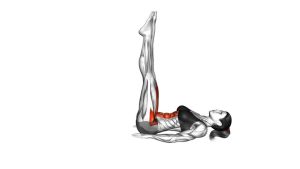
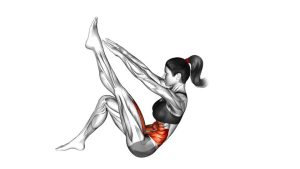
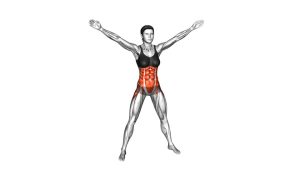
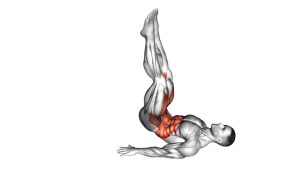
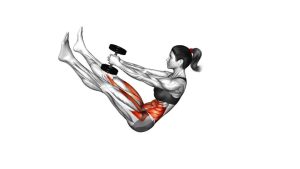
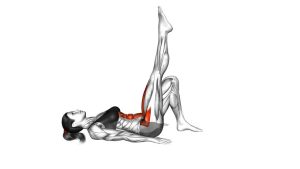
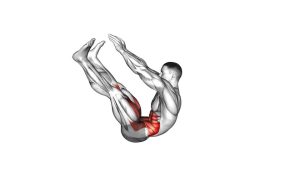
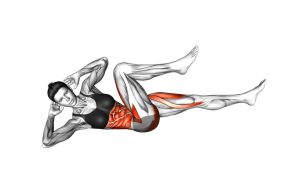
This movement works best when every rep is controlled from the core rather than thrown with momentum. Start with the arms extended overhead while holding the ball, keep the legs long, then lift one leg as the torso curls upward. At the top, reach the ball toward the raised foot area before lowering back with control.
Quick Overview
| Body Part | Core |
|---|---|
| Primary Muscle | Rectus abdominis |
| Secondary Muscle | Obliques, hip flexors, deep core stabilizers |
| Equipment | Medicine ball and exercise mat |
| Difficulty | Intermediate to advanced |
Sets & Reps (By Goal)
- Core control: 2–3 sets × 6–8 reps per side with a slow tempo
- Core strength: 3–4 sets × 8–10 reps per side with a moderate medicine ball
- Muscular endurance: 2–3 sets × 12–16 total alternating reps with clean form
- Advanced finisher: 3 rounds × 20–30 seconds, resting 45–60 seconds between rounds
Progression rule: First improve control and range. Then, increase reps. Finally, use a slightly heavier medicine ball only when your lower back stays stable.
Setup / Starting Position
- Lie on your back: Use a flat surface or mat so your spine has support.
- Hold the medicine ball overhead: Keep both hands on the ball with the arms extended behind your head.
- Lengthen your legs: Keep both legs straight and slightly lifted if you can control your lower back.
- Brace your core: Pull the ribs down gently and avoid letting the lower back arch aggressively.
- Set your neck: Keep the head relaxed and avoid yanking the chin toward the chest before the torso lifts.
If the extended start position feels too hard, begin with the legs slightly higher or use a lighter ball.
Execution (Step-by-Step)
- Start long: Begin with the arms overhead, the ball in both hands, and the legs extended.
- Lift the torso: Curl your upper body away from the floor while bringing the ball forward.
- Raise one leg: Lift one straight leg toward the ball as the opposite leg stays extended lower.
- Reach at the top: Bring the medicine ball toward the raised foot area without throwing your shoulders forward.
- Control the lowering phase: Slowly return the torso, arms, and raised leg back toward the starting position.
- Alternate sides: Repeat the same pattern with the opposite leg on the next rep.
Pro Tips & Common Mistakes
- Move with control: Do not swing the medicine ball to create momentum.
- Keep the leg long: A straight working leg makes the exercise cleaner and more demanding.
- Alternate evenly: Reach toward the right leg, return, then reach toward the left leg.
- Avoid neck pulling: Let the abs lift the torso instead of forcing the head forward.
- Protect the lower back: If your back arches strongly, lift the non-working leg slightly higher or reduce range.
- Use a manageable ball: A heavy ball is not helpful if it makes your reps sloppy.
- Exhale as you lift: Breathing out during the reach helps your ribs stay down and your core stay tight.
FAQ
What muscles does the Medicine Ball Alternate V-Up work?
It mainly works the rectus abdominis. However, the alternating reach also involves the obliques, hip flexors, and deep stabilizers that help control your torso and pelvis.
Is the Medicine Ball Alternate V-Up beginner-friendly?
Not usually. Because the exercise combines a weighted reach, torso flexion, and alternating leg raises, it is better for intermediate and advanced trainees. Beginners can start with bodyweight alternate V-ups first.
Should my lower back stay flat during this exercise?
Your lower back should stay controlled. It does not need to be crushed into the floor, but you should avoid a large uncontrolled arch, especially as the arms and legs extend.
How heavy should the medicine ball be?
Use a light to moderate ball that allows smooth reps. In most cases, control matters more than load because the exercise already becomes difficult due to the long lever position.
Can I do this exercise without a medicine ball?
Yes. A bodyweight alternate V-up is a useful regression. You can also hold a light foam ball or keep the hands reaching forward until your coordination improves.
Recommended Equipment
- Medicine Ball — the main resistance tool for this exercise
- Soft Medicine Ball — easier to grip and more comfortable for floor-based core drills
- Thick Exercise Mat — adds comfort for the spine during repeated V-up reps
- Weighted Fitness Ball — a lighter option for controlled core training
- Core Sliders — useful for pairing with other ab and core stability exercises
Tip: Choose equipment that helps you maintain clean form. A lighter medicine ball is usually better than a heavy ball that forces momentum.