Side Plank Leg Lift: Form, Benefits, Sets, Tips & FAQ
Learn the Side Plank Leg Lift to strengthen obliques, glutes, and hip stability with proper form, sets, tips, mistakes, FAQs, and equipment.
Side Plank Leg Lift
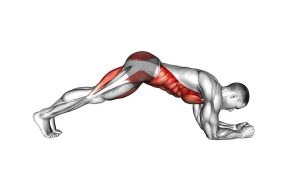
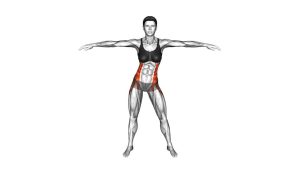
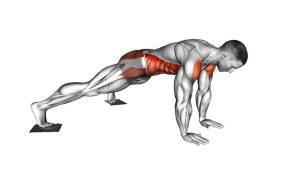
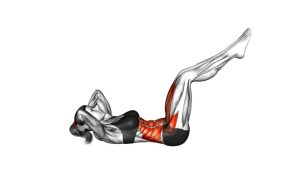
This exercise works best when the body stays stacked and quiet. Instead of lifting the leg as high as possible, focus on keeping the ribs, hips, knees, and feet aligned. As a result, the movement becomes a powerful combination of lateral core strength, hip control, and balance.
Quick Overview
| Body Part | Core |
|---|---|
| Primary Muscle | Obliques and glute medius |
| Secondary Muscle | Transverse abdominis, shoulders, hip abductors, lower-back stabilizers |
| Equipment | None; optional exercise mat |
| Difficulty | Intermediate |
Sets & Reps (By Goal)
- Core stability: 2–4 sets × 6–10 reps per side with slow control.
- Glute medius strength: 3–4 sets × 8–12 reps per side.
- Balance and control: 2–3 sets × 5–8 reps per side with a 2-second pause at the top.
- Beginner modification: 2–3 sets × 6–10 reps per side from a bent-knee side plank.
Progression rule: Add reps first, then add a longer top hold. However, do not progress until your hips stay lifted and your torso stays stacked.
Setup / Starting Position
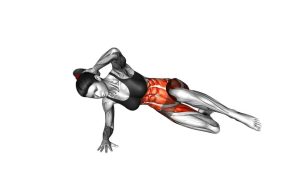
- Lie on your side: Place your lower forearm on the floor with the elbow under the shoulder.
- Stack your legs: Extend both legs and place the top foot directly over the bottom foot.
- Lift your hips: Press through the forearm and bottom foot until your body forms one straight line.
- Brace your core: Keep the ribs down, hips forward, and shoulders away from the ears.
- Set your head position: Keep the neck neutral and look forward instead of dropping the head.
Tip: If balance is difficult, place the bottom knee on the floor first. Then, once control improves, return to the full stacked-leg version.
Execution (Step-by-Step)
- Start in a strong side plank: Keep your elbow under your shoulder and your body in a straight line.
- Lift the top leg: Raise the top leg upward in a controlled arc while keeping the knee straight.
- Pause briefly: Hold the top position for a moment without rolling the hips backward.
- Lower with control: Bring the top leg back down slowly until it returns near the bottom leg.
- Repeat evenly: Continue for the target reps, then switch sides and repeat with the same control.
Pro Tips & Common Mistakes
- Keep the hips stacked: Avoid rolling the top hip backward during the leg lift.
- Do not chase height: A moderate leg lift with clean alignment is better than a high lift with twisting.
- Press the floor away: Stay active through the forearm so the shoulder does not collapse.
- Control the lowering phase: Lower slowly instead of dropping the leg quickly.
- Keep the core braced: Prevent the waist from sagging toward the floor.
- Match both sides: Use the same tempo and range on the left and right side.
FAQ
What muscles does the Side Plank Leg Lift work?
It mainly works the obliques and glute medius. In addition, it trains the deep core, shoulders, hip abductors, and stabilizing muscles around the spine and pelvis.
Is the Side Plank Leg Lift good for glutes?
Yes. The top-leg lift strongly challenges the outer glute muscles, especially the glute medius. However, the exercise also requires strong core control because the torso must stay stable.
Why do my hips drop during this exercise?
Your hips may drop because the obliques, shoulders, or glutes are not maintaining enough tension. Therefore, reduce the reps, use a shorter hold, or perform the exercise from the bottom knee.
Should I lift the leg very high?
No. Lift only as high as you can while keeping the pelvis stacked. If the hip rolls backward, the range is too large for your current control level.
Can beginners do the Side Plank Leg Lift?
Beginners can perform a modified version with the bottom knee on the floor. Once the side plank position feels stable, progress gradually to the full-leg version.
Recommended Equipment (Optional)
- Exercise Mat — adds comfort for the forearm, elbow, hip, and side-body position.
- Mini Resistance Bands — increases outer-glute activation when placed above the knees or ankles.
- Forearm Plank Pad — helps reduce elbow pressure during side plank holds.
- Adjustable Ankle Weights — adds light resistance after bodyweight reps are controlled and stable.
- Yoga Blocks — useful for modified setups, balance support, and mobility warm-ups.
Tip: Start with only a mat. Then, once the movement is stable, add a mini band or light ankle weight gradually.