Kettlebell Side Bend: Oblique Form, Benefits, Sets & Tips
Learn the kettlebell side bend to strengthen obliques, improve lateral core control, and train safe side-bending form with sets, tips, FAQs, and gear.
Kettlebell Side Bend
This exercise is useful for building side-core strength, improving trunk control, and teaching the body to manage loaded side-bending safely. Because the kettlebell pulls the torso downward, the opposite-side obliques must control the descent and help bring the body back to neutral.
Quick Overview
| Body Part | Core |
|---|---|
| Primary Muscle | Obliques |
| Secondary Muscle | Quadratus lumborum, transverse abdominis, erector spinae, grip muscles |
| Equipment | Kettlebell |
| Difficulty | Beginner to Intermediate |
Sets & Reps (By Goal)
- Core control: 2–3 sets × 10–12 reps per side using a light kettlebell.
- Oblique strength: 3–4 sets × 8–12 reps per side with a moderate load.
- Muscle endurance: 2–3 sets × 12–20 reps per side with smooth tempo.
- Warm-up activation: 1–2 sets × 8–10 reps per side using a very light load.
Progression rule: Add reps before increasing weight. Only use a heavier kettlebell when you can keep your hips stable, chest forward, and movement free from twisting.
Setup / Starting Position
- Stand tall: Place your feet about hip-width to shoulder-width apart.
- Hold the kettlebell: Grip one kettlebell at your side with your arm straight but not locked aggressively.
- Position the free hand: Place the opposite hand behind your head, on your waist, or across your chest for balance.
- Brace lightly: Keep your ribs stacked over your pelvis and tighten your core gently.
- Face forward: Keep your chest, hips, and eyes pointing forward before starting the rep.
Start with a light kettlebell. The exercise should feel controlled in your side core, not stressful in your lower back.
Execution (Step-by-Step)
- Begin upright: Stand tall with the kettlebell hanging naturally at one side.
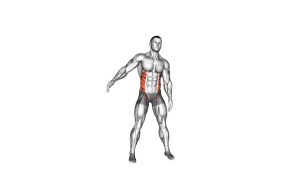
- Bend toward the kettlebell: Slowly lower your torso sideways, letting the kettlebell travel down the outside of your leg.
- Keep the movement clean: Do not rotate your shoulders, lean forward, or push your hips far to the side.
- Pause briefly: Stop when you feel a controlled stretch and tension through the opposite-side obliques.
- Return to center: Use your obliques to pull your torso back to a tall, neutral position.
- Repeat evenly: Complete all reps on one side, then switch the kettlebell to the opposite hand.
Pro Tips & Common Mistakes
- Keep your chest forward: The movement should be a side bend, not a rotation.
- Use a controlled range: Do not chase a deep stretch if it causes lower-back compression.
- Avoid swinging: Momentum reduces oblique tension and increases injury risk.
- Do not shrug: Keep the shoulder holding the kettlebell relaxed and down.
- Brace before moving: A light core brace protects your spine and improves control.
- Move slowly: Use a steady tempo, especially during the lowering phase.
- Train both sides: Perform equal reps on each side to support balanced trunk strength.
FAQ
What muscles does the kettlebell side bend work?
The kettlebell side bend mainly works the obliques. It also trains the quadratus lumborum, deep core stabilizers, lower-back stabilizers, and grip muscles.
Is the kettlebell side bend good for obliques?
Yes. It is a direct weighted oblique exercise when performed with clean lateral flexion, stable hips, and no twisting. The obliques work to control the lowering phase and bring the torso back to upright.
Should I use a heavy kettlebell?
Not at first. Start light and focus on precise control. A heavy kettlebell can cause swinging, excessive range, or lower-back strain if your core cannot stabilize the movement.
How far should I bend?
Bend only as far as you can control without twisting, rounding, or feeling pinching in the lower back. A moderate range is usually better than forcing a deep side bend.
Can beginners do kettlebell side bends?
Yes, beginners can do this exercise with a light kettlebell and slow tempo. However, people with current lower-back pain should use caution and choose pain-free core exercises when needed.
Recommended Equipment
- Cast Iron Kettlebell — the main tool for performing kettlebell side bends with stable loading.
- Adjustable Kettlebell — useful if you want multiple weight options without buying many kettlebells.
- Exercise Mat — helpful for warm-ups, stretching, and floor-based core work after training.
- Weightlifting Gloves — can improve grip comfort during kettlebell and dumbbell exercises.
- Resistance Bands Set — useful for pairing side bends with anti-rotation and full-core stability drills.
Choose equipment based on control first. For this exercise, a lighter kettlebell with perfect form is better than a heavy kettlebell with twisting or momentum.