Seated In-Out Leg Raise Over Bench: Core Form, Sets, Tips & FAQ
Learn the Seated In-Out Leg Raise Over Bench to strengthen abs, hip flexors, and core control with proper setup, form tips, reps, and gear.
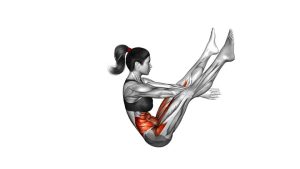
Seated In-Out Leg Raise Over Bench
This exercise works best when every rep is performed with slow control. The bench acts as a height target, forcing the legs to lift higher than a standard seated leg raise. This increases core compression demand and makes the movement more challenging for the lower abs and hip flexors.
Quick Overview
| Body Part | Abs |
|---|---|
| Primary Muscle | Rectus abdominis |
| Secondary Muscle | Hip flexors, obliques, transverse abdominis, quadriceps |
| Equipment | Flat bench or stable elevated platform |
| Difficulty | Intermediate |
Sets & Reps (By Goal)
- Core control: 2–3 sets × 8–10 slow reps
- Ab strength: 3–4 sets × 10–15 reps
- Muscular endurance: 2–4 sets × 15–20 reps
- Beginner progression: 2–3 sets × 6–8 reps with bent knees
- Advanced challenge: 3–4 sets × 8–12 reps with straighter legs and slower tempo
Progression rule: First improve control and range of motion. Then increase reps, slow the tempo, or use a slightly higher target only when your lower back stays stable.
Setup / Starting Position
- Place a bench in front of you: Use a stable flat bench or low platform that will not slide.
- Sit on the floor: Position yourself close enough so your legs can travel over the bench smoothly.
- Support with your hands: Place your palms behind your hips with fingers pointing forward or slightly outward.
- Lean back slightly: Keep your chest lifted and torso stable without collapsing into the shoulders.
- Brace your core: Pull your ribs down gently and prepare to lift both legs together.
- Start with legs extended: Keep your heels hovering lightly above the floor before beginning the movement.
Execution (Step-by-Step)
- Begin in a supported seated position: Brace your abs and keep your hands planted behind you.
- Draw the knees in: Bend your knees and pull them toward your chest without rounding aggressively.
- Lift and extend forward: Straighten your legs toward the bench while keeping them elevated.
- Clear the bench: Raise your feet high enough to pass over the bench without touching it.
- Control the end range: Keep your legs long and your core tight as the feet move over the bench.
- Return with control: Bend your knees back toward the chest instead of dropping the legs.
- Repeat smoothly: Continue the in-out pattern while keeping the torso steady and breathing controlled.
Pro Tips & Common Mistakes
- Keep the movement slow: Fast reps usually turn this into momentum instead of core training.
- Do not let the heels drop: Keep tension by maintaining a light hover through the full rep.
- Use the bench as a target: Clear it with control, but do not kick or swing over it.
- Brace before extending: The hardest part is the straight-leg extension, so prepare your core first.
- Avoid shoulder shrugging: Push gently through your hands while keeping the neck relaxed.
- Control the lower back: If your back arches, bend your knees or shorten the range.
- Do not rush the tuck: Pull the knees in with abdominal control, not hip snapping.
FAQ
What muscles does the Seated In-Out Leg Raise Over Bench work?
It mainly targets the rectus abdominis and hip flexors. The obliques, transverse abdominis, quads, shoulders, and triceps also help stabilize the body.
Is this exercise good for lower abs?
Yes. The lower-ab region works hard to control pelvic position as the legs extend and lift over the bench. To feel it more in the abs, keep the ribs down and avoid arching your lower back.
Can beginners do this exercise?
Beginners can perform a modified version with bent knees, a lower target, and fewer reps. If the full version causes back arching or hip strain, start with seated knee tucks first.
Should my legs stay straight the whole time?
Not necessarily. Straighter legs make the exercise harder. Bent knees are acceptable if they help you maintain control, reduce lower-back stress, and complete the movement cleanly.
Why use a bench for this exercise?
The bench creates a clear height target. This forces better leg lift, stronger hip flexor engagement, and more core control than a regular seated in-out leg raise.
How do I make the exercise harder?
Slow the tempo, keep the legs straighter, pause briefly over the bench, or increase the number of controlled reps. Do not increase difficulty if your lower back loses position.
Recommended Equipment
- Flat Weight Bench — provides a stable target for leg raise over-bench variations.
- Thick Exercise Mat — improves comfort while sitting on the floor during core work.
- Adjustable Workout Bench — useful for multiple core, strength, and bench-supported exercises.
- Core Sliders — helpful for building abdominal control through related bodyweight drills.
- Resistance Bands Set — useful for hip flexor activation, warm-ups, and core accessory training.
Tip: Choose a bench or platform that is stable, wide enough, and low enough for clean movement. Avoid unstable furniture that may slide or tip during the exercise.