Barbell Good Morning: Proper Form, Muscles Worked, Sets & Tips
Learn the Barbell Good Morning for stronger hamstrings, glutes, and lower back. Includes setup, form steps, sets, mistakes, FAQs, and equipment.
Barbell Good Morning
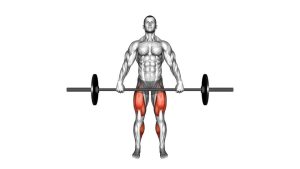
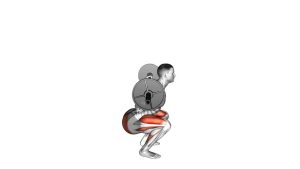
This exercise is best performed with slow control, strong bracing, and a clean hinge pattern. You should feel tension through the hamstrings and glutes, while the lower back works isometrically to maintain position. The knees stay softly bent, the hips travel backward, and the bar remains stable across the upper back.
Quick Overview
| Body Part | Hamstrings |
|---|---|
| Primary Muscle | Hamstrings |
| Secondary Muscle | Glutes, erector spinae, core stabilizers, adductors |
| Equipment | Barbell, squat rack, weight plates, optional bar pad |
| Difficulty | Intermediate |
Sets & Reps (By Goal)
- Technique practice: 2–3 sets × 8–10 reps with a light barbell
- Hamstring strength: 3–4 sets × 6–10 reps with controlled tempo
- Posterior chain hypertrophy: 3–5 sets × 8–12 reps with moderate load
- Hip hinge warm-up: 2 sets × 10–12 reps using an empty bar or very light weight
- Strength accessory work: 3–4 sets × 5–8 reps after squats or deadlifts
Progression rule: Add weight only when every rep maintains a neutral spine, stable bar position, and strong hip-driven movement. Quality should always come before load.
Setup / Starting Position
- Set the rack height: Position the barbell around upper-chest height so you can unrack it safely.
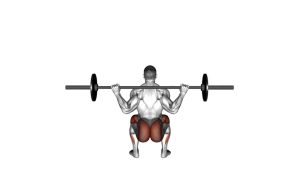
- Place the bar correctly: Rest the bar across the upper traps, similar to a high-bar squat position. Avoid placing it directly on the neck.
- Grip the bar firmly: Hold the bar with both hands slightly wider than shoulder-width to keep it stable.
- Step back carefully: Take one or two small steps back and set your feet about shoulder-width apart.
- Brace your core: Inhale, tighten your midsection, and keep your ribs stacked over your hips.
- Soften the knees: Keep a slight bend in the knees, but do not turn the movement into a squat.
- Set your gaze: Look slightly forward and down so the neck stays neutral with the spine.
The start position should feel strong, tall, and controlled before the first rep begins.
Execution (Step-by-Step)
- Begin with the hips: Push your hips backward as if closing a car door behind you.
- Lower the torso: Let your chest move forward while keeping your spine neutral and your core braced.
- Keep the knees slightly bent: The knees should stay soft but mostly fixed throughout the rep.
- Feel the hamstring stretch: Lower until you feel strong tension in the hamstrings without losing back position.
- Pause briefly: Hold the bottom position for a moment without bouncing.
- Drive the hips forward: Squeeze the glutes and extend the hips to raise your torso back up.
- Finish tall: Return to standing with the hips fully extended, ribs controlled, and barbell steady.
Pro Tips & Common Mistakes
- Hinge, don’t squat: Push the hips back instead of bending the knees deeply.
- Keep the spine neutral: Avoid rounding the lower back at the bottom of the movement.
- Control the descent: Lower slowly to keep tension on the hamstrings and protect the back.
- Do not chase depth: Stop when your hamstring flexibility ends. Going lower with a rounded back reduces safety and effectiveness.
- Brace before each rep: A strong brace keeps the bar stable and protects the torso position.
- Keep the bar locked in place: Do not allow the bar to roll up toward the neck or slide down the back.
- Avoid looking up: Keep the neck aligned with the spine instead of craning the head forward.
- Use lighter loads first: The Barbell Good Morning is highly technical and should be progressed gradually.
FAQ
What muscles does the Barbell Good Morning work?
The Barbell Good Morning mainly works the hamstrings, with strong support from the glutes, lower back, and core stabilizers. It is a posterior-chain exercise built around hip extension and trunk stability.
Is the Barbell Good Morning safe?
It can be safe when performed with proper technique, light-to-moderate loading, and a neutral spine. It becomes risky when the lifter rounds the lower back, uses too much weight, or lowers beyond their mobility limit.
How low should I go during a Barbell Good Morning?
Lower only as far as you can while keeping your spine neutral and your hips moving backward. Many lifters should stop when the torso is around 45 degrees or slightly lower, depending on flexibility and control.
Should beginners do Barbell Good Mornings?
Beginners should first learn bodyweight hip hinges, dowel hinges, Romanian deadlifts, or light band good mornings. Once the hinge pattern is clean, the barbell version can be introduced with very light weight.
What is the difference between a Good Morning and a Romanian Deadlift?
Both train the hip hinge, hamstrings, and glutes. In the Barbell Good Morning, the bar rests on the upper back. In the Romanian Deadlift, the bar is held in the hands in front of the body. The Good Morning usually places more demand on torso bracing.
When should I include Barbell Good Mornings in my workout?
Use them as an accessory exercise after squats, deadlifts, or lower-body strength work. They can also be used on hamstring-focused days with moderate volume and controlled tempo.
Recommended Equipment
- Olympic Barbell — the main tool for performing Barbell Good Mornings with progressive loading
- Squat Rack — helps you unrack and rerack the bar safely at the correct height
- Barbell Pad — optional comfort support for lifters who feel pressure across the upper back
- Weight Lifting Belt — useful for advanced lifters who need extra bracing feedback during heavier sets
- Olympic Weight Plates — allows gradual load progression once technique is stable and controlled
Tip: Start with an empty barbell or very light plates. The Barbell Good Morning is most effective when the hinge stays clean and the torso remains controlled.