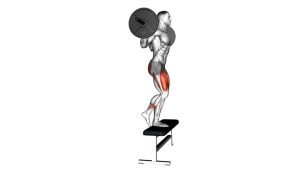
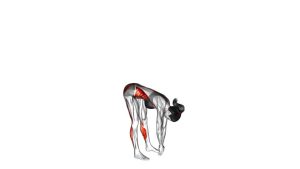
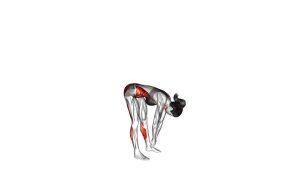
Barbell Straight-Leg Deadlift: Form, Muscles, Sets & Tips
Learn the Barbell Straight-Leg Deadlift for stronger hamstrings, glutes, and posterior chain control with setup, steps, tips, FAQs, and equipment.
Barbell Straight-Leg Deadlift
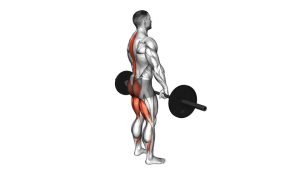
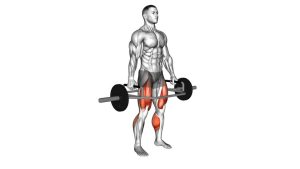
This exercise works best when performed with slow control, tight posture, and a consistent bar path. The knees stay slightly soft, but the main movement comes from the hips traveling backward and forward. Use a weight that allows you to keep your back neutral, your core braced, and the bar close to your body from start to finish.
Quick Overview
| Body Part | Hamstrings |
|---|---|
| Primary Muscle | Hamstrings |
| Secondary Muscle | Glutes, erector spinae, adductors, core, forearms |
| Equipment | Barbell and weight plates |
| Difficulty | Intermediate |
Sets & Reps (By Goal)
- Strength: 3–5 sets × 4–6 reps with controlled tempo and full rest.
- Muscle growth: 3–4 sets × 8–12 reps with a slow eccentric lowering phase.
- Hamstring control: 2–4 sets × 10–15 reps using moderate weight and clean form.
- Technique practice: 2–3 sets × 6–8 reps with light weight and a strict hip hinge.
Progression rule: Add weight only when every rep stays smooth, the spine remains neutral, and the bar stays close to the legs throughout the full range.
Setup / Starting Position
- Stand tall: Place your feet about hip-width apart with the barbell held in front of your thighs.
- Grip the bar: Use an overhand grip slightly wider than shoulder width.
- Brace your core: Pull your ribs down slightly and create tension around your midsection.
- Set your shoulders: Keep your chest open and shoulder blades lightly pulled back and down.
- Unlock the knees: Keep a small bend in the knees, but avoid squatting during the movement.
Your starting posture should feel tall, stable, and braced. The bar should begin close to the thighs, not hanging away from the body.
Execution (Step-by-Step)
- Push your hips back: Begin the movement by sending your hips behind you while keeping the bar close to your legs.
- Lower under control: Slide the bar down along the thighs toward the shins as your torso leans forward.
- Keep your spine neutral: Maintain a long back and avoid rounding your shoulders or lower back.
- Feel the hamstring stretch: Lower until you feel strong tension in the hamstrings without losing posture.
- Drive the hips forward: Stand back up by squeezing the glutes and extending the hips.
- Finish tall: Return to a full upright position without leaning backward or overextending the lower back.
Pro Tips & Common Mistakes
- Think hips back first: The straight-leg deadlift is a hinge, not a squat.
- Keep the bar close: Letting the bar drift forward increases lower-back strain.
- Use a soft knee bend: Do not lock the knees aggressively, but do not bend them deeply either.
- Control the lowering phase: A slow eccentric improves hamstring tension and technique quality.
- Avoid rounding your back: Stop the range before your spine loses its neutral position.
- Do not overextend at lockout: Stand tall and squeeze the glutes without leaning backward.
- Use lighter weight first: This exercise rewards control more than heavy loading.
FAQ
What muscles does the Barbell Straight-Leg Deadlift work?
The main muscles are the hamstrings. The glutes, lower back, core, and forearms also assist by extending the hips, stabilizing the spine, and holding the barbell.
Is the straight-leg deadlift the same as the Romanian deadlift?
They are similar because both use a hip hinge, but the straight-leg version usually keeps the knees more fixed and slightly straighter. The Romanian deadlift often allows a little more knee bend and may feel slightly easier to control for many lifters.
How low should I lower the bar?
Lower the bar only as far as you can maintain a neutral spine and controlled hamstring tension. For many lifters, this is around mid-shin level, but your range depends on hamstring mobility and control.
Should I feel this exercise in my lower back?
Your lower back may work as a stabilizer, but it should not be the main area of fatigue or discomfort. If your lower back dominates, reduce the weight, keep the bar closer, brace harder, and shorten the range.
Is this exercise good for hamstring growth?
Yes. The Barbell Straight-Leg Deadlift is excellent for hamstring growth because it loads the hamstrings in a stretched position. Use controlled reps, moderate weight, and a slow lowering phase for best results.
Recommended Equipment
- Olympic Barbell — essential for performing loaded straight-leg deadlifts with proper balance.
- Barbell Weight Plates — allows progressive overload for strength and muscle-building goals.
- Weightlifting Straps — useful when grip strength limits hamstring and glute training volume.
- Weightlifting Belt — helps support bracing during heavier hip-hinge sets.
- Deadlift Platform Mat — protects the floor and improves training stability during barbell work.
Tip: Start with light weight until your hinge mechanics are consistent. Equipment can support the lift, but clean form should always come first.