Dumbbell Swing: Proper Form, Muscles Worked, Sets, Tips & FAQ
Learn the Dumbbell Swing for glute power, hamstring strength, conditioning, and hip-hinge control with form cues, sets, tips, FAQs, and equipment.
Dumbbell Swing
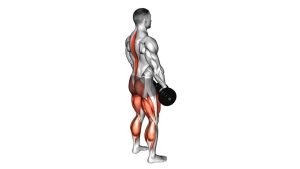
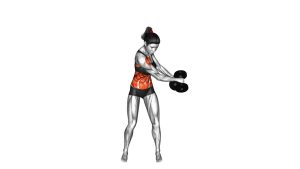
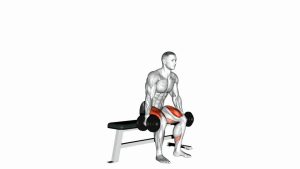
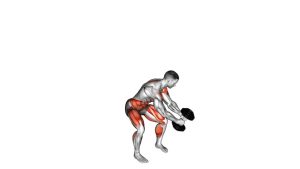
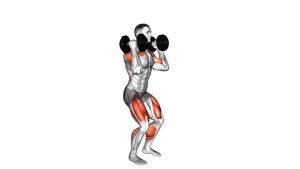
This exercise works best when the movement feels powerful but controlled. The dumbbell should travel between the legs during the backswing, then rise naturally as the hips extend. A clean rep should look like a fast hinge-to-stand motion, not a squat, front raise, or lower-back pull.
Quick Overview
| Body Part | Legs |
|---|---|
| Primary Muscle | Glutes and hamstrings |
| Secondary Muscle | Core, lower back, adductors, shoulders, traps, and grip |
| Equipment | Dumbbell |
| Difficulty | Intermediate because it requires hip-hinge timing, core control, and rhythm |
Sets & Reps (By Goal)
- Power development: 4–6 sets × 6–10 reps using crisp, explosive reps with full rest.
- Muscle endurance: 3–4 sets × 12–20 reps using a moderate dumbbell and steady rhythm.
- Conditioning: 4–8 rounds × 20–40 seconds of work with 40–90 seconds of rest.
- Technique practice: 2–3 sets × 8–12 reps using a light dumbbell and slow setup control.
Progression rule: Improve hip-hinge quality first. Add weight only when every rep stays powerful, smooth, and controlled without shoulder lifting or lower-back rounding.
Setup / Starting Position
- Stand with space: Place your feet about shoulder-width apart with the dumbbell slightly in front of you.
- Grip the dumbbell: Hold one end of the dumbbell with both hands, or hold the handle securely if using a single-arm variation.
- Set your hinge: Push your hips back while keeping your chest proud and spine neutral.
- Keep knees soft: Bend the knees slightly, but do not drop into a squat.
- Brace before moving: Tighten your core lightly, keep shoulders packed, and allow the arms to hang long.
Tip: Start with the dumbbell close enough that you can pull it into the backswing without reaching, rounding, or losing balance.
Execution (Step-by-Step)
- Load the hips: Hike the dumbbell back between your legs while pushing the hips behind you.
- Keep the spine neutral: Maintain a long back and avoid looking too far up or dropping the head down.
- Drive through the hips: Snap the hips forward powerfully and squeeze the glutes as you stand tall.
- Let the dumbbell float: Allow the dumbbell to rise to about chest height without pulling it up with your arms.
- Finish tall: Stand upright with ribs down, glutes tight, and core braced. Do not lean backward.
- Guide the descent: Let the dumbbell fall naturally, then hinge again as it returns between your legs.
- Repeat with rhythm: Continue the load, snap, float, and catch pattern for the target reps.
Pro Tips & Common Mistakes
- Hinge, do not squat: Push the hips back instead of dropping straight down.
- Use the hips as the engine: The glutes should create the upward movement, not the arms.
- Keep arms relaxed: Treat your arms like ropes connected to the dumbbell.
- Avoid overextending: Finish tall, but do not lean back at the top.
- Control the bottom: Do not let the dumbbell pull your spine into rounding.
- Use the right weight: Too light may encourage arm lifting; too heavy may break your hinge pattern.
- Breathe with rhythm: Exhale during the hip snap and inhale as the dumbbell returns.
FAQ
What muscles does the dumbbell swing work?
The dumbbell swing mainly works the glutes and hamstrings. It also trains the core, lower back, grip, shoulders, and upper back as stabilizers during the swing.
Is the dumbbell swing the same as a kettlebell swing?
It is very similar because both use a hip-hinge pattern and explosive hip extension. The main difference is the tool. A dumbbell changes the grip and weight shape, so it may feel slightly less natural than a kettlebell for some lifters.
Should I lift the dumbbell with my shoulders?
No. The dumbbell should rise because your hips drive forward powerfully. If you are actively raising the dumbbell with your shoulders, reduce the weight and focus on snapping the hips.
How high should the dumbbell go?
Chest height is enough for most people. The goal is not maximum height. The goal is a clean, powerful hip drive with control at the top and bottom of each rep.
Is the dumbbell swing good for fat loss or conditioning?
Yes. Because it uses large muscles and a repeated explosive pattern, it can be useful for conditioning circuits. Use safe technique first, then increase density through rounds, time, or controlled rep volume.
Recommended Equipment
- Hex Dumbbell — a stable option for controlled dumbbell swing training
- Adjustable Dumbbell — useful for progressing weight without needing many separate dumbbells
- Kettlebell — a natural alternative for swing patterns and hip-power training
- Weightlifting Gloves — helpful for grip comfort during higher-rep conditioning sets
- Non-Slip Exercise Mat — adds floor grip and comfort for home dumbbell workouts
Tip: Choose equipment that lets you maintain a smooth hinge, firm grip, and powerful hip drive without losing control.