Barbell Stiff-Legged Deadlift: Hamstring Form, Sets, Tips & FAQ
Learn the Barbell Stiff-Legged Deadlift for hamstring strength, glute control, and hip-hinge form with setup, reps, mistakes, FAQs, and gear.
Barbell Stiff-Legged Deadlift
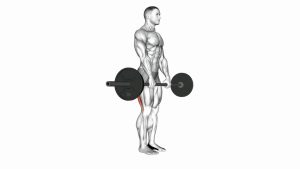
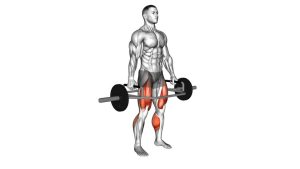
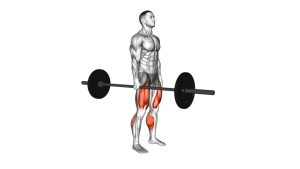
This exercise works best when the lifter controls the descent and moves from the hips instead of the lower back. A clean rep should show the hips traveling backward, the torso folding forward, the knees staying softly unlocked, and the barbell sliding close to the thighs and shins. The bottom position should be determined by hamstring flexibility, not by forcing the bar to the floor.
Quick Overview
| Body Part | Hamstrings |
|---|---|
| Primary Muscle | Hamstrings |
| Secondary Muscle | Glutes, erector spinae, adductors, upper back stabilizers, core |
| Equipment | Barbell and weight plates |
| Difficulty | Intermediate |
Sets & Reps (By Goal)
- Strength: 3–5 sets × 4–6 reps with controlled form and full rest.
- Muscle growth: 3–4 sets × 8–12 reps using a slow descent and strong hip extension.
- Technique practice: 2–3 sets × 8–10 reps with light weight and strict bar path.
- Posterior-chain accessory work: 2–4 sets × 10–15 reps after squats or deadlifts.
Progression rule: Add load only when every rep keeps the spine neutral, the bar close, and the hamstring stretch controlled.
Setup / Starting Position
- Stand tall: Place your feet about hip-width apart with the barbell held in front of your thighs.
- Grip the bar: Use a firm overhand grip or mixed grip if needed for heavier loads.
- Set the posture: Keep your chest proud, shoulders packed, ribs controlled, and spine neutral.
- Unlock the knees: Keep a slight knee bend, but do not turn the movement into a squat.
- Brace the core: Create tension through the trunk before starting the hinge.
Execution (Step-by-Step)
- Begin with the hips: Push your hips backward while keeping the bar close to your legs.
- Lower under control: Let the torso fold forward as the bar travels down the thighs toward the shins.
- Keep the knees quiet: Maintain only a small knee bend throughout the rep.
- Stop at your stretch limit: Lower until you feel a strong hamstring stretch without rounding your back.
- Drive the hips forward: Contract the hamstrings and glutes to return to standing.
- Finish tall: Stand upright with the hips fully extended, but do not lean backward at the top.
Pro Tips & Common Mistakes
- Think “hips back,” not “bar down”: The bar lowers because the hips hinge backward.
- Do not lock the knees hard: Keep them softly unlocked to protect the joints and maintain control.
- Avoid rounding the back: Stop the descent before your spine loses position.
- Keep the bar close: A drifting bar increases lower-back stress and weakens the hinge.
- Use a slow eccentric: Lower for 2–4 seconds to improve hamstring tension and control.
- Do not bounce at the bottom: Pause briefly or reverse smoothly without using momentum.
- Avoid overextending at lockout: Finish by squeezing the glutes, not by leaning backward.
FAQ
What muscles does the Barbell Stiff-Legged Deadlift work?
It primarily targets the hamstrings. It also trains the glutes, lower back stabilizers, upper back, and core because the body must maintain a strong hip-hinge position.
Is the stiff-legged deadlift the same as the Romanian deadlift?
They are similar, but not exactly the same. The stiff-legged deadlift usually uses less knee bend, which increases the loaded stretch on the hamstrings. The Romanian deadlift often uses slightly more knee flexion and may feel more balanced between glutes and hamstrings.
How low should I lower the bar?
Lower only as far as your hamstrings allow while your spine stays neutral. For many lifters, this means the bar reaches around mid-shin level. You do not need to touch the floor.
Should beginners do this exercise?
Beginners can learn the movement, but it is usually better to start with a lighter hip-hinge drill, a dumbbell Romanian deadlift, or an unloaded hinge pattern before using a loaded barbell.
Why do I feel this in my lower back?
Some lower-back stabilization is normal, but the main stretch should be in the hamstrings. If your lower back dominates, reduce the weight, keep the bar closer, brace harder, and stop before your back rounds.
Recommended Equipment
- Olympic Barbell — the main tool for performing loaded stiff-legged deadlifts.
- Bumper Plates — useful for controlled loading and consistent bar height.
- Barbell Collars — help keep plates secure during each rep.
- Weightlifting Straps — support grip when the hamstrings and glutes are the main training focus.
- Deadlift Platform Mat — protects flooring and improves training setup stability.
Tip: Equipment should support cleaner form, not hide poor technique. Start light, master the hinge, and increase weight gradually.