Stability Ball Leg Curl: Hamstring Form, Sets, Tips & FAQ
Learn the Stability Ball Leg Curl for stronger hamstrings, glutes, and hip stability. Includes form cues, sets, mistakes, FAQs, and equipment.
Stability Ball Leg Curl
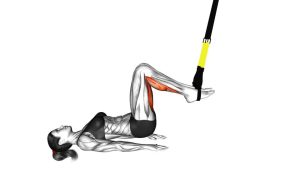
This exercise is excellent for building hamstring strength without a machine because it combines knee flexion, hip extension, and core control in one movement. It is more challenging than a basic bridge because the stability ball creates instability, forcing the hamstrings, glutes, and trunk stabilizers to work together. Keep every rep controlled and avoid using momentum.
Quick Overview
| Body Part | Hamstrings |
|---|---|
| Primary Muscle | Hamstrings |
| Secondary Muscle | Glutes, calves, core stabilizers, lower back stabilizers |
| Equipment | Stability ball / Swiss ball and exercise mat |
| Difficulty | Intermediate |
Sets & Reps (By Goal)
- Strength: 3–4 sets × 6–10 controlled reps, resting 60–90 seconds between sets.
- Muscle building: 3–4 sets × 10–15 reps with a slow lowering phase.
- Hamstring endurance: 2–3 sets × 15–20 reps using smooth, steady movement.
- Beginner progression: 2–3 sets × 6–8 partial reps while keeping the hips lifted.
- Warm-up activation: 1–2 sets × 8–12 light reps before lower-body training.
Progression rule: First improve control and hip height. Then increase reps, slow the eccentric phase, or progress to a single-leg stability ball leg curl.
Setup / Starting Position
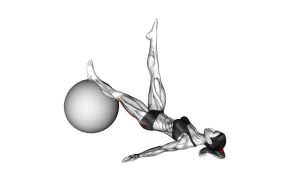
- Lie on your back: Place your upper back, shoulders, and head flat on the floor.
- Position the ball: Put both heels on top of the stability ball with legs extended.
- Set your arms: Keep your arms on the floor slightly away from your sides for balance.
- Brace your core: Keep your ribs controlled and avoid excessive lower-back arching.
- Lift your hips: Press through the heels and raise your hips until your body forms a straight line from shoulders to heels.
- Start stable: Keep the ball still before beginning the curl.
Tip: If the ball feels unstable, start with your arms wider on the floor and perform a shorter curl range.
Execution (Step-by-Step)
- Begin in a bridge: Keep your hips lifted and your body long from shoulders to heels.
- Pull the ball in: Drive your heels into the ball and bend your knees to roll it toward your glutes.
- Squeeze at the top: Pause briefly when your knees are bent and the hamstrings feel fully contracted.
- Keep hips high: Do not let your pelvis sag as the ball moves closer to your body.
- Extend slowly: Roll the ball away by straightening your knees under control.
- Finish with tension: Return to the long bridge position without dropping your hips to the floor.
Pro Tips & Common Mistakes
- Keep your hips lifted: Dropping the hips turns the exercise into a weaker hamstring curl and reduces glute involvement.
- Use your heels: Press the heels into the ball instead of pushing mainly through the toes.
- Control the return: The extension phase should be slow because it builds strong eccentric hamstring control.
- Avoid over-arching: Keep the ribs down and core braced so the lower back does not take over.
- Do not rush reps: Fast reps usually reduce tension and make the ball harder to control.
- Choose the right ball size: A ball that is too large or too small can make the movement awkward.
- Start with partial reps: If full curls cause cramping, use a shorter range until strength improves.
- Keep knees tracking straight: Avoid letting the knees flare too wide or collapse inward.
FAQ
What muscles does the Stability Ball Leg Curl work?
The main muscles are the hamstrings. The glutes help keep the hips extended, while the core, calves, and lower-back stabilizers help control the body and ball.
Is the Stability Ball Leg Curl good for hamstrings?
Yes. It is a strong hamstring exercise because it trains knee flexion while the hips stay lifted. This creates useful posterior-chain tension without needing a leg curl machine.
Why do my hamstrings cramp during this exercise?
Cramping often happens when the hamstrings are weak, fatigued, or overloaded too quickly. Reduce the range, perform fewer reps, and focus on keeping the hips lifted with smooth control.
Should my hips stay off the floor the whole time?
Yes. Keeping the hips lifted is one of the main goals. If your hips drop, the hamstrings lose tension and the exercise becomes less effective.
Is this exercise beginner friendly?
It can be challenging for beginners because the ball is unstable. Beginners should start with basic glute bridges, then progress to partial stability ball curls before doing full reps.
What is a harder variation?
A harder version is the single-leg stability ball leg curl. Only progress to it when you can keep the hips high and control the ball smoothly with both legs.
Recommended Equipment
- Stability Ball / Swiss Ball — the main tool needed for performing the leg curl movement.
- Anti-Burst Exercise Ball — a safer and more durable option for strength and stability training.
- Exercise Mat — improves comfort for the back, shoulders, and arms during floor exercises.
- Core Sliders — useful alternative for hamstring curl variations on smooth surfaces.
- Resistance Bands for Legs — helpful for glute activation and lower-body warm-up before hamstring work.
Tip: Choose a stability ball that supports your body weight and allows your heels to rest comfortably on top while lying flat.