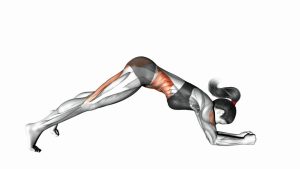
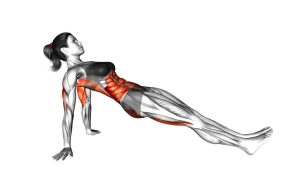
Self-Assisted Inverse Leg Curl: Hamstring Form, Sets, Tips & FAQ
Learn the Self-Assisted Inverse Leg Curl to build eccentric hamstring strength with safer Nordic-style control, form cues, sets, tips, FAQs, and gear.
Self-Assisted Inverse Leg Curl
This exercise trains the hamstrings to resist knee extension while the body moves forward as one strong line. It is best performed with slow control, a braced core, active glutes, and light hand assistance only when needed. The goal is not to collapse to the floor, but to control the descent and return with clean mechanics.
Quick Overview
| Body Part | Hamstrings |
|---|---|
| Primary Muscle | Hamstrings |
| Secondary Muscle | Glutes, calves, core, spinal stabilizers |
| Equipment | Bench, padded floor, ankle anchor, optional exercise mat |
| Difficulty | Intermediate |
Sets & Reps (By Goal)
- Strength control: 3–4 sets × 4–6 slow reps
- Hypertrophy: 3–5 sets × 6–10 assisted reps
- Eccentric focus: 3–4 sets × 3–5 reps with a 3–6 second lowering phase
- Beginner regression: 2–3 sets × 3–6 partial-range reps with more hand assistance
Progression rule: First increase control and lowering time. Then reduce hand assistance. Only extend the range when your hips stay locked and your torso stays aligned.
Setup / Starting Position
- Anchor the ankles: Place your feet securely under a bench, pad, bar, or stable anchor.
- Kneel on padding: Use a mat or soft surface to protect the knees.
- Stack the body: Keep the head, ribs, hips, and knees in one long line.
- Brace the core: Slightly tighten the abs to prevent the lower back from arching.
- Prepare the hands: Keep the hands in front of the chest so they can assist near the bottom.
Execution (Step-by-Step)
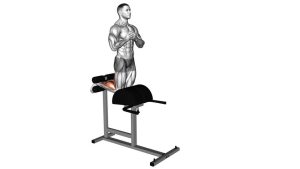
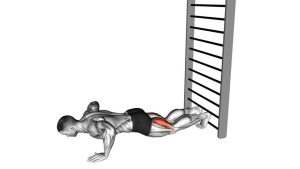
- Start tall: Kneel upright with the ankles fixed and the hips fully extended.
- Lean forward slowly: Lower from the knees while keeping the body straight.
- Control the descent: Let the hamstrings resist the forward fall instead of dropping quickly.
- Use the hands lightly: Touch the floor only when needed to reduce load and prevent collapse.
- Return to the top: Push lightly with the hands and pull with the hamstrings to return upright.
- Reset each rep: Re-brace, re-align the hips, and repeat with the same slow control.
Pro Tips & Common Mistakes
- Keep the hips extended: Do not sit back or hinge at the hips.
- Lower slowly: A controlled eccentric phase gives this exercise its main benefit.
- Use assistance wisely: The hands should help, not take over the whole movement.
- Avoid back arching: Brace the abs and keep the ribs stacked over the pelvis.
- Protect the knees: Use enough padding and avoid hard floor contact.
- Do not rush progression: This movement creates high hamstring tension, so build gradually.
FAQ
What is the Self-Assisted Inverse Leg Curl good for?
It is excellent for building eccentric hamstring strength, knee flexion control, posterior chain stability, and Nordic curl progression strength.
Is this the same as a Nordic hamstring curl?
It is a self-assisted Nordic-style variation. The main difference is that the hands help reduce load, especially near the hardest bottom range.
Should I feel this in my hamstrings?
Yes. You should feel strong tension in the hamstrings. You may also feel the glutes and core working to keep the body aligned.
Why do my hips bend during the movement?
Hip bending usually means the hamstrings are not yet strong enough for the current range. Shorten the range, slow down, and use more hand assistance.
Can beginners do this exercise?
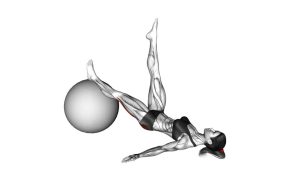
Beginners can use it as a regression only with strong assistance, short range, slow control, and proper knee padding. Complete beginners may start with stability ball leg curls or sliding hamstring curls first.
Recommended Equipment
- Nordic Hamstring Curl Strap — helps anchor the ankles securely for Nordic-style hamstring work
- Exercise Knee Pad — protects the knees during kneeling hamstring exercises
- Thick Exercise Mat — provides stable cushioning for floor-based leg training
- Nordic Curl Bench — offers a dedicated setup for progressive Nordic curl training
- Resistance Bands Set — useful for assisted progressions and hamstring warm-up drills
Tip: Choose stable equipment that keeps your ankles secure. A poor anchor can make the movement unsafe and reduce hamstring tension.